
Best Shapes for Genuine Alexandrite Gemstones
Jun 19th 2026
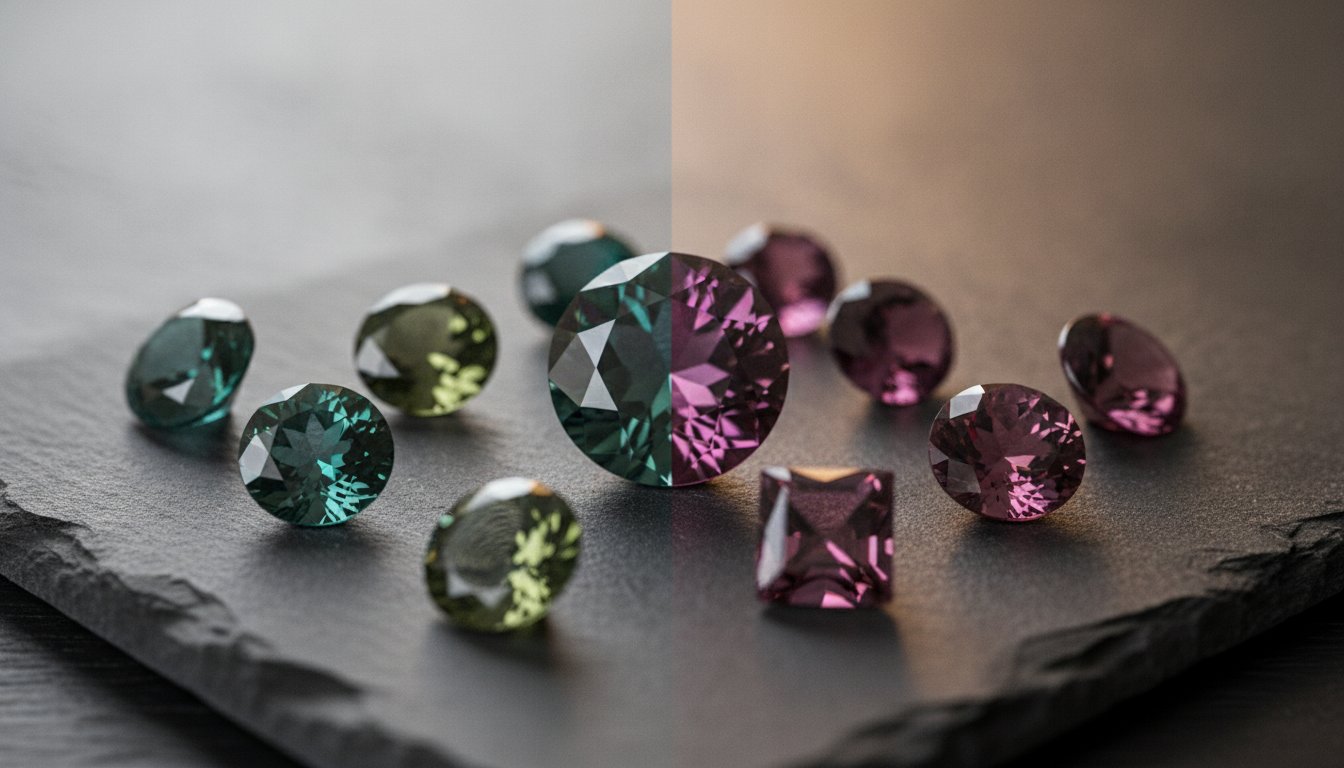
A 1-carat alexandrite with a 100% color shift is often more valuable than a 3-carat stone that only manages a partial change. While most buyers focus on carat weight, the true connoisseur knows that the cut's interaction with light is what prevents a stone from looking muddy in shifting environments. You're likely wondering, what is the best shape for a genuine alexandrite gemstone? It's a vital question for any serious collector who understands that rarity and light must work in harmony, especially when the market is flooded with ovals that don't always showcase that "emerald by day, ruby by night" magic.
Choosing the right silhouette is about more than just aesthetics; it's a strategic move to protect your investment and ensure daily durability. This guide will show you how specific shapes like round and cushion cuts align with the crystal's pleochroic axes to maximize color intensity. We'll explore why ovals are so common, how to avoid the dreaded "muddy" look, and the trade-offs between weight retention and visual brilliance. You'll gain the expert perspective needed to select a stone that remains a vibrant, high-value legacy piece for a lifetime.
Key Takeaways
- Understand how the orientation of the chrysoberyl crystal's C-axis dictates whether a stone achieves a 100% color shift or remains lackluster.
- Learn why Round Brilliant and Cushion cuts are the definitive answers to what is the best shape for a genuine alexandrite gemstone to maximize light return and saturation.
- Discover the rare trade-offs cutters make between preserving carat weight and achieving the ideal proportions required for high-investment fancy shapes.
- Evaluate how a chrysoberyl’s 8.5 Mohs hardness influences shape selection for daily wear, ensuring your heirloom remains secure in its setting.
- Gain insight into the rigorous inspection process that ensures every loose alexandrite meets the highest standards for color-change intensity and radical transparency.
The Science of Shape: How Cut Affects Alexandrite's Color Change
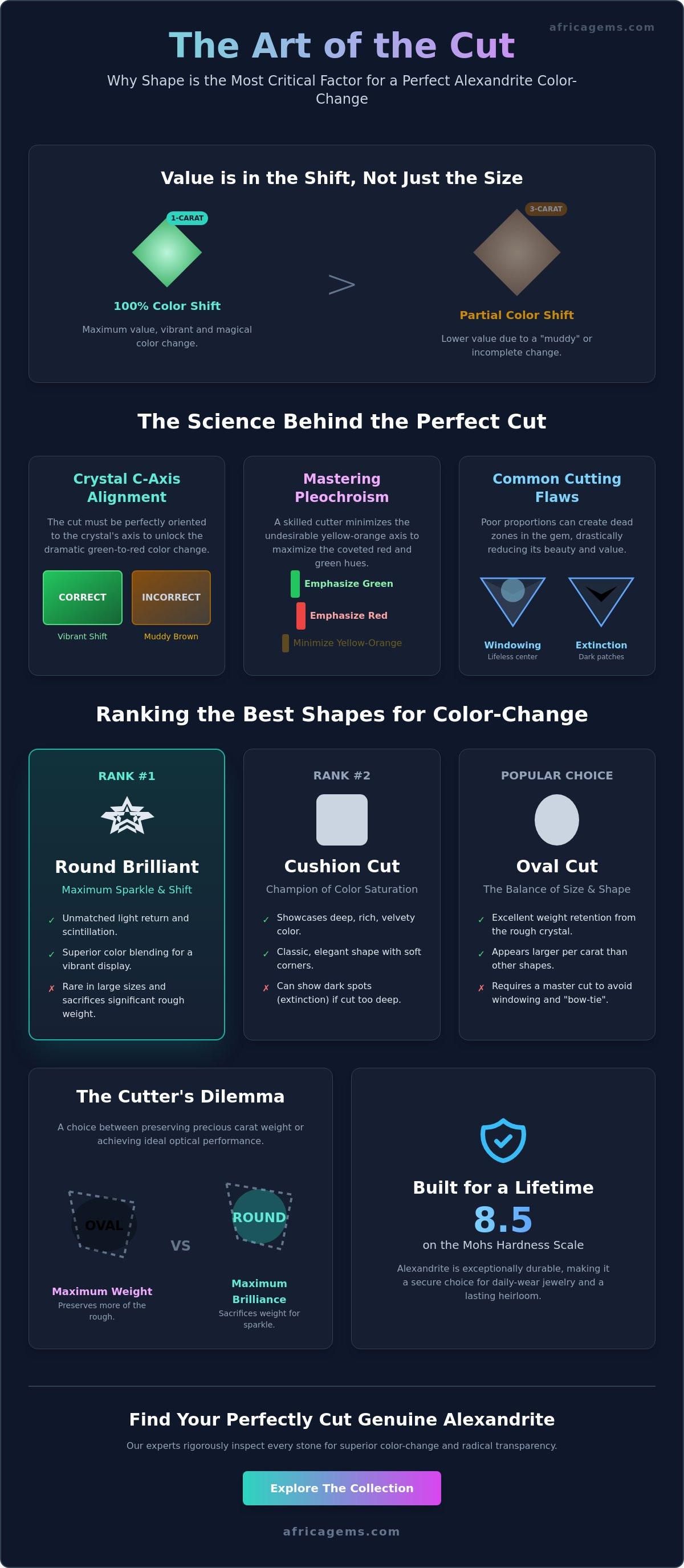
Cutting a genuine alexandrite isn't just about shaping a stone; it's a high-stakes negotiation with physics. Master lapidaries must decide which colors to emphasize and which to sacrifice. Because alexandrite is a variety of chrysoberyl, its internal structure is remarkably complex. The alexandrite color-change effect depends entirely on how the cutter aligns the stone's facets with the crystal's "C-axis." If this orientation is off by even a few degrees, the gem won't achieve that coveted 100% color shift. Instead of a vibrant transition from forest green to raspberry red, you'll see a disappointing, muddy brown or a dull grey.
To see the sheer scale of value these stones can reach when cut correctly, watch this short visual demonstration of a world-class specimen:
When asking what is the best shape for a genuine alexandrite gemstone?, the answer begins with how that shape manages light return. Deep shapes can sometimes lead to "extinction," where light becomes trapped inside the stone rather than reflecting back to your eye. This creates dark, lifeless patches that kill the color-change effect. A perfect cut ensures light travels through the stone and returns to the viewer, carrying the full spectrum of the shift with it. This is why you'll rarely see deep, chunky cuts in high-end alexandrite; they simply don't let the stone breathe.
What is Pleochroism in Alexandrite?
Pleochroism is the optical soul of the alexandrite. This property allows a single crystal to display different colors when viewed from different angles. In alexandrite, there are three distinct pleochroic directions: green, red, and a less desirable yellow-orange. A skilled cutter must orient the table of the stone to minimize that yellow-orange axis. By doing so, they highlight the dramatic red-green duality that collectors crave. If the shape is poorly chosen, these colors blend poorly, resulting in a stone that looks "washed out" or perpetually stuck in a brownish transitional phase.
Light Return and Colour Saturation
Internal reflections, often called scintillation, are the engines of the color shift. In a well-proportioned stone, these reflections blend the pleochroic colors seamlessly. However, many genuine stones suffer from "windowing," where the center of the gem is cut too shallow to save weight. This allows light to leak through the back, creating a pale, colorless hole in the middle of your gem. Unlike lab-grown alternatives that are cut for speed, genuine alexandrite requires a surgical approach to preserve saturation. Every facet must be placed with the intent to maximize the "Alexandrite Effect" while maintaining the stone's physical integrity.
Ranking the Best Shapes for Maximizing the Color-Change Effect
Selecting a silhouette for a rare color-change chrysoberyl is a balancing act between optical performance and the preservation of precious material. While the science of pleochroism explains how light interacts with the crystal, the specific geometry of the cut is what ultimately brings those theories to life. Three specific shapes dominate the market for high-quality loose alexandrite gemstones because they manage the complex light-splitting properties of the stone most effectively. Each offers a different "personality" to the color shift, from high-energy sparkle to deep, velvety saturation.
The Round Brilliant: Maximum Sparkle and Shift
If you are searching for the absolute peak of light return and color blending, you'll likely ask, what is the best shape for a genuine alexandrite gemstone? For many collectors, the answer is the round brilliant. This shape is the undisputed king of scintillation. Its symmetrical facets are designed to bounce light back through the crown, forcing the green and red pleochroic colors to mix in a vibrant, energetic display.
However, finding a round brilliant in a large natural specimen is incredibly difficult. Alexandrite crystals typically grow in long, flat habits that don't lend themselves to the deep, round proportions required for this cut. Because the cutter must grind away a massive amount of rare rough to achieve a circle, round stones carry a significant price premium. They are the premier choice for symmetrical jewelry designs, providing a classic look with unrivaled optical fire.
The Cushion Cut: For Connoisseurs of Color
The cushion cut is often considered the connoisseur's choice. Its rounded corners and larger facets allow for a deeper pavilion, which significantly enhances color saturation. When evaluating GIA quality factors, the depth of the color change is paramount. The cushion cut creates a velvety "pillow" effect that makes the incandescent red look especially lush and moody. This shape excels in larger carat weights, where the depth of the stone can truly trap and intensify the light.
The Oval: The Practical Choice for Rare Stones
The oval is the most common shape you'll encounter when shopping for genuine alexandrite. This isn't a coincidence; it's a matter of economic and geological reality. Ovals mirror the natural elongated shape of most raw alexandrite crystals, allowing the lapidary to preserve the maximum carat weight. This efficiency makes them more accessible than rounds while still providing excellent light return. To ensure quality, look for an oval that lacks a prominent "bow-tie" effect, which is a dark shadow across the center that can dull the color shift. If you are looking for a specific balance of value and beauty, you might enjoy exploring our curated selection of exceptionally cut specimens.
The Cutter's Dilemma: Why Fancy Shapes are Rare in Genuine Stones
Cutting a genuine alexandrite is an exercise in extreme caution. Because top-tier specimens can command prices upwards of $30,000 per carat for stones over five carats, the lapidary's primary goal is often weight retention rather than purely aesthetic experimentation. This economic reality creates a significant divide between natural stones and their lab-grown counterparts. While you might see plenty of heart-shaped or marquise-cut stones in the synthetic market, these are almost exclusively non-genuine gems. For a natural stone, the loss of material required to create a fancy shape is often too great a financial risk for the cutter to bear.
Deeply understanding the physics of alexandrite's color helps explain why fancy shapes are so difficult to execute successfully. The chromium ions within the chrysoberyl lattice absorb light differently depending on the path length and the angle of entry. In elongated shapes like a marquise or a long pear, the light path is inconsistent across the stone's body. This often leads to an uneven color distribution. You might see a stone that appears green at one end while simultaneously flashing red at the other. While some find this "bi-color" look interesting, it technically prevents the stone from achieving a unified, 100% color shift across the entire table.
When collectors ask what is the best shape for a genuine alexandrite gemstone?, they are often surprised to learn that the answer is rarely a fancy shape. The structural habit of the chrysoberyl crystal simply doesn't support these outlines without massive waste. Every milligram of a Brazilian or Russian alexandrite is precious; therefore, cutters prioritize the crystal's natural "axes" over trendy silhouettes.
The Emerald Cut: A High-Risk, High-Reward Choice
Step-cuts like the Emerald or Asscher are incredibly rare in the world of genuine alexandrite. These shapes require nearly flawless clarity because their large, open facets act like windows into the stone's soul, revealing every internal inclusion. Unlike brilliant cuts that blend colors through multiple reflections, an emerald cut offers a "flash" effect. You see large planes of color change all at once. It's a breathtaking look, but it's high-risk; if the orientation isn't perfect, the stone will look perpetually grey or "sleepy" rather than vibrant.
Marquise and Pear: Durability Concerns
Marquise and pear shapes present a unique challenge regarding durability. Even though chrysoberyl boasts an impressive 8.5 on the Mohs scale, the pointed tips of these shapes are vulnerable to chipping if they aren't protected by a heavy V-prong setting. These elongated shapes also tend to show a "bow-tie" effect. In a color-change stone, this bow-tie isn't just a dark shadow; it's a zone where the color shift often fails to materialize, leaving a dead spot in the center of an otherwise magnificent gem. If you're investing in a lifetime piece, these technical flaws can become more distracting over time.
Durability and Setting: Matching Shape to Lifestyle
Chrysoberyl is a remarkably resilient mineral, ranking 8.5 on the Mohs scale. This puts it just below sapphire and ruby in terms of durability, making it one of the few colored gems truly suitable for the rigors of a daily-wear gemstone engagement ring. While hardness protects against surface scratches, the physical shape and setting choice protect against structural impact. When deciding what is the best shape for a genuine alexandrite gemstone?, you've got to weigh your lifestyle against the stone's light-shifting needs. A stone with a medium to slightly thick girdle provides a hidden benefit; it offers a sturdier edge for the jeweler to grip, which significantly reduces the risk of edge fracture during the high-pressure setting process.
Best Shapes for Active Lifestyles
Setting Tips to Enhance Color Change
The metal you choose acts as a backdrop for the "Alexandrite Effect." Platinum or white gold provides a crisp, neutral canvas that often makes the daylight green appear cooler and more clinical, emphasizing the emerald side of its personality. In contrast, yellow gold can add a rich warmth to the incandescent red shift, making the ruby by night phase look even more dramatic and saturated. To ensure the stone performs at its peak, choose an open setting that allows light to flood the pavilion from multiple angles. Our custom jewelry design services specialize in balancing these structural needs with the unique optical requirements of rare color-change stones.
Ready to bring your vision to life? Explore our collection of premium mountings to find the perfect home for your alexandrite.
Buying Genuine Alexandrite: The AfricaGems Standard
The acquisition of a genuine alexandrite is a significant milestone for any serious collector. Because this gem is among the rarest on earth, the purchasing process can feel overwhelming. At AfricaGems, we replace that uncertainty with radical transparency and a commitment to full disclosure. Every stone in our vault is accompanied by a clear record of its history and any detectable treatments. We believe that an informed buyer is a secure buyer. Marc Sarosi personally inspects every loose alexandrite gemstone we offer. He scrutinizes the color-change quality under controlled lighting to ensure the shift is crisp and the saturation is deep.
When you're investing in a material that commands such high value, third-party validation is essential. We rely on the Gemological Institute of America (GIA) to provide the industry's most rigorous identification reports. A GIA certificate is the only way to definitively distinguish a natural specimen from a laboratory-grown alternative. This document doesn't just verify the stone's origin; it protects your investment for generations. It's a non-negotiable part of our standard, ensuring that your heirloom-quality gem is exactly what it's claimed to be.
Expert Consultation for Rare Acquisitions
Our team leverages over 40 years of specialized expertise to guide you through the selection process. Buying a rare gem is a personal journey, and we act as your knowledgeable mentor every step of the way. We help you navigate technical nuances to determine what is the best shape for a genuine alexandrite gemstone? based on your desired jewelry setting and budget. Our ethical sourcing policy is a foundational pillar of our business. We ensure that all rare gemstones in our inventory are procured with respect for the environment and the communities involved. The AfricaGems guarantee provides you with a blend of security, elegance, and professional authority.
Next Steps: From Loose Stone to Finished Masterpiece
Your experience doesn't end with the selection of a loose stone. We offer a seamless transition from acquisition to the creation of finished masterpieces, including bespoke rings and gemstone pendants. If a particular stone catches your eye, we're happy to provide a custom video showcasing its color-change transition. Seeing that "emerald by day, ruby by night" phenomenon in real-time is the most effective way to validate your choice before purchase. While we've discussed the technical superiority of certain cuts, the "best shape" is ultimately the one that sparks a personal connection. We invite you to begin your consultation today and discover the magic of a perfectly cut alexandrite.
Securing Your Legacy in Light
Selecting the right cut for an alexandrite is the difference between a stone that simply exists and one that truly performs. We've explored how the interaction between the crystal's internal axes and facet geometry determines the intensity of the "emerald by day, ruby by night" effect. While ovals offer practical value, the pursuit of maximum saturation often leads serious collectors back to the symmetry of the round brilliant or the velvety depth of the cushion cut. When you ask what is the best shape for a genuine alexandrite gemstone?, you're really asking how to perfectly balance optical fire with the physical protection of your investment.
Since 1984, AfricaGems has been a pillar of integrity in the gemstone trade. Founded by Marc Sarosi, our business maintains an A+ rating for ethical sourcing and radical transparency. We understand that purchasing such a rare material requires absolute confidence. That's why we offer a personalized video of the color-change for any stone upon request, ensuring the gem you see online is the one that captures your heart in person. Explore our hand-selected inventory of Loose Alexandrite Gemstones and begin your journey toward owning one of nature's most captivating wonders. Your perfect specimen is waiting to be discovered.
Frequently Asked Questions
Is a round alexandrite better than an oval?
A round brilliant is technically superior for light return and scintillation, but it isn't always better in terms of accessibility. Because alexandrite crystals grow in flat, elongated shapes, cutting a round requires wasting a large portion of the rare rough. This makes rounds significantly more expensive per carat. Ovals are the most common choice because they allow the cutter to preserve precious weight while still providing excellent color-change performance.
Does the shape of an alexandrite affect its price?
Shape has a direct impact on the stone's market value. Rounds command the highest premium because they represent the greatest loss of raw material during the cutting process. While ovals are more standard in pricing, any shape that successfully maximizes a 100% color shift will see a value increase. When considering what is the best shape for a genuine alexandrite gemstone?, remember that rarity and rough wastage are baked into the final price tag.
Which shape shows the best colour change?
Round brilliant and cushion cuts typically showcase the most dramatic color change. Their facet arrangements are designed to bounce light throughout the interior of the stone, blending the red and green pleochroic axes into a unified, vibrant shift. While ovals perform well, the depth of a cushion cut often allows for a more saturated red under incandescent light, making it a favorite for those prioritizing the intensity of the "Alexandrite Effect."
Are emerald cut alexandrites rare?
Emerald cuts are exceptionally rare in the natural alexandrite market. This step-cut style features large, open facets that act like windows, requiring the stone to be nearly eye-clean to look attractive. Most natural alexandrite is Type II, meaning it contains some inclusions. Finding a piece of rough large and clean enough to justify an emerald cut is a rare event that typically results in a high-value collector's piece.
What is the most durable shape for an alexandrite engagement ring?
Rounds and cushions are the most durable choices for daily wear. These shapes lack the sharp, vulnerable points found in marquise or pear cuts, which can easily chip if struck against a hard surface. Given that chrysoberyl has an 8.5 hardness, these rounded silhouettes further enhance the gem's natural resilience. Pairing these shapes with a secure six-prong or bezel setting ensures your investment remains protected for a lifetime of wear.
Can I get a custom shape for a natural alexandrite?
While custom shapes like hearts or trillions are possible, they are rarely seen in natural alexandrite. Cutters almost always follow the natural habit of the crystal to minimize weight loss. If you find a natural stone in a highly unusual shape, it's often a sign that the rough had a specific orientation that allowed for it. Most custom requests for fancy shapes are fulfilled using lab-created materials where rough wastage isn't a financial concern.
How do I know if an alexandrite is genuine based on its cut?
While cut alone isn't proof, natural alexandrites often show signs of weight-saving techniques. You might notice a slightly lopsided pavilion or a shallow window in the center where color is less intense. In contrast, synthetic stones are often cut to perfect, calibrated dimensions with no regard for material loss. If you see a perfectly symmetrical, large heart or marquise at a low price, it's a strong indicator the stone is not genuine.
Why are most alexandrites cut with a brilliant crown and step pavilion?
This mixed cut is designed to offer the best of both worlds. The brilliant crown provides the sparkle and light return necessary to showcase the color shift. The step-cut pavilion underneath helps preserve the stone's weight and deepens the color saturation. This specific hybrid style is a hallmark of high-end colored gemstones, as it prioritizes the unique optical personality of the alexandrite over the standardized brilliance seen in diamonds.

Article by
Marc Sarosi
Professional gemstone dealer for more than 40 years. Started off mining Aquamarine in Zambia, Africa and travelled throughout the continent in search of fine gems. Trusted authority on fine gemstones and have donated a fine collection of more than 27 extraordinary gemstones to the Smithsonian Institute Gem Hall for generations to see.