
Best Ruby Shapes for Rings: Expert Choice Guide
Jul 1st 2026
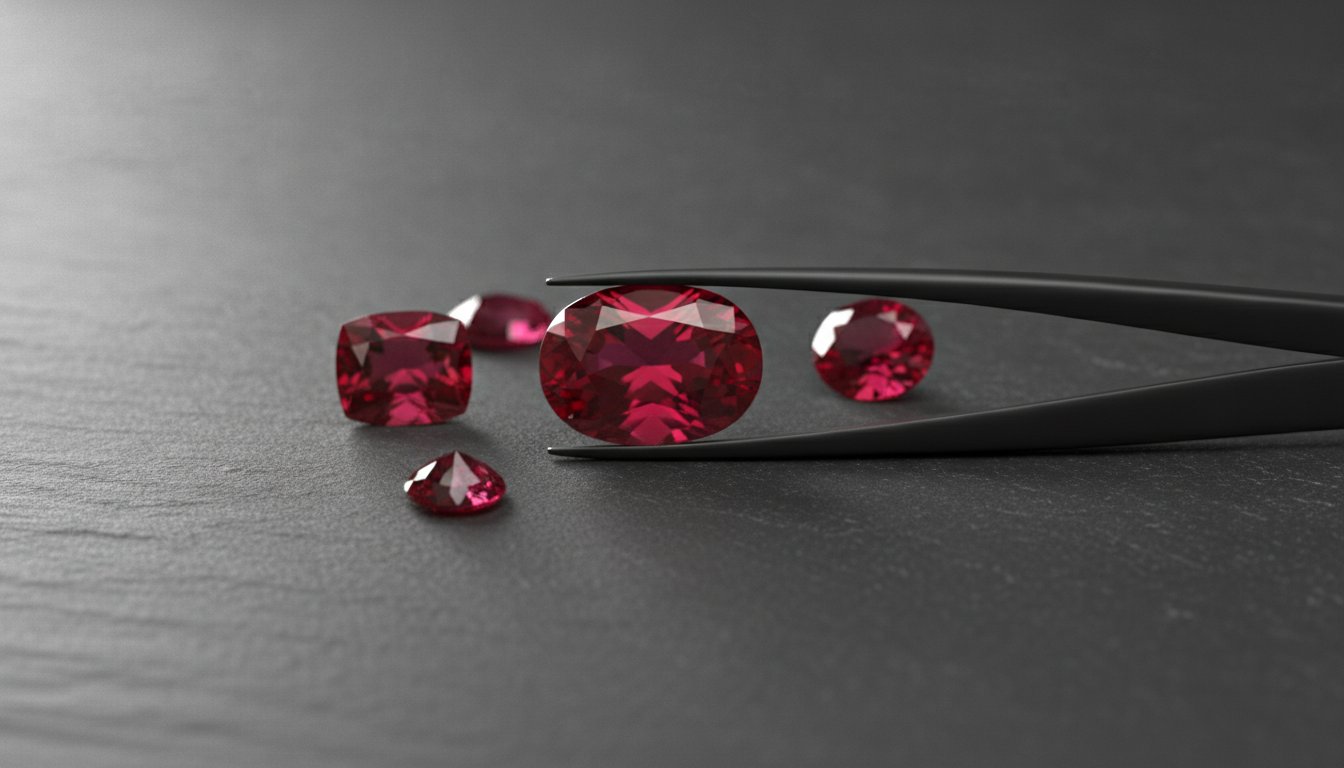
The rarest rubies don't just sit on the finger; they glow with an internal fire that seems to defy the physics of light. While most buyers focus purely on carat weight, the true connoisseur knows that the silhouette of the stone dictates its soul. You might be asking yourself, what is the best shape in ruby gemstones the best for a ruby ring to ensure that sought-after "pigeon blood" intensity? It's a valid concern, as the wrong choice can leave a high-value stone looking dark or "extinguished" in the center. We recognize the confusion over why a standard round might cost significantly more than an elegant oval, or the fear that a pointed pear shape might chip during daily wear.
This guide will help you select a shape that maximizes color saturation while retaining the stone's long-term value. You'll learn how to identify cuts that make a ruby look larger for its carat weight and which settings offer the best protection for your investment. We'll walk through the technical trade-offs between brilliance and durability, ensuring you feel like an informed insider before you make your final selection. By understanding how light interacts with different facets, you can choose a gem that remains a vibrant legacy for generations.
Key Takeaways
- Distinguish between a ruby's silhouette and its facet arrangement to ensure you prioritize deep color saturation over mere geometry.
- Explore how the hexagonal tabular crystal habit of natural rubies makes ovals and cushions the premier choice for maximizing both carat weight and value.
- Evaluate the rarity of large round specimens to understand what is the best shape in ruby gemstones the best for a ruby ring when balancing visual impact with investment potential.
- Match your chosen gemstone to the ideal setting to provide the structural security needed for a lifetime of durability.
- Leverage the decades of expertise from founder Marc Sarosi to select stones that exhibit the rare "pigeon blood" intensity without compromising on clarity.
Understanding Ruby Shapes: More Than Just Aesthetics
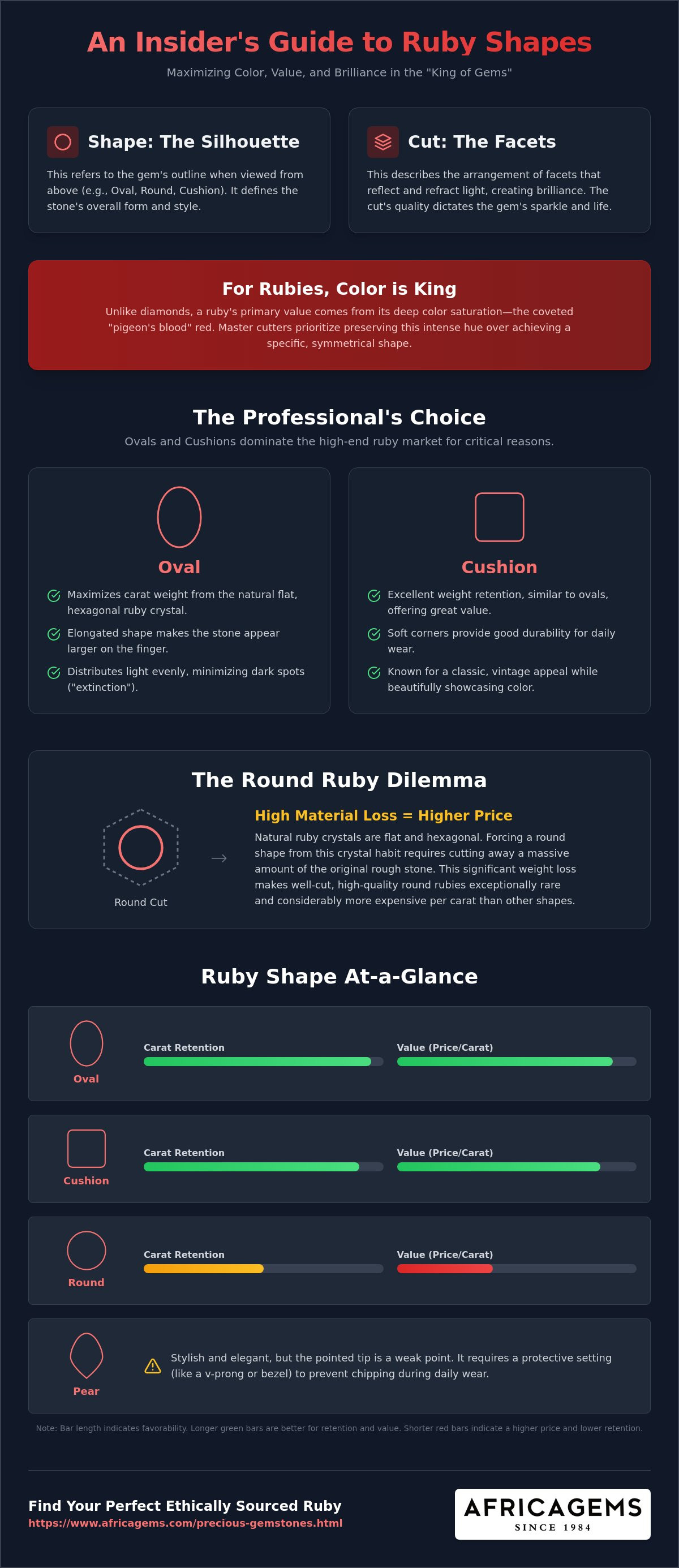
Selecting a ruby for a ring involves a sophisticated understanding of how light interacts with the stone's internal structure. Most buyers use the terms "shape" and "cut" interchangeably, but they represent two distinct elements of a gemstone's character. The shape refers to the stone's outward silhouette, such as an oval or a cushion. Conversely, the cut describes the specific arrangement of facets that determine how light travels through the material. For a comprehensive Ruby gemstone overview, we must look at how these technical choices impact the stone's primary value driver: its color.
In the world of high-end gems, color is the ultimate authority. While a diamond's value is often dictated by its clarity and the precision of its "Ideal Cut," a ruby's worth is largely defined by its hue and saturation. At AfricaGems, we prioritize this "color-first" philosophy when sourcing ethically mined Loose Mozambique Rubies. A master lapidary will often sacrifice perfect symmetry or a specific shape to preserve the most intense red possible. This approach prevents "windows," which are pale, washed-out areas where light leaks through the back of the gem instead of reflecting toward the viewer.
To better understand this concept, watch this helpful video:
The "King of Gems" and Light Performance
The legendary "inner glow" of a ruby isn't an accident; it's the result of light being trapped and reflected within the stone. Rubies possess a property called pleochroism, meaning they display different colors when viewed from different angles. One angle might show a purplish-red, while another reveals a more orange-red. Because rubies exhibit pleochroism, the lapidary must precisely orient the table facet to capture the most vivid red axis, ensuring the finished gem doesn't appear overly purple or orange. This careful alignment is what creates the iconic "pigeon blood" intensity that collectors crave.
Ruby vs. Diamond: Why Shapes Differ
It's a common mistake to apply diamond grading standards to rubies. When people ask what is the best shape in ruby gemstones the best for a ruby ring, they're often looking for the same mathematical perfection found in round brilliant diamonds. However, rubies rarely grow in large, clean crystals that allow for such symmetry without massive weight loss. Collectors prioritize "face-up" color and depth over a perfectly calibrated round shape. An elongated oval or a soft cushion often provides the best balance, allowing the stone to retain its rich color depth while appearing larger on the finger than a round stone of the same weight.
The Professional Choice: Why Ovals and Cushions Rule
Unlike diamonds, which often grow in octahedral shapes, rubies naturally form in what's known as a hexagonal tabular habit. This means the rough crystals are typically flat and six-sided. To force a round shape out of a flat, hexagonal crystal requires cutting away a massive amount of precious material. This is why, when collectors ask what is the best shape in ruby gemstones the best for a ruby ring, the professional answer almost always points toward ovals and cushions. These silhouettes honor the stone's original geometry, allowing the lapidary to retain maximum carat weight from the rough while showcasing the most intense color possible.
Beyond weight retention, these elongated shapes are technically superior at managing light. Round rubies often suffer from "extinction," where large portions of the stone appear black or dead because light isn't reflecting properly. According to GIA's guide to rubies, the way a stone is faceted can significantly mask or highlight these dark zones. Ovals and cushions distribute light more evenly across the table, ensuring that the "pigeon blood" red remains vibrant from every angle. This efficiency makes them a smarter value proposition, as you often get a more visually impressive stone for a better price-per-carat than a rare, high-quality round.
If you're looking for that perfect balance of shape and saturation, browsing our collection of Loose Mozambique Rubies can help you visualize these differences in person.
The Oval Ruby: The Modern Classic
Ovals have become the gold standard for ruby engagement rings for several practical reasons. Their elongated silhouette has a natural slenderizing effect on the wearer’s finger, creating an elegant, graceful look. More importantly, an oval ruby has a larger "face-up" size than a round stone of equal carat weight. You're effectively getting a stone that looks bigger without paying the premium for the extra carats. It's the ideal choice for those who want a classic aesthetic with a modern, flattering profile.
The Cushion Cut: For Maximum "Glow"
For those seeking a vintage aesthetic, the cushion cut offers a romantic blend of soft corners and deep brilliance. You can choose between "Antique" cushions with larger facets that produce broad flashes of light or "Modern" cushions that offer a more brilliant, shimmering effect. This shape is often the first choice for the rarest "Pigeon Blood" rubies because the deep pavilion of a cushion cut enhances color saturation by allowing light to travel further through the stone before returning to the eye. This extra travel time through the chromium-rich crystal deepens the red hue, giving the gem an unparalleled internal glow.
Round, Pear, and Marquise: Style vs. Rarity
Choosing a round ruby is a decision that moves beyond simple aesthetics and into the territory of extreme rarity. While many first-time buyers ask what is the best shape in ruby gemstones the best for a ruby ring, they're often surprised to learn that the classic round brilliant is the most difficult to source in significant sizes. Rarity dictates the price. Because the natural crystal habit of a ruby is hexagonal and tabular, forcing it into a round brilliant cut results in a staggering loss of rough material, often exceeding 60 percent. This waste makes a high-quality round ruby one of the most expensive investments in the colored stone market.
If you're determined to have a perfectly proportioned round center stone in a larger size without the natural rarity premium, Chatham Lab Created Gemstones offer a technically flawless alternative. These stones provide the iconic round look with "pigeon blood" color intensity that's exceptionally difficult to find in natural rounds over 2 carats. For those who insist on natural origins, understanding the trade-offs between style and rarity is essential for a confident purchase.
The Rarity of the Round Ruby
Finding a natural, high-quality round ruby over 2 carats is a feat of patience and significant capital. Most round rubies you'll encounter are smaller "melee" stones used as accents. Cutting a large round from a flat ruby crystal is so inefficient that most lapidaries won't even attempt it unless the rough stone is uniquely suited for the shape. As an investment tip, remember that a 1-carat round ruby often costs significantly more than a 1-carat oval of equal color and clarity. You're paying a premium for the material that was ground away to achieve that perfect circle.
Fancy Shapes: Hearts, Pears, and Marquise
Fancy shapes like pears and marquises offer a distinct advantage: they look much larger than they actually are. Their elongated points draw the eye along the length of the stone, maximizing "face-up" size. However, these shapes require careful inspection for the "bow-tie" effect, a dark band across the center where light fails to reflect. It's a common issue in elongated cuts that can dull the stone's fire if too prominent.
Heart shapes present their own challenges, particularly in finding a well-proportioned cleft that doesn't look like a simple triangle. While these artistic shapes create stunning, unique ring designs, they require extra care. The vulnerable points of a pear or marquise must be protected by specialized prongs or a bezel setting to prevent chipping. When considering what is the best shape in ruby gemstones the best for a ruby ring, these fancy shapes are excellent for those prioritizing a large visual impact and artistic flair, provided the setting is robust enough to secure the investment.
Practical Guidance: Matching Shape to Setting
Once you've determined what is the best shape in ruby gemstones the best for a ruby ring based on light return and rarity, the next critical step is ensuring that investment is physically secure. The architecture of your setting isn't just about style; it's the primary defense for your gemstone. A ruby's durability is high, sitting just below diamond on the Mohs scale, but its edges and points remain vulnerable to sharp impacts. You can explore a variety of protective and elegant designs by browsing the AfricaGems Shop Mountings collection.
The silhouette of your ruby dictates the mechanics of the mounting. For instance, a bezel setting provides the ultimate protection by encircling the entire perimeter of the ruby with a thin metal rim. This is an excellent choice for those with active lifestyles, as it guards the girdle of the stone against chips. If you prefer the brilliance of a prong setting, consider the "Halo" effect. Surrounding a ruby with a border of small diamonds can make a 1-carat oval appear like a 2-carat centerpiece while adding a structural buffer around the central gem's edges.
Securing the Points
Pears and marquise shapes require specialized "V-prongs" at their tips. These prongs wrap around the sharpest points of the stone to prevent chipping during daily wear. For round and oval rubies, a six-prong setting offers a significant security advantage over the standard four-prong style. If one prong fails in a four-prong setting, the stone is often lost; with six prongs, the gem remains safely in place. We also recommend a low-profile setting for high-activity wearers, as it keeps the stone closer to the finger and less likely to snag on clothing.
Color Enhancement Through Metal Choice
The metal you choose can dramatically alter the perception of the ruby's hue. Yellow gold prongs are a master's trick. The warm tones of the metal can mask slight orange or brown modifiers in the stone, making the ruby appear "redder" to the naked eye. Conversely, platinum or white gold creates a high-contrast, modern aesthetic that makes a vivid "pigeon blood" red pop against the cool, bright metal. For those who want a truly unique marriage of a specific shape and a perfectly matched setting, the AfricaGems Custom Jewelry design service allows you to create a legacy piece that balances security with breathtaking beauty.
Ready to find the perfect foundation for your gemstone? Explore our professional-grade ring mountings today to ensure your ruby stays secure for a lifetime.
Expert Recommendation: Finding Your Perfect Ruby Shape
In the final analysis, the pursuit of the perfect ruby is a journey of compromise and connoisseurship. While the market offers a variety of silhouettes, our recommendation remains steadfast: ovals and cushions represent the pinnacle of value and aesthetic brilliance. When you consider what is the best shape in ruby gemstones the best for a ruby ring, these two shapes consistently provide the deepest color saturation and the most impressive face-up size. This is particularly true for unheated stones, which command a 150-300% price premium as of 2026. Because unheated rough is so scarce, lapidaries will almost always choose an oval or cushion to preserve the weight and natural "pigeon blood" intensity that defines a world-class gem.
Treatment status also plays a role in your decision. About 95% of rubies are heat-treated, a standard practice that improves clarity and color. However, for those seeking the ultimate rarity, unheated stones offer a connection to the earth's raw power. Heat treatment allows for slightly more flexibility in cutting, but even the finest heated stones are best served by elongated shapes. If you're looking for the absolute pinnacle of the trade, we invite you to explore our guide on Loose Burma Rubies, which details why these stones remain the gold standard for collectors worldwide.
The AfricaGems Guarantee
Choosing a ruby is a significant investment that requires a partner you can trust. At AfricaGems, we move beyond the digital storefront to offer a personal consultation experience rooted in decades of expertise from our founder, Marc Sarosi. Our commitment to the integrity of the industry means we provide full disclosure and radical transparency for every stone we sell. We prioritize ethically sourced gems and provide rigorous technical validation, including certificates from top-tier labs like GIA or GRS, so you can feel like an informed insider rather than just a customer. We don't just sell stones; we curate legacies.
Next Steps for the Collector
Your next step is to explore the vibrant depths of our current inventory. You can browse our extensive collection of Loose Mozambique Rubies to see how different shapes influence color intensity in person. For a deeper education on gemstone quality, treatments, and market trends, visit the AfricaGems Blog. If you've already found your dream stone, contact our team for a custom quote to begin the process of creating a bespoke ruby ring that will serve as a legacy for generations. We're here to ensure your selection process is as brilliant as the gem itself.
Securing Your Legacy with the Perfect Ruby
Choosing a gemstone is more than a simple transaction; it's the beginning of a legacy that will be cherished for generations. We've explored how ovals and cushions maximize color intensity and why the rarity of round stones creates such a significant market premium. You now understand that what is the best shape in ruby gemstones the best for a ruby ring isn't just a matter of preference, but a strategic decision involving light performance and structural security. Since 1984, Marc Sarosi has led AfricaGems with a commitment to radical transparency. We provide full disclosure on all gemstone treatments and prioritize ethically sourced materials to ensure your absolute peace of mind.
Every stone in our vault is selected for its potential to become a cherished heirloom. Whether you're drawn to the classic glow of a cushion or the slender elegance of an oval, your choice should reflect both your personal style and an informed understanding of gemological value. We invite you to take the next step in your journey as a collector. Browse Our Exquisite Collection of Loose Mozambique Rubies today and discover the fiery brilliance that only a masterfully shaped gem can provide.
Frequently Asked Questions
What is the most popular shape for a ruby engagement ring?
Ovals are the most popular choice for ruby engagement rings. They offer a timeless silhouette that flatters the finger while allowing the lapidary to preserve the stone's natural color saturation. This shape provides a larger visual footprint than a round stone of the same weight, making it a sophisticated and practical selection for a lifetime of wear.
Does the shape of a ruby affect its price per carat?
Shape has a profound impact on the price per carat of a ruby. Round rubies are the most expensive because they require the most significant weight loss from the original rough crystal. Ovals and cushions are generally more affordable on a per-carat basis as they follow the natural hexagonal growth of the stone, allowing for better yield and value.
Which ruby shape makes the stone look the biggest?
Elongated shapes like the pear and marquise provide the largest visual surface area for their weight. These fancy cuts distribute their mass across a longer table, creating a "face-up" size that appears much larger than a round or cushion cut. They're an excellent choice for those who prioritize a bold, impressive presence on the hand.
Are round rubies more expensive than ovals?
Round rubies consistently command higher prices than ovals of equal quality. When considering what is the best shape in ruby gemstones the best for a ruby ring, rounds are often viewed as the ultimate luxury due to their extreme scarcity in sizes above one carat. The technical difficulty in cutting a round from flat rough material creates an inherent rarity premium that ovals simply don't carry.
What is the best setting to protect a pear-shaped ruby?
A V-prong or a full bezel setting is the premier choice for protecting a pear-shaped ruby. These settings specifically shield the vulnerable, pointed tip of the stone, which is the area most susceptible to chipping or snagging. A low-profile mounting also helps keep the stone secure by reducing its exposure to accidental impacts.
Can a poorly shaped ruby show inclusions more easily?
A poorly executed cut can certainly make internal inclusions more apparent. If a ruby is cut too shallow, it creates a "window" in the center where light passes straight through rather than reflecting back. This lack of light return makes the stone's internal characteristics much more visible to the naked eye, whereas a well-proportioned cut uses light to mask minor imperfections.
What is the "pigeon blood" ruby and what shape is best for it?
"Pigeon blood" refers to a vivid, pure red hue with a soft purple undertone, and it's best showcased in a cushion or oval cut. These shapes typically feature a deeper pavilion, which allows light to travel further through the chromium-rich crystal. This extra distance deepens the color perception, helping the gem achieve that legendary, high-intensity glow.
How do I know if a ruby shape is well-proportioned?
A well-proportioned ruby will exhibit even light return across its entire surface without significant dark spots or pale windows. You should look for symmetry in the outline and facets that reflect light consistently. In elongated shapes, ensure the "bow-tie" effect is minimal so the center of the stone remains as vibrant as the edges.

Article by
Marc Sarosi
Professional gemstone dealer for more than 40 years. Started off mining Aquamarine in Zambia, Africa and travelled throughout the continent in search of fine gems. Trusted authority on fine gemstones and have donated a fine collection of more than 27 extraordinary gemstones to the Smithsonian Institute Gem Hall for generations to see.