
Best Gemstone for Engagement Ring Besides Diamond: The 2026 Connoisseur’s Guide
Jun 2nd 2026
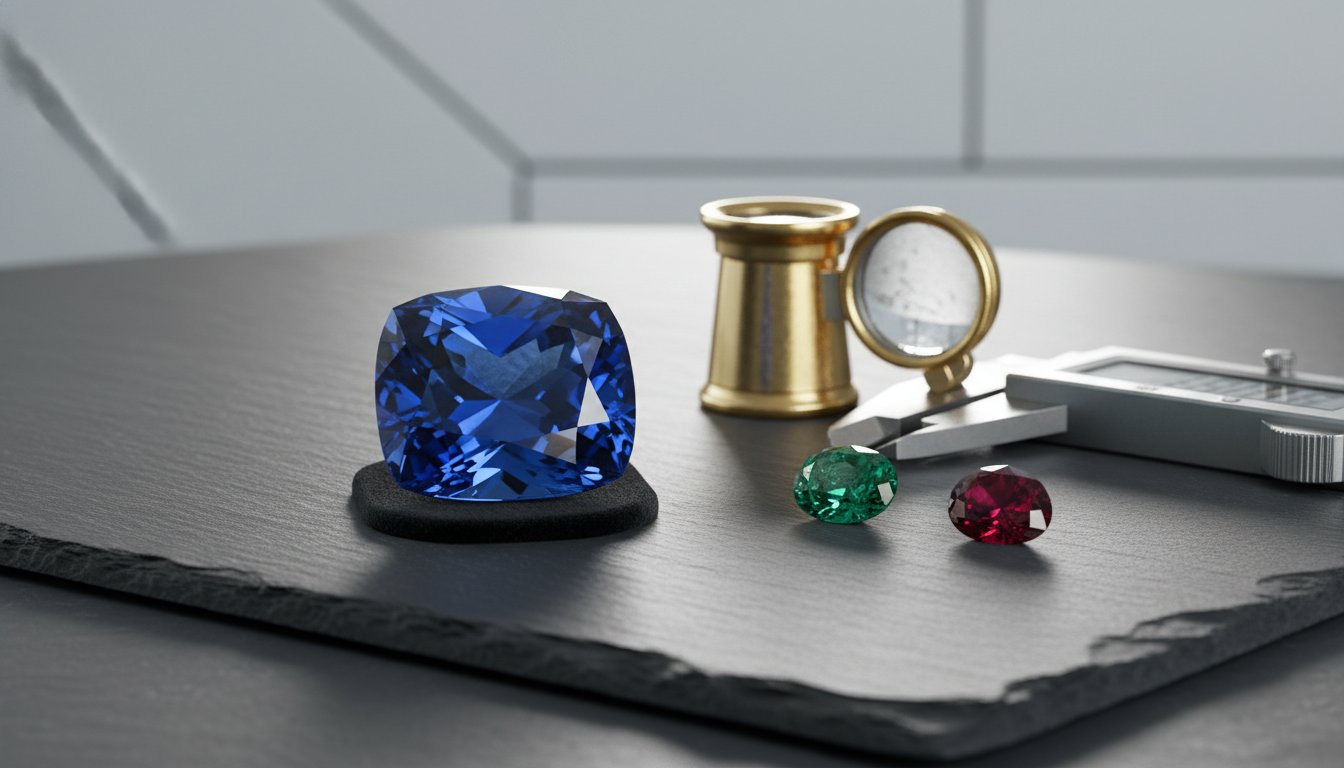
What if the most enduring symbol of your commitment isn't a diamond, but a rare, vivid sapphire that carries more historical weight and investment potential than any colorless stone? You likely worry that choosing a colored gem means sacrificing durability or ending up with a piece that dulls over time. It's a natural concern for a serious collector. Finding the best gemstone for engagement ring besides diamond requires more than just an eye for color; it demands an understanding of mineral hardness and the shifting 2026 market landscape.
This guide provides the technical validation you need to choose with confidence. We'll examine the 2026 GIA report overhaul and how expanded origin services are redefining value for stones like Colombian emeralds and peridot. You'll learn why the Mohs scale is your most important tool for daily wear and how to spot the "smart buys" that offer rarity without the "Big Three" price tag. By the end, you'll have the insider knowledge to select a center stone that tells a unique story while maintaining its brilliance for generations. We're moving beyond simple aesthetics to focus on the science of light performance and the integrity of your investment.
Key Takeaways
- Master the Mohs Scale of Hardness to identify which stones can withstand the rigors of daily activity without scratching or chipping.
- Discover why sapphires are the best gemstone for engagement ring besides diamond for those seeking a balance of structural integrity and aesthetic variety.
- Learn to evaluate the "Big Three" by understanding the premium placed on unheated rubies and the new 2026 GIA origin determination services.
- Uncover the allure of spinel and alexandrite as high-performance alternatives for the modern connoisseur.
- Rely on the Marc Sarosi Guarantee for a secure acquisition process backed by radical transparency and full treatment disclosure.
The "Daily Wear" Standard: Why Hardness is Non-Negotiable
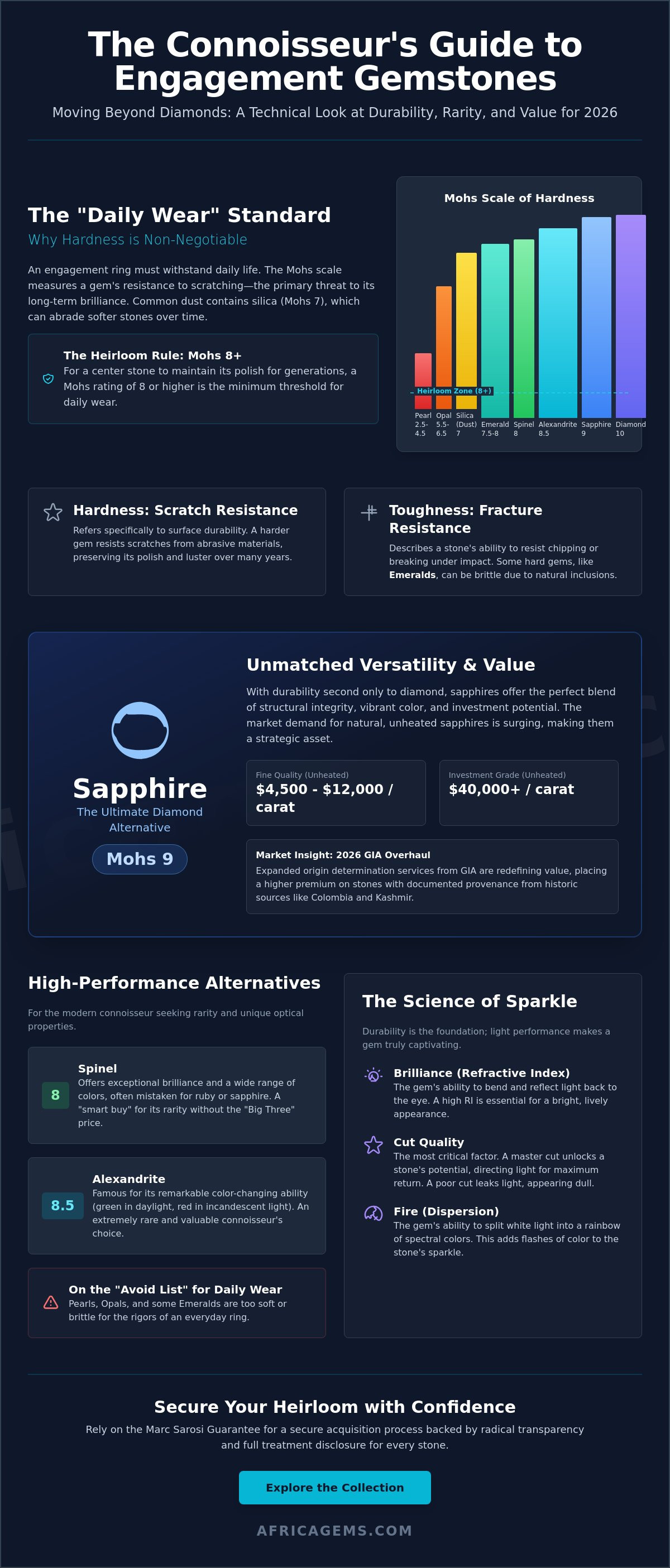
An engagement ring isn't just jewelry; it's a piece of high-performance equipment that must endure decades of friction, impact, and exposure. The Mohs Scale of Hardness measures a mineral's resistance to scratching, which is the primary threat to a stone's longevity. Diamonds sit at a 10, the absolute peak of this scale, setting the "Diamond Benchmark" for durability. When you're searching for the best gemstone for engagement ring besides diamond, you aren't just looking for a beautiful hue. You're looking for a material that can survive a lifetime of contact with hard surfaces without losing its polish.
Understanding Gemstone properties requires a clear distinction between hardness and toughness. Hardness refers specifically to surface scratch resistance. Toughness describes a stone's ability to resist fracturing or chipping under a direct blow. Even a diamond can chip if struck at a specific angle. This is why the "Avoid List" for engagement rings includes pearls, opals, and emeralds. Pearls and opals are far too soft for daily wear. While emeralds are relatively hard at 7.5 to 8, their natural internal inclusions make them brittle and prone to breakage under pressure.
To better understand how to select a stone that lasts, watch this helpful video:
The Mohs 8+ Rule for Heirlooms
Common household dust often contains microscopic particles of silica, which has a Mohs rating of 7. If you choose a stone below this threshold, simply wiping the dust off your ring can cause micro-abrasions that dull the surface over time. This is why a sapphire, with a rating of 9, maintains its mirror-like polish significantly better than a precious gemstone like morganite, which sits at 7.5 to 8. The Daily Wear Threshold for an heirloom-quality center stone is a Mohs rating of 8 or higher.
Light Performance: Beyond Just Color
While durability is the foundation, light performance is what makes a stone "pop" on the hand. The Refractive Index (RI) determines how much light a gem bends and reflects back to the viewer. A high RI is essential for brilliance. Cut quality acts as the engine for this performance; a poorly cut stone will leak light through the bottom, appearing dull regardless of its natural color. Finally, dispersion, or "fire," is the stone's ability to split white light into a rainbow of colors. This is the characteristic that allows certain alternatives to stand out as the best gemstone for engagement ring besides diamond.
Sapphires: The Ultimate Diamond Alternative for Versatility
Corundum is the gold standard for those who refuse to compromise on durability. With a Mohs rating of 9, sapphires are the most robust choice available after diamonds. They offer the structural integrity required for a ring intended to be worn every single day. In the 2026 market, natural blue sapphires have seen a significant surge in demand as collectors move away from the predictability of colorless stones. This shift is driven by a desire for a center stone that combines high-end luxury with a distinct personality. For the serious buyer, the "unheated" advantage is paramount. Untreated stones possess a natural saturation that hasn't been altered by man, ensuring they hold higher long-term value and heirloom status.
The 2026 price index reflects this rarity. Entry-level fine quality unheated sapphires currently range from $4,500 to $12,000 per carat, while investment-grade specimens can exceed $40,000 per carat. This makes the sapphire not just a beautiful choice, but a strategic asset. When evaluating these stones, referring to the GIA Gem Encyclopedia can provide the technical grounding needed to understand how trace elements create such a vast spectrum of color. It's this combination of resilience and rarity that secures the sapphire's position as the best gemstone for engagement ring besides diamond.
Blue Sapphires: From Cornflower to Royal
The allure of a blue sapphire lies in its "Big Three" shades. Cornflower blue offers a bright, medium-toned hue, while Royal blue provides a deep, velvety saturation that feels regal. Velvet blue remains the most sought-after by connoisseurs for its internal glow. Origin plays a critical role in valuation; stones from Ceylon (Sri Lanka) and Madagascar are prized for their exceptional clarity and life. If you are browsing loose blue sapphires online, look for high-resolution videos that show the stone's performance in natural light to ensure there are no "extinction" zones where the color looks black.
Fancy Color Sapphires: Pink, Yellow, and Padparadscha
Beyond blue, the corundum family offers a kaleidoscope of "fancy" colors. Pink sapphires are a brilliant, more durable alternative to morganite, offering a vivid "pop" that softer stones cannot match. Yellow sapphires capture the warmth of a canary diamond at a significantly more accessible price point. However, the Padparadscha remains the pinnacle of the collection. This rare, lotus-colored gem features a delicate marriage of pink and orange. It's one of the world's rarest treasures and a favorite for those seeking a truly unique story. If you're ready to explore these vibrant possibilities, you might consider viewing a curated collection of untreated sapphires to find your perfect match.
The "Big Three" & Beyond: Rubies, Emeralds, and Spinels
While sapphires offer unmatched versatility, the other members of the "Big Three" provide a level of prestige that few other materials can match. For many, a ruby or emerald represents the pinnacle of a storied collection. However, when you're selecting the best gemstone for engagement ring besides diamond, you must weigh this prestige against the physical realities of the stone. Rubies share the robust Mohs 9 rating of the sapphire, but emeralds present a different set of challenges. To round out the options for a modern connoisseur, we must also look at spinel, a stone that has long been the "insider's secret" for those who prioritize both light performance and longevity.
Rubies: The Durability of Sapphire with the Passion of Red
Rubies are the red variety of corundum, meaning they possess the same exceptional scratch resistance as sapphires. In 2026, loose burma rubies remain the most coveted specimens in the world. An unheated Burmese ruby can command three times the price of a heated stone, with entry-level fine quality starting between $10,000 and $25,000 per carat. The most prized hue is "Pigeon Blood" red, a vivid, slightly fluorescent shade that seems to glow from within. When purchasing, always demand full transparency regarding heat treatments. Natural, unheated rubies are true investment-grade assets that will endure the friction of daily wear without losing their luster.
The Emerald Dilemma: Beauty vs. Practicality
Emeralds are undeniably stunning, but they are classified as "Type III" stones. This means they are almost always naturally included with "jardin," or internal fractures. While these inclusions give emeralds their character, they also make the stone brittle. For a high-impact piece like an engagement ring, this is a risk. In 2026, a "no-oil" emerald is the gold standard, often costing double the price of a stone with minor oil treatment. If you choose an emerald, consider a protective bezel setting rather than exposed prongs. For those who want the lush green of an emerald with better durability, tsavorite garnets are a brilliant alternative. They are rarer than emeralds but offer superior brilliance and a higher resistance to chipping.
Spinel: The Modern Heirloom Choice
Spinel is perhaps the most underrated stone in the world of fine jewelry. With a Mohs rating of 8, it's exceptionally durable and perfectly suited for an engagement ring. Unlike many other stones, spinel is singly refractive. This technical property allows it to handle light much like a diamond, resulting in a "glow" that remains visible even in low-light environments. From the electric "Jedi Red" to deep cobalt blues, loose spinel gemstones offer a sophisticated alternative for those seeking a unique story. It's a "smart buy" in 2026, offering rarity and light performance that often exceeds the more famous "Big Three" at a more accessible investment point.
Rare Alternatives for the Connoisseur: Alexandrite and Tanzanite
Beyond the traditional spectrum of the "Big Three" lies a tier of stones reserved for the true collector. These gems offer optical phenomena and geological scarcity that challenge the dominance of the diamond. For many, the best gemstone for engagement ring besides diamond is one that possesses a story as unique as the bond it represents. However, when moving into the territory of rare gemstones, a buyer must balance the allure of scarcity with the practical requirements of daily wear. Alexandrite and tanzanite represent two ends of this spectrum: one offers extreme durability with a magical color shift, while the other provides a single-source rarity that requires a more disciplined approach to care.
Alexandrite: The Ultimate Conversation Piece
Alexandrite is a variety of chrysoberyl that famously displays an "emerald by day, ruby by night" effect. This phenomenon is caused by the presence of chromium in the crystal lattice, which absorbs light in a way that shifts the stone's appearance from a cool teal-green in daylight to a warm purplish-red under incandescent light. It's a remarkably durable choice for a center stone, boasting a Mohs rating of 8.5. This hardness ensures it can withstand the friction of daily activity without losing its mirror-like polish.
In the 2026 market, natural alexandrite remains one of the most expensive materials on earth. High-quality green specimens can range from $10,000 to $50,000 per carat, while grey-toned stones trade between $3,000 and $20,000 per carat. For those who desire this sophisticated color-change effect without the five-figure investment, Chatham Lab-Grown Alexandrite offers the same physical and optical properties at a fraction of the cost. It's a strategic way to secure a durable, conversation-starting gem that fits a modern budget.
Tanzanite: A Single-Source Miracle
Tanzanite is often described as a "single-source miracle" because it's found only in a small area near Mount Kilimanjaro. This geological exclusivity makes tanzanite approximately 1,000 times rarer than a diamond. Its vivid blue-violet hue is unlike any other gem, but it comes with a technical catch. With a Mohs rating of 6.5 to 7, tanzanite is softer than the stones we've previously discussed. It's often referred to as an "evening wear" stone because it's more prone to scratching and cleavage if struck against a hard surface.
If you choose tanzanite as the best gemstone for engagement ring besides diamond, you must prioritize a protective setting. A bezel mounting or a halo design can shield the stone's edges from impact. 2026 prices for investment-grade tanzanite (the top 1% of production) range from $600 to $1,500 per carat, making it a high-value acquisition for those who are willing to commit to extra care. To ensure you're getting the depth of color and clarity required for an heirloom, you can browse our certified tanzanite inventory to see the range of saturation available.
Sourcing Your Centerstone: The AfricaGems Advantage
Acquiring the best gemstone for engagement ring besides diamond is a decision that extends beyond the visual. It's a commitment to a piece of history and a significant financial allocation. At AfricaGems, we recognize that the digital marketplace requires more than just high-resolution imagery; it demands a foundation of absolute trust. The Marc Sarosi Guarantee is our signature of accountability, ensuring that every stone in our inventory has been personally vetted for quality and integrity. This personal oversight transforms a simple transaction into a professional consultation, positioning you as an informed insider in the world of rare materials.
Our commitment to radical transparency is a core pillar of our communication. We provide full disclosure on all product enhancements and treatments, a practice that has distinguished us since 1984. With the 2026 GIA colored stone report overhaul now in effect, we ensure all our premium stones come with the latest certification, including expanded origin determination. This rigorous technical validation ensures that when you invest in a precious gemstone, you're receiving an asset with verified provenance and value. Every stone we sell is ethically sourced, ensuring a conflict-free supply chain that respects both the earth and the communities that bring these treasures to light.
Why Buying Loose is Smarter Than Pre-Set
Purchasing a loose stone is the only way to truly verify the technical specifications of your center stone. Pre-set jewelry can often mask "hidden flaws" like chips near the girdle or inclusions tucked under prongs. By choosing a loose specimen, you have the opportunity to inspect the stone’s 360-degree clarity and cut performance. Learning how to buy gemstones online with security allows you to control the quality of the most important component of your ring before it's permanently set. This approach ensures that the best gemstone for engagement ring besides diamond is exactly what it's claimed to be, without the interference of a mounting.
Crafting Your Bespoke Engagement Ring
Once you've secured your ideal stone, our custom jewelry design services allow you to translate that beauty into a wearable masterpiece. Collaborating directly with our team ensures that the setting is engineered to protect and enhance your specific gem. Whether you're matching a royal blue sapphire with platinum or a peach sapphire with 18k rose gold, we prioritize structural integrity. Each piece undergoes a final inspection to ensure your heirloom is built to last for generations, mirroring the endurance of the bond it commemorates. We don't just sell stones; we help you curate a legacy.
Securing Your Legacy with a Connoisseur-Grade Center Stone
Selecting the best gemstone for engagement ring besides diamond is a journey that balances technical resilience with individual expression. You now understand that prioritizing a Mohs rating of 8 or higher is the only way to ensure your ring survives the friction of daily life. Whether you're drawn to the velvety depth of an unheated sapphire or the color-shifting magic of alexandrite, the value of your acquisition rests on radical transparency. For those seeking inspiration for the perfect setting, Javda Jewelry provides a wide array of engagement ring styles that highlight the unique character of these stones. AfricaGems upholds this standard through founder Marc Sarosi’s personal guarantee on every stone and our A+ Rating with the Better Business Bureau.
We provide full disclosure on all gemstone treatments, ensuring you feel like an informed insider rather than just a buyer. Your engagement ring should be more than a simple purchase; it's a durable masterpiece that tells your story with integrity. By focusing on "no-heat" and "no-oil" specimens, you're securing an asset that maintains its brilliance for generations. Explore our curated collection of Loose Blue Sapphires for your engagement ring and begin your custom design journey today. Your perfect center stone is waiting to be discovered.
Frequently Asked Questions
Is a sapphire as durable as a diamond for an engagement ring?
While not as hard as a diamond, a sapphire is the most durable colored gemstone available for daily wear. It ranks 9 on the Mohs scale, just below the diamond's 10, making it highly resistant to scratching from daily contact with hard surfaces. It's the gold standard for those seeking longevity and structural integrity in a colored center stone that will endure for decades.
Which gemstone has the most sparkle besides diamond?
Zircon and certain colors of spinel offer the highest level of brilliance and fire among natural alternatives. Zircon possesses high dispersion, which splits light into rainbow colors much like a diamond. Spinel's single refraction creates a bright, crisp glow that remains visible even in low-light environments. Both stones are excellent choices for those who prioritize a lively, sparkling appearance on the hand.
What is the most affordable diamond alternative that still looks expensive?
White zircon is the most cost-effective natural alternative that maintains a luxurious, diamond-like appearance. This stone provides a clean, colorless look with high dispersion, mimicking the fire of a diamond at a fraction of the investment. It is a natural material that offers genuine heirloom quality and high brilliance. Choosing a high-quality zircon allows you to achieve a sophisticated look while remaining within a practical budget.
Can I wear an emerald engagement ring every day?
You can wear an emerald daily, but it requires significantly more caution than a sapphire or ruby. Emeralds are Type III stones with natural internal inclusions that can make them brittle. To protect your investment, we recommend using a protective bezel setting and removing the ring during physical activities or housework. This disciplined approach ensures the stone remains free of chips and fractures over time.
What is the rarest gemstone for an engagement ring?
Padparadscha sapphire and natural alexandrite are the rarest options for a sophisticated engagement ring. Padparadscha sapphires are found in very few locations and possess a delicate pink-orange hue that mimics a tropical sunset. Alexandrite is prized for its dramatic color-change phenomenon, making it a truly unique choice for the best gemstone for engagement ring besides diamond. These stones are highly sought after by collectors for their limited supply.
How much should I spend on a gemstone engagement ring compared to a diamond?
Most high-quality colored gemstones allow you to acquire a larger or higher-clarity stone for the same budget as a smaller diamond. While investment-grade rubies are costly, selecting a sapphire or spinel provides a larger center stone for the same investment. This flexibility makes colored gems the best gemstone for engagement ring besides diamond for couples seeking maximum visual impact. You can prioritize color saturation and clarity without the extreme price premiums seen in the diamond market.
Are lab-created gemstones "real" gemstones?
Yes, lab-created stones like Chatham gemstones are chemically, physically, and optically identical to their natural counterparts. They are "real" in every technical sense, grown in controlled environments to mimic the earth's natural processes over time. They offer a high-clarity, ethically sourced option for those who want the look of a rare gem at a more accessible price point without compromising on beauty or durability. Similarly, for those who appreciate the classic appeal of a diamond but prefer a modern alternative, 18k gold lab diamond rings provide the perfect balance of luxury and sustainability.
What is the best green gemstone for an engagement ring if I want durability?
Tsavorite garnet is the premier choice for a durable green center stone. It is harder and more brilliant than an emerald, with a Mohs rating of 7 to 7.5 and no significant cleavage planes. This makes it much more resistant to chipping during daily wear. It offers a vivid, lush green hue that remains stable and bright, making it a perfect modern heirloom for active individuals.