
Are Mozambique Rubies Good Quality? A Complete Guide
Jun 29th 2026
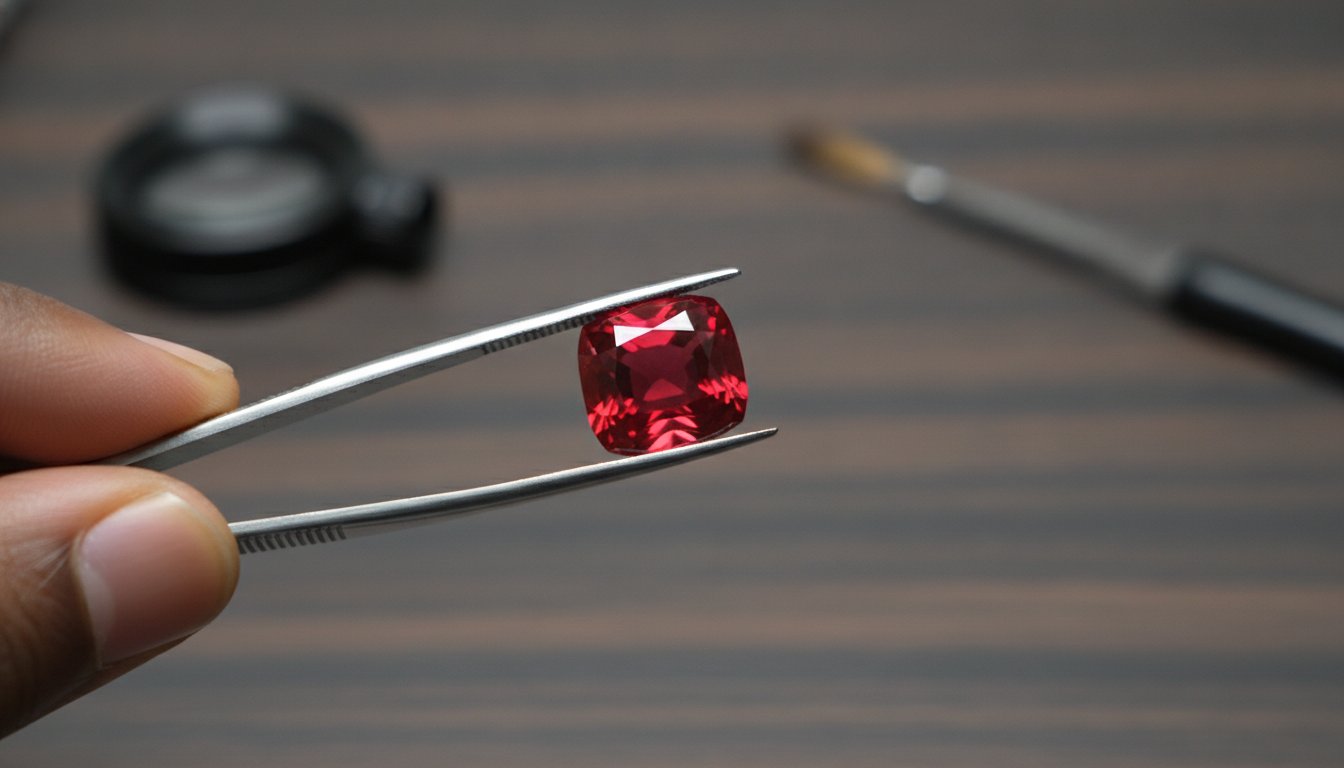
Mozambique rubies aren't just a secondary option for those priced out of the Burmese market; they've evolved into the definitive benchmark for the modern gemstone connoisseur. If you've been wondering are mozambique rubies good quality, the answer lies in their exceptional crystalline transparency and vivid saturation that often surpasses traditional sources. While the legendary mines of Myanmar once held a monopoly on prestige, the deposits discovered near Montepuez in 2009 have fundamentally shifted the global landscape. Today, these gems represent the pinnacle of ethical luxury and geological brilliance.
It's natural to feel hesitant when weighing origin premiums or worrying about whether a stone has been heavily treated. With approximately 95% of the world's rubies undergoing heat treatment, you deserve absolute certainty when investing in such a significant asset. This guide will help you discover why Mozambique rubies have become the gold standard for modern collectors, offering exceptional color, clarity, and value that rivals the world's rarest mines. We'll explore the specific characteristics of "Pigeon Blood" specimens, provide a framework for evaluating unheated stones, and give you the technical confidence to select a high-value loose ruby with complete transparency.
Key Takeaways
- Discover why are mozambique rubies good quality and how their exceptional transparency and intense red hues have established them as the modern gold standard.
- Learn the technical differences between mid-iron Mozambique stones and low-iron Burmese rubies, including how they maintain a "true red" brilliance in any lighting environment.
- Understand the clarity advantage of these gems, which frequently meet VS and VVS standards that are rarely found in traditional mining regions.
- Gain confidence in your investment by learning to navigate the nuances of unheated versus heated specimens through a lens of radical transparency.
- Identify the specific criteria and reputable lab reports, such as GIA or GRS, necessary to ensure you are acquiring a museum-grade loose stone.
The Rise of Mozambique Rubies: Defining Modern Quality
The discovery of the Montepuez deposit in 2009 fundamentally altered the trajectory of the gemstone industry. Before this pivotal moment, the market for top-tier rubies was dominated by legacy sources that were often plagued by supply instability or extreme pricing. When the red earth of Mozambique's Cabo Delgado province began yielding stones of unprecedented clarity and color, collectors and dealers alike had to recalibrate their standards. If you are investigating whether are mozambique rubies good quality, you'll find that these gems have quickly become the modern benchmark for excellence, offering a combination of size and transparency that was previously thought impossible for a natural ruby.
Unlike many older deposits that produced heavily included material, Mozambique produces stones with significantly fewer eye-visible inclusions. This geological advantage allows for a higher yield of "clean" gems that don't rely on heavy treatments to achieve beauty. Mozambique ruby quality is defined by a singular, harmonious balance between deep color saturation and a rare, liquid-like crystal transparency that allows light to travel through the stone with minimal interruption. To gain a deeper understanding of these stones, it's helpful to review foundational Ruby gemstone information regarding their mineral composition and global distribution.
To better understand this concept of extreme fine quality, watch this helpful video:
The Montepuez Factor: Why Origin Matters
The significance of the Cabo Delgado province cannot be overstated. It's currently the world's most productive source for gem-quality rubies, providing a level of consistency that allows for the creation of perfectly matched pairs and calibrated suites for high-end jewelry. While traditional East African rubies often suffered from a "sleepy" or opaque appearance, the Montepuez material is remarkably crystalline. This clarity is why many professional buyers now look to Mozambique when they require a stone that displays a vivid, open color without the distracting "silk" or veining common in other regions.
While these gems are found deep within the earth, the surface of the continent offers its own treasures; those who appreciate the raw beauty of such regions might also wish to discover MINT Adventures and their expert-led 4x4 expeditions through exotic landscapes.
The "Pigeon Blood" Designation in Mozambique
There's a common misconception that "Pigeon Blood" status is reserved only for Burmese stones. In reality, major global laboratories like the GIA and GRS frequently award this prestigious designation to Mozambique rubies that meet strict color and fluorescence criteria. The Mozambique red is distinct; it's a pure, vivid hue that avoids the overly pinkish tones of Vietnamese material or the dark, purplish-red common in Madagascar. This is largely due to the high chromium content in the soil, which provides that signature glowing red that remains vibrant even in low-light conditions. When browsing precious gemstones for a long-term investment, these unheated, Pigeon Blood certified Mozambique rubies represent some of the most secure assets in the current market.
Mozambique vs. Burma Rubies: A Comparative Analysis
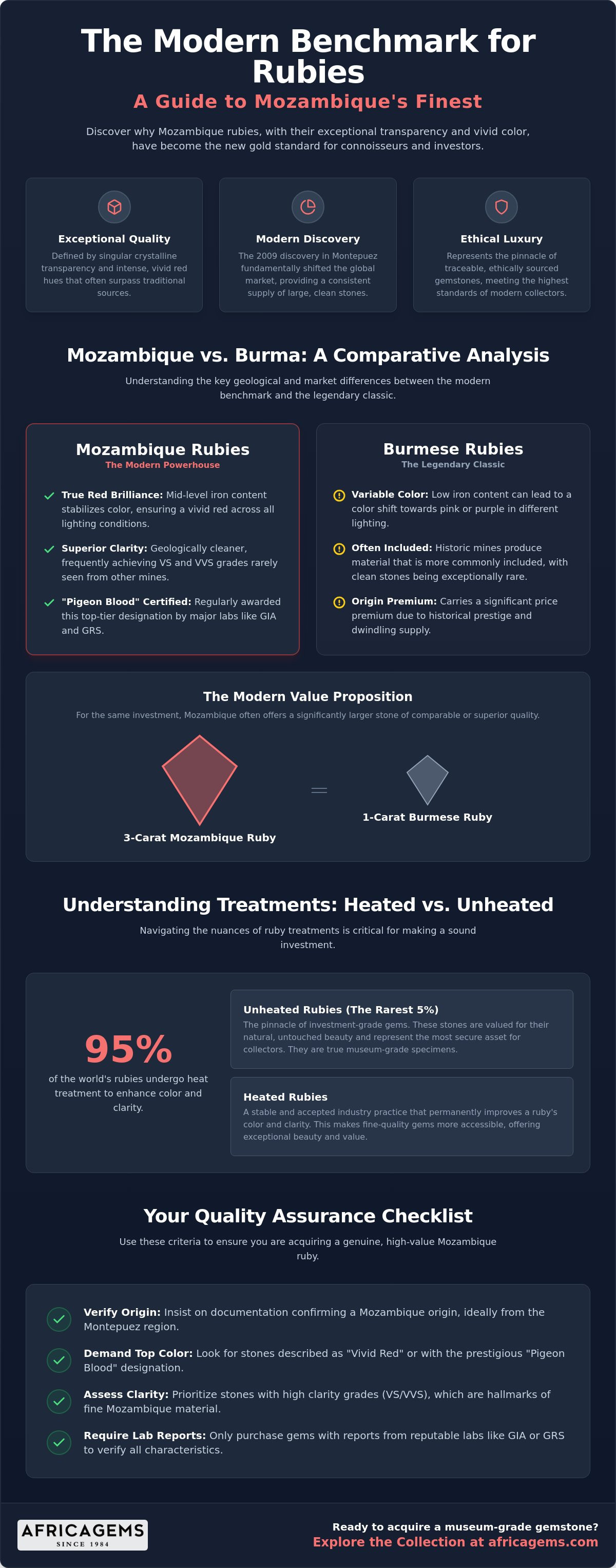
For decades, the Mogok Valley of Myanmar was the undisputed source of the world's most coveted rubies. However, as supply from these historic mines has dwindled, collectors are asking: are mozambique rubies good quality compared to the legendary "Burma" stones? The answer lies in the subtle chemistry of the gemstones, specifically their iron content. Burmese rubies are typically low in iron, while Mozambique rubies possess a mid-level iron content. This chemical signature acts as a stabilizer, ensuring the stone retains its deep red hue across varied lighting environments without shifting toward the pink or purple spectrum.
The value proposition is perhaps the most compelling factor for modern buyers. Due to the "origin premium" still attached to Myanmar, a collector can often acquire a stunning 3-carat Mozambique ruby for the same investment required for a 1-carat Burmese stone of comparable grade. This disparity isn't a reflection of beauty, but rather a result of historical legacy. A comprehensive Gemological Institute of America review highlights how Mozambique material has successfully bridged the gap between rarity and accessibility. To understand the historical context of these legacy stones, you can explore our Loose Burma Rubies guide.
Fluorescence and the "Glow" Factor
Low iron content in Burmese rubies allows them to fluoresce with high intensity under UV light, creating a signature "glow." Mozambique rubies, with their mid-iron composition, offer a different optical advantage. The iron acts as a buffer for the color, preventing the stone from looking "washed out" in bright sunlight or overly fluorescent. Instead, they provide incredible "fire" and color stability. This means a Mozambique ruby often looks better in the warm, incandescent light of an evening gala, where a Burmese stone might lose some of its visual punch. If you're seeking the perfect balance of size and visual impact, our selection of loose Mozambique rubies provides a path to high-carat elegance.
Clarity and Carat Weights
In terms of transparency, Mozambique rubies are significantly more likely to be "eye-clean" than their Burmese counterparts. The geological conditions in the Montepuez region favored the growth of crystals with fewer internal fractures and mineral inclusions. While a 2-carat Burmese ruby is considered a major find, Mozambique regularly yields high-quality specimens exceeding 5 carats. Collectors who prioritize crystal transparency and "vividness" over historical pedigree find that Mozambique rubies are world-class assets. When you evaluate if are mozambique rubies good quality, the presence of these large, VVS-grade specimens provides definitive proof of their premier standing in the gemstone world.
Technical Quality Factors: Color, Clarity, and Cut
Evaluating the technical merits of a gemstone requires looking beyond the initial sparkle. When assessing are mozambique rubies good quality, we must scrutinize the interplay between color saturation and light performance. While color is the primary driver of value, the technical execution of the cut and the purity of the crystal determine whether a stone truly sings. The robust, tabular crystal structure of Mozambique rubies provides gem cutters with the necessary depth to execute high-yield, high-brilliance cuts that maximize light return and minimize color zoning. This structural integrity allows for specimens that exhibit far more "life" than the often-fragmented stones found in older deposits.
In the world of red gems, the cut's primary job is to manage light return while avoiding two common pitfalls: windows and extinction. A "window" occurs when the stone is cut too shallow, causing light to pass straight through rather than reflecting back to the eye. Conversely, "extinction" happens when areas of the ruby appear black because the cut is too deep or the saturation is too high. Mozambique material, with its consistent crystal habit, allows master cutters to achieve a precision that minimizes these issues, ensuring the stone remains vibrant from every angle.
The Spectrum of Mozambique Red
The color of a Mozambique ruby ranges from a bright, "open" red to a dense, deep crimson. While "Pigeon Blood" remains the pinnacle, you must be wary of over-saturated stones that cross the line into "Dark Red." These specimens can appear muddy or black in low light. The most desirable stones are those with a "Pure Red" hue, free from secondary orange or purple modifiers. Because of the mid-level iron content inherent in this region, these rubies maintain their color profile with remarkable stability, avoiding the "fluorescence washout" that can affect low-iron stones in bright environments.
Inclusion Profiles: What to Expect
While traditional rubies are often expected to have significant "silk" or rutile needles, Mozambique material is prized for its superior clarity. It's common to find stones that meet VS (Very Slightly Included) or even VVS (Very Very Slightly Included) standards. Typical internal features include small negative crystals, delicate feathers, or isolated needles. These inclusions are often so minimal that they don't impede the stone's brilliance. High clarity is essential for the durability and visual impact of gemstone rings, where the stone is viewed closely and subjected to daily light exposure. Choosing a high-clarity Mozambique ruby ensures that the "life" of the stone remains the focal point of your jewelry.
Treatments and Investment Value: Unheated vs. Heated
Transparency is the cornerstone of any high-value gemstone transaction. When asking are mozambique rubies good quality, you must also ask how they've been enhanced. At AfricaGems, we practice radical transparency, ensuring every client understands the exact nature of their stone. While the vast majority of rubies in the global market are heated, the distinction between stable heat and invasive treatments is critical for long-term value. A high-quality Mozambique ruby should stand on its own merits, with its value clearly defined by its treatment status.
The "Heat Only" standard is widely accepted by the world's most prestigious gemological laboratories. This process involves heating the stone to improve clarity and color, resulting in a stable, permanent enhancement that doesn't compromise the ruby's durability. However, we draw a hard line at lead-glass filling or composite treatments. These materials are essentially non-genuine gems that lack the physical properties and value retention of a natural ruby. We simply don't sell them. Our commitment to integrity means we only offer stones that meet the highest standards of the professional trade.
For the serious collector, the unheated Mozambique ruby remains the ultimate prize. These rare specimens possess "Pigeon Blood" intensity and exceptional clarity without any human intervention. In 2026, the premium for unheated stones has reached record highs, with collectors often paying a 100% to 300% premium for "no heat" certification. This scarcity makes them a robust hard asset. When you invest in an unheated stone, you're securing a piece of geological history that requires no apology or explanation.
Understanding Heat Treatment in Mozambique
Low-temperature heat treatment is a sophisticated technique often used on Mozambique material to dissolve minor inclusions and sharpen the red hue. It's a testament to the stone's inherent quality that such minimal intervention can produce museum-grade results. Approximately 95% of the world's rubies are heated. For most buyers, a heated Mozambique ruby offers the best balance of visual perfection and price, provided the treatment is disclosed and the stone is stable.
Market Trends and Future Appreciation
Since the discovery of the Montepuez deposit around 2009, Mozambique rubies have seen meteoric price growth. They're no longer viewed as alternatives to Burma; they're now the primary source for major auction houses like Sotheby’s and Christie’s. The liquidity of stones in the 2 to 5 carat range is particularly strong, as these sizes are highly sought after for bespoke jewelry and private collections. If you're ready to secure a legacy-grade stone, we invite you to browse our curated collection of loose Mozambique rubies today.
How to Buy Quality Mozambique Rubies: The AfricaGems Standard
Acquiring a high-value gemstone online requires more than just a sharp eye for photography; it requires a mentor you can trust. When you ask are mozambique rubies good quality, you're really asking if the specific stone you're viewing meets a world-class standard of excellence. At AfricaGems, we operate on the Marc Sarosi Selection principle, which is a rigorous vetting process where we reject approximately 90% of the stones we are offered. We only curate specimens that exhibit superior brilliance, color purity, and crystal integrity. This uncompromising approach ensures that every stone in our inventory is a specimen we'd be proud to include in a private legacy collection.
Beyond the physical beauty of the stone, we prioritize the integrity of the entire supply chain. Our Mozambique material is sourced through established mining partnerships in the Montepuez region that emphasize social responsibility and ethical transparency. This commitment to "Clean Rubies" ensures that your investment supports sustainable development and fair labor practices. Once you've selected a premier loose stone, you can explore our shop mountings to pair your ruby with a handcrafted setting, creating a bespoke piece of jewelry that reflects your personal style and values.
Deciphering the Lab Report
A reputable lab report from the GIA, GRS, or AGL is non-negotiable for a significant ruby purchase. You should look closely at the "Origin" and "Comments" sections of these documents. In heated stones, labs often note the presence of "minor residue" from the heating process. We prioritize stones with "no residue" or, ideally, "no enhancement" certifications. These technical distinctions are the difference between a commercial-grade stone and a museum-quality asset. Understanding these nuances helps you buy with the confidence of an industry insider, ensuring you're paying for true geological rarity rather than clever laboratory work.
The AfricaGems Guarantee
We back our selection with a 30-day money-back guarantee, providing the security you need when making a high-end purchase. We believe you should have the opportunity to appreciate the stone's "fire" and color saturation in your own environment before making a final commitment. For those considering significant investments, Marc Sarosi offers personal consultations to guide you through the technical specifications of our current loose ruby inventory. This direct accountability transforms a digital transaction into a personal consultation, ensuring you find a Mozambique ruby that meets the highest standards of quality and value.
Secure Your Piece of Geological History
The evidence is clear: Mozambique rubies have rightfully claimed their place at the pinnacle of the gemstone world. By offering a unique chemical composition that ensures color stability and exceptional crystal transparency, these gems provide a level of visual performance that was once reserved for the world's most elite collections. When you consider if are mozambique rubies good quality, remember that these stones aren't just alternatives; they're the modern standard for brilliance and ethical integrity. You're choosing a gem that balances historical allure with contemporary transparency.
This commitment to excellence is shared by other sectors of the African luxury market. To explore how industry leaders are collaborating to elevate regional standards, check out Africa Luxury Hospitality Network (ALHN).
At AfricaGems, we bring over 40 years of expertise through our founder, Marc Sarosi, to help you select only the most exceptional specimens. Every high-value ruby in our inventory is 100% natural, ethically sourced, and accompanied by a prestigious GIA or AGL certificate for your absolute security. Whether you're a seasoned collector or a first-time buyer, you can invest with the confidence of an industry insider. We invite you to explore stones that have been vetted for their "life," fire, and long-term investment potential.
View Our Hand-Selected Collection of Loose Mozambique Rubies and discover a stone that will serve as a radiant legacy for generations to come.
Frequently Asked Questions
Are Mozambique rubies real rubies?
Yes, Mozambique rubies are genuine, natural corundum. They share the same chemical, physical, and optical properties as rubies from any other global deposit. These gems are characterized by their high chromium content, which gives them their iconic red brilliance and confirms their status as a premium natural gemstone.
Do Mozambique rubies hold their value as an investment?
Mozambique rubies have shown exceptional value retention and growth, particularly unheated specimens. When collectors ask are mozambique rubies good quality for investment, they look to the record-breaking auction results at major houses like Sotheby's. These stones are now considered a stable hard asset with a liquidity that rivals traditional Burmese sources.
Is "Pigeon Blood" possible in Mozambique rubies?
Yes, the "Pigeon Blood" designation is frequently awarded to the finest Mozambique rubies by premier laboratories like the GIA and GRS. This status is granted to stones that exhibit a vivid, pure red hue with high saturation and the correct level of fluorescence. This confirms that Mozambique gems meet the most rigorous global standards for color excellence.
Which is better: a Burma ruby or a Mozambique ruby?
The choice depends on your priorities as a collector. Burma rubies offer a legendary historical pedigree, while Mozambique rubies provide superior clarity, larger carat weights, and better color stability in varied lighting conditions. Many modern connoisseurs choose Mozambique for its exceptional "eye-clean" transparency and the ability to acquire a larger stone for their investment.
How can I tell if a Mozambique ruby has been heat treated?
Identifying heat treatment requires advanced gemological equipment to detect microscopic changes in internal inclusions. You shouldn't rely on a visual inspection alone. Always insist on a report from a reputable laboratory like the GIA or AGL, which will explicitly state if a stone has been enhanced or remains in its natural, unheated state.
Are Mozambique rubies ethically sourced?
Mozambique has become a global leader in ethical gemstone sourcing through structured mining partnerships in the Montepuez region. These operations emphasize environmental stewardship and community reinvestment. This level of oversight provides a transparent "birth certificate" for your ruby, ensuring it was sourced with a high degree of social responsibility.
How much should a 1-carat Mozambique ruby cost in 2026?
The cost of a 1-carat Mozambique ruby varies significantly based on its color saturation, clarity, and whether it has undergone heat treatment. While market rates have risen steadily through 2026, the specific value is determined by the stone's individual characteristics. We recommend reviewing our current inventory to understand how these technical factors influence the final price.
Can Mozambique rubies be used for engagement rings?
Yes, Mozambique rubies are an excellent choice for engagement rings due to their remarkable durability. With a hardness of 9 on the Mohs scale, they're second only to diamonds and are perfectly suited for daily wear. Their exceptional clarity makes them particularly beautiful when set in custom mountings, providing a vibrant display of red fire.

Article by
Marc Sarosi
Professional gemstone dealer for more than 40 years. Started off mining Aquamarine in Zambia, Africa and travelled throughout the continent in search of fine gems. Trusted authority on fine gemstones and have donated a fine collection of more than 27 extraordinary gemstones to the Smithsonian Institute Gem Hall for generations to see.