
Are Brazilian Alexandrites the Best Quality Gems Today?
Jun 24th 2026
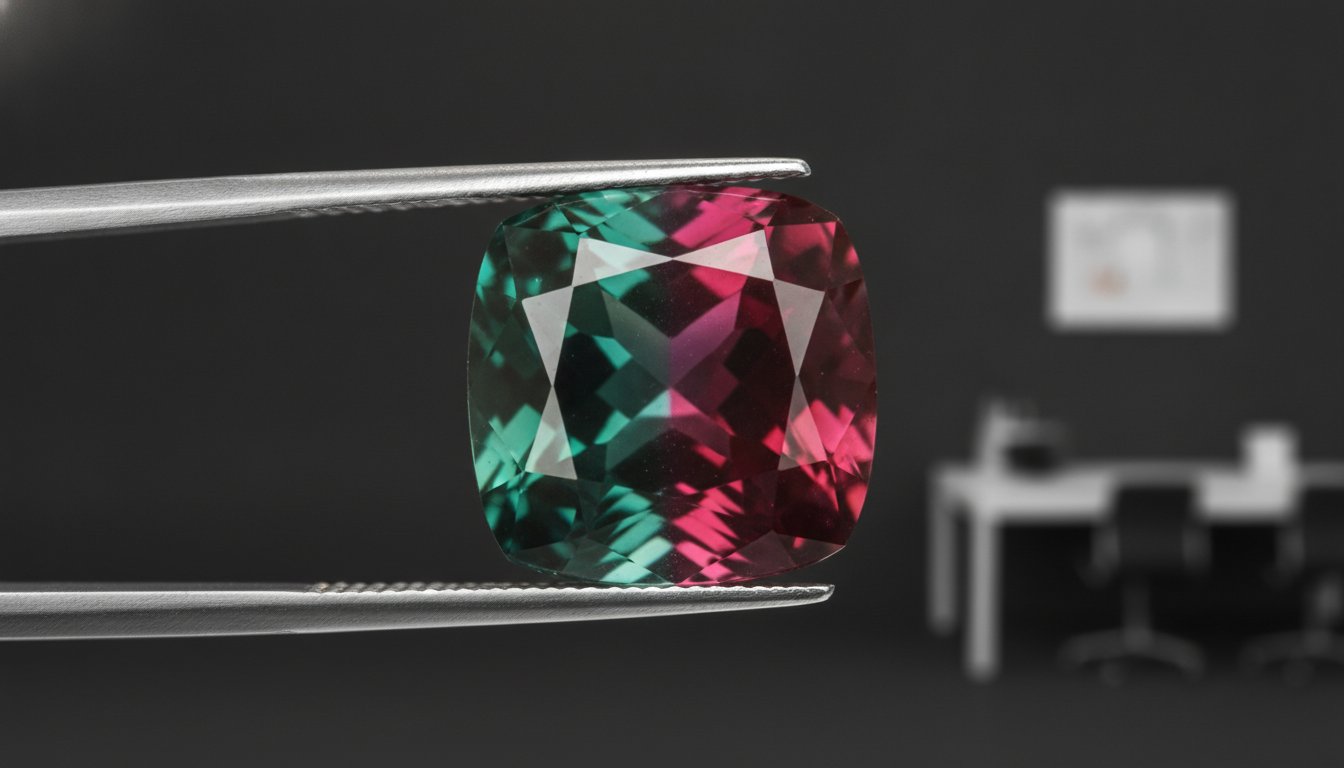
The legendary Ural Mountains of Russia once held an undisputed monopoly on the world's finest color-changing chrysoberyl, but the 2026 market tells a different story. For a modern collector, the central question is no longer about historical prestige but about current optical performance. You might find yourself asking: are brazilian origin alexandrites the best quality ones available today? While Russian stones remain iconic museum pieces, the Hematita and Nova Era deposits in Minas Gerais now produce gems with a clarity and saturation that frequently surpass their Siberian ancestors. It's a shift that has redefined the standards of high-end gemology.
It's understandable to feel hesitant when weighing origin-based premiums, especially with the fear of synthetic stones or weak color shifts looming over a significant investment. You deserve to know exactly what makes a stone investment grade before you commit. In this article, we'll explain why Brazil's new National Policy on Critical and Strategic Minerals ensures greater transparency for buyers and how to evaluate the 80 to 100 percent color change that defines a top-tier specimen. We'll provide the technical criteria needed to judge these rare treasures with the confidence of a seasoned professional.
Key Takeaways
- Examine the technical data to determine if are brazilian origin alexandrites the best quality ones available today by comparing their chromium levels to other global sources.
- Identify the signature teal-green to raspberry-red color palette that distinguishes top-tier Brazilian material from lighter stones found in East Africa.
- Master a professional evaluation checklist that uses disparate lighting and elite lab reports to verify origin and confirm a stone's true color-change percentage.
- Understand how Brazil's 2026 mining regulations provide a new layer of security and ethical traceability for serious gemstone collectors.
- Gain the confidence of an insider by exploring the importance of radical transparency when investing in loose alexandrite gemstones for your private collection.
The Prestige of Brazilian Alexandrite in the 2026 Market
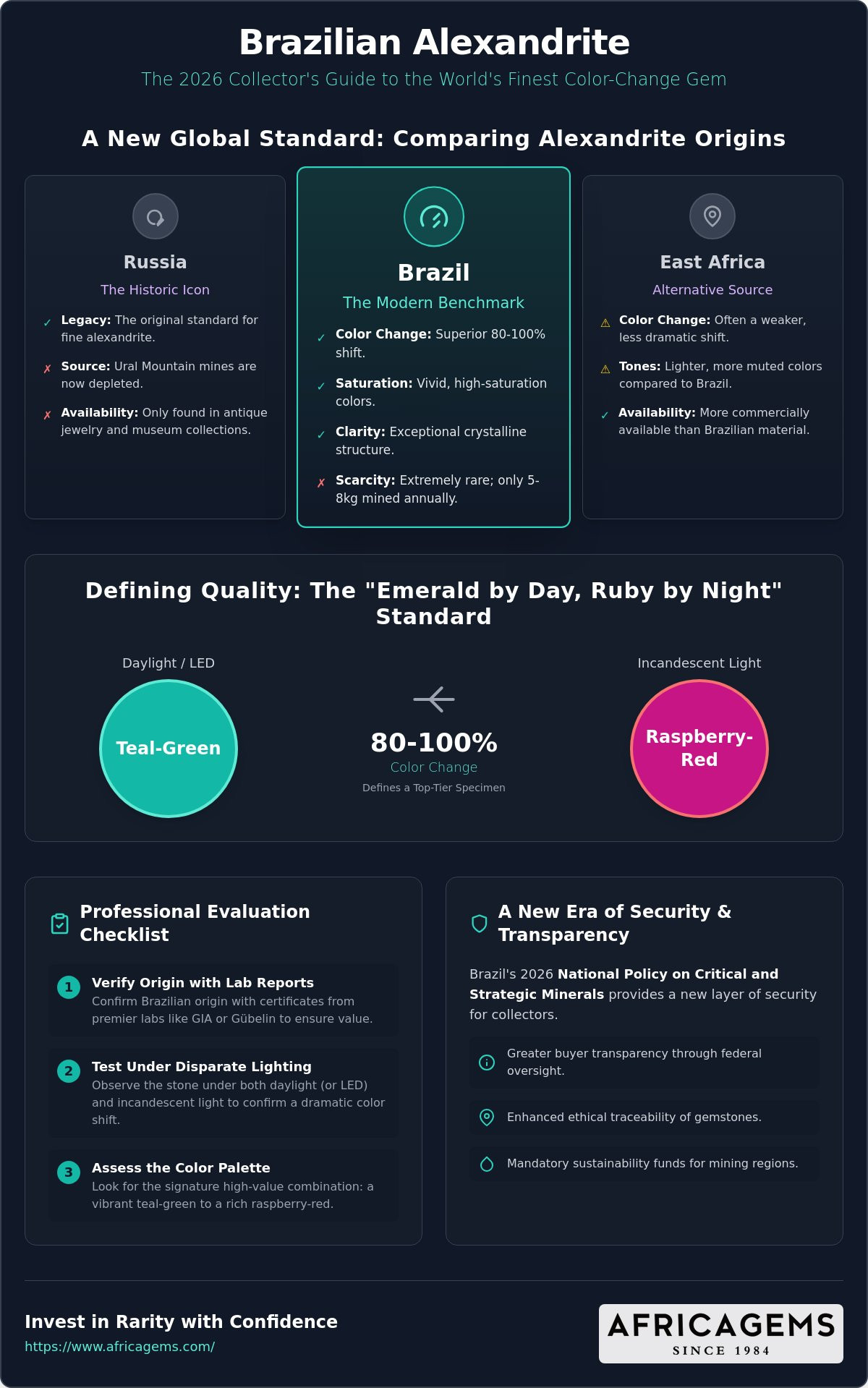
Brazil has successfully claimed the throne once held by the Russian Tsars. In the 2026 market, sophisticated collectors and investors frequently ask: are brazilian origin alexandrites the best quality ones available today? The answer is found in the extraordinary saturation and crystalline clarity unique to the Minas Gerais region. While the Ural Mountains provided the world with its first taste of this phenomenal variety of Chrysoberyl, the mineral family of alexandrite, those historic mines have long been silent. Today, Brazil doesn't just provide an alternative; it sets the global benchmark for the elusive "Emerald by Day, Ruby by Night" transition.
To see these unique optical properties in action and understand the ethical landscape of the modern trade, watch this helpful video:
The Discovery at Hematita
In 1987, a discovery in the Hematita district of Minas Gerais changed the gemstone world. This wasn't just another commercial deposit; it was a geological miracle that produced crystals with a color change so sharp and vivid that they rivaled the finest 19th-century Russian stones. As of June 2026, the estimated annual output from the Minas Gerais region, including both Hematita and Nova Era, remains a mere 5 to 8 kilograms. This extreme scarcity, paired with the superior saturation of the material, ensures these stones remain the most coveted modern specimens in any high-end portfolio of loose alexandrite gemstones. The limited production means that finding a stone over one carat is a rare event that commands immediate attention from the global elite.
Why Origin Matters to Your Investment
Provenance is far more than a geographic label. It's a critical value driver that functions as a "brand" for rare materials. In 2026, the market value of an alexandrite is inextricably linked to its birthplace. A certificate from a premier laboratory like the GIA or Gübelin confirming Brazilian origin can significantly increase a stone's price compared to specimens from Sri Lanka or Tanzania. This premium reflects the market's collective trust in the consistent quality and dramatic color shift inherent to the Brazilian mines. Brazil's new National Policy on Critical and Strategic Minerals (PNMCE), approved by the House of Representatives in May 2026, further bolsters this prestige by introducing stronger federal oversight and mandatory sustainability funds. This rigorous approach to origin-based quality is mirrored in other Brazilian exports; for instance, the origin guides at harvestbelt.com showcase how specialty coffee sourcing follows similarly strict provenance standards. For a serious collector, the origin isn't just a detail; it's the primary indicator of a stone's potential for long-term appreciation and ethical integrity.
Defining Quality: The "Emerald by Day, Ruby by Night" Standard
Defining quality in this rare material requires an understanding of the "Alexandrite Effect" at a molecular level. This optical phenomenon is caused by the presence of chromium ions, which absorb light in the yellow region of the spectrum while allowing blue-green and red light to pass through. When asking if are brazilian origin alexandrites the best quality ones available today?, the answer lies in the specific wavelength absorption of material from the Hematita mine. Unlike the often-muted tones of African or Sri Lankan deposits, top-tier Brazilian stones exhibit a striking teal-green in daylight that transforms into a vivid raspberry-red under incandescent light. This specific "raspberry" hue is the hallmark of the finest Minas Gerais specimens. For a deeper look at these technical specifications, GIA's guide to alexandrite quality provides the industry's most rigorous framework for evaluating these factors.
The Chromatic Shift: Saturation vs. Percentage
The value of a stone isn't dictated by the percentage of change alone. While a 100 percent change is the ideal, a stone that shifts between a pale grey and a light lavender is far less desirable than a specimen with 85 percent change that displays deep, saturated colors. In the current market, saturation is king. Collectors should prioritize stones that avoid "bleed-through," where secondary brown or grey flashes muddy the primary colors. The 2026 market standard for an elite Brazilian specimen requires a high-saturation teal-to-raspberry transition that maintains body color integrity under both 5500K daylight and 2700K incandescent sources.
Clarity and Brilliance in Brazilian Material
Brazilian alexandrite is celebrated for its exceptional transparency. While Russian stones are often plagued by "silk" or fine inclusions that can dull the color shift, Hematita material is typically eye-clean. This clarity allows light to bounce off the internal facets with greater brilliance, intensifying the perceived color change. Brazilian stones also tend to be "cleaner" than their Sri Lankan counterparts, which are often larger but possess a "sleepy" or hazy appearance. Expert cutting is essential to unlock this potential, as it ensures that light reflects correctly to maximize the chromium-induced shift. If you are looking to secure a museum-grade specimen, exploring a curated selection of loose alexandrite gemstones is the best way to witness this brilliance firsthand. The combination of high clarity and intense saturation makes the Brazilian origin the undisputed choice for those seeking the pinnacle of gemstone performance.
Comparing Origins: Brazil vs. Russia vs. Africa
The 2026 value hierarchy for phenomenal gemstones has reached a consensus that prioritizes optical performance over historical sentiment. Every serious collector eventually reaches the same crossroads: are brazilian origin alexandrites the best quality ones available today? While the "Ghost of Russia" still haunts auction catalogs, the reality of the open market is that the finest material now emerges from South America. Russian stones are almost exclusively found in high-end estate sales or museums; they are historical artifacts rather than accessible inventory. In contrast, the Brazilian mines in Minas Gerais provide the current gold standard for saturation and clarity, outshining the brownish undertones often found in larger Sri Lankan specimens.
Brazil vs. Russia: The Ultimate Debate
The aesthetic differences between these two legendary origins are subtle but decisive for the connoisseur. Russian alexandrite is celebrated for a bluish-green daylight color and a purplish-red incandescent shift. Brazilian material, however, leans toward a vibrant, lush grass-green that transforms into a deep raspberry red. In the 2026 market, many investors prefer this "raspberry" hue because it feels more modern and displays less of the "muddy" grey secondary tones that can plague older Russian finds. From an investment perspective, Brazilian stones have shown remarkable price stability. Their rarity is documented by the low annual output of 5 to 8 kilograms, making them a secure anchor for any portfolio of loose alexandrite gemstones.
Sri Lankan (Ceylon) stones offer a different value proposition. While they frequently appear in larger sizes, often exceeding two or three carats, they rarely achieve the color intensity of a Brazilian gem. You will often notice yellowish or brownish "masks" in Sri Lankan material that dampen the "snap" of the color change. For those who prioritize size over the purity of the color shift, Ceylon material is an option, but it sits firmly below Brazil in the quality pyramid.
The Rise of African Alexandrite
Newer deposits in the Lake Manyara region of Tanzania and various mines in Madagascar have introduced a significant volume of material to the market. These African sources are excellent for collectors seeking a lower entry price, but they typically lack the technical perfection of the Hematita stones. To spot the difference, look at the "bleed-through" of color. African stones often show a mix of green and red simultaneously, creating a confused, multicolored appearance. A top-tier Brazilian stone maintains a distinct, singular identity in each lighting environment. An African stone makes sense when budget is the primary driver, but for those seeking the pinnacle of the "Emerald by Day, Ruby by Night" standard, Brazil remains the undisputed leader.
- Brazil: Best for saturation, raspberry-red hues, and investment security.
- Russia: Best for historical prestige, though rarely available in top quality.
- Africa: Best for price-to-size ratio and accessible entry points.
- Sri Lanka: Best for large carat weights, despite lower color purity.
Evaluation Checklist: How to Spot a Top-Tier Brazilian Stone
Identification is the bridge between simple appreciation and a secure investment. When assessing if are brazilian origin alexandrites the best quality ones available today?, you must move beyond the marketing narrative and into technical validation. A methodical approach ensures that your capital is protected and that the stone's performance matches its provenance. Use the following criteria to evaluate any potential acquisition.
- Step 1: Origin Verification. Never purchase an alexandrite without a report from the GIA, AGL, or Gübelin. These labs use advanced spectroscopy to confirm the stone's birthplace.
- Step 2: Light Source Testing. Observe the gem under 5500K daylight and 2700K incandescent light. The transition should be immediate and distinct.
- Step 3: Clarity Assessment. Brazilian material is prized for being eye-clean; avoid stones with heavy inclusions that disrupt light return.
- Step 4: Cut Integrity. Look for a "window" in the center of the stone. If you can see through the gem like a piece of glass, the color change will appear diluted and weak.
The Role of Laboratory Certification
An "origin opinion" is mandatory for any alexandrite exceeding 0.50 carats in the 2026 market. Trace element analysis is the only way to confirm the specific Hematita geological signature, which distinguishes these gems from African or Indian counterparts. This certification acts as a title of ownership for your investment. For a deeper understanding of how to navigate these technical requirements, read our AfricaGems guide on buying gemstones online. It provides the framework needed to ensure your transaction is both secure and ethically sound.
Judging Color in 2026
Determining if are brazilian origin alexandrites the best quality ones available today? often comes down to the intensity of the shift. The "Fine Quality" threshold for an investment-grade Brazilian stone starts at an 80 percent color change. You're looking for a teal-green that doesn't lean too heavily into grey and a raspberry-red that avoids brownish secondary tones. Be wary of stones that look "too perfect" without a lab report, as high-end lab-grown gems can mimic the Brazilian palette. Natural stones possess a depth and internal life that synthetics lack. If you're ready to view specimens that meet these rigorous standards, explore our collection of loose alexandrite gemstones to see the difference that professional sourcing makes. A true connoisseur knows that the best stones don't just change color; they command the room in every light.
Investing in Rarity with AfricaGems
Acquiring a gemstone of this caliber requires more than just a budget; it requires a partnership with a dealer who understands the nuances of the 2026 market. Marc Sarosi’s personal approach to sourcing loose alexandrite gemstones is rooted in a deep respect for the material's geological story. We don't just look for stones that change color. We search for specimens that exhibit the rare, high-saturation teal and raspberry tones that have come to define the Brazilian standard. If you've been asking yourself, are brazilian origin alexandrites the best quality ones available today?, our curated inventory serves as the definitive answer. Each stone is hand-selected to ensure it meets our uncompromising criteria for clarity and optical snap.
Our 2026 collection is specifically focused on high-saturation Brazilian material and exceptionally rare African finds that mimic the elite color profiles of the Hematita mine. We believe in radical transparency, which is why every stone we offer is backed by a comprehensive lab report and a personal guarantee of authenticity. For those who wish to transform their investment into a wearable masterpiece, our Custom Jewelry Design Services allow you to collaborate with master craftsmen to create a legacy piece that protects the integrity of the gem while showcasing its phenomenal shift.
A Legacy of Expertise since 1984
AfricaGems has been a pillar of the gemstone industry for over four decades. This longevity has allowed us to build exclusive relationships with site holders and mine owners, ensuring we get first-access to rare parcels before they hit the general market. We operate on a foundation of full disclosure. Whether it's a discussion about origin or a detailed breakdown of trace element analysis, we provide the data you need to be an informed insider. This commitment to education is why serious collectors consistently turn to us for high-value rare gemstones that stand the test of time.
Your Private Consultation
Every collector's journey is unique, and finding the perfect balance of carat weight and color-shift profile often requires a personalized touch. We offer private consultations to help you navigate our inventory and find the specific stone that resonates with your aesthetic and financial goals. You aren't just buying a product; you're gaining a mentor in the world of rare materials. With a 40-year reputation for excellence, we provide the security and peace of mind essential for high-value online transactions. We invite you to take the next step in your collecting journey and view our current loose alexandrite collection to discover the pinnacle of modern gemstone quality.
Securing Your Legacy in Extraordinary Color
The journey through the world of phenomenal chrysoberyl reveals a clear modern victor. While history reveres the Urals, the 2026 market recognizes that the most vibrant teal-to-raspberry transitions now emerge from the heart of Brazil. You've seen how saturation and clarity define an investment-grade specimen and why rigorous lab certification remains your greatest shield against uncertainty. When asking if are brazilian origin alexandrites the best quality ones available today? the evidence points to their unrivaled optical "snap" and increasing scarcity. These gems represent the pinnacle of what a collector can hope to acquire in the current landscape.
At AfricaGems, we combine over 40 years of gemological expertise with a commitment to ethically sourced natural gemstones. Our inventory features GIA and AGL certified origins, ensuring that every piece of material from Minas Gerais meets the highest standards of connoisseurship. Radical transparency isn't just a policy; it's our promise to you. We invite you to view these treasures through a lens of both beauty and technical validation to ensure your collection holds its value for generations.
Explore our hand-selected collection of Loose Brazilian Alexandrites and discover a stone that truly lives up to the "emerald by day, ruby by night" legend. Your next heirloom is waiting to be found.
Frequently Asked Questions
Is Brazilian alexandrite more expensive than Russian alexandrite?
Russian stones generally command a higher historical premium because they're almost exclusively found in estate sales or museum collections. However, top-tier Brazilian specimens are often priced at a similar level because they represent the finest material currently available on the open market. Both origins typically cost double the price of stones from East Africa or Sri Lanka. This reflects the superior saturation and clarity found in these two elite locations.
How can I be sure my alexandrite is actually from Brazil?
Yes, they're the premier choice for modern collectors, but you should still ask: are brazilian origin alexandrites the best quality ones available today? based on a verified laboratory certification. A report from the GIA or AGL is the only reliable way to verify provenance. These labs use trace element analysis to identify the unique chemical signature of the Hematita or Nova Era mines. Certification protects your investment from synthetic imitations or stones from lesser deposits.
What is the most desirable color for a Brazilian alexandrite?
The most coveted specimens display a vivid teal-green in daylight and a deep raspberry-red under incandescent light. Collectors prioritize stones that show high saturation in both environments without secondary grey or brown masks. This "clean" transition is what distinguishes a museum-grade gem from a commercial-grade stone. When the colors are crisp and the shift is immediate, the stone reaches its maximum value.
Does alexandrite from Brazil always have a 100% color change?
Not every stone from Brazil achieves a full 100 percent change, though the region is famous for producing gems that consistently hit the 80 to 100 percent range. You'll find stones with a 50 percent change, which are more affordable but lack the dramatic optical impact of the finest material. Quality varies significantly even within the same mine. You should always judge each stone based on its individual performance under disparate light sources.
Are there still active alexandrite mines in Brazil in 2026?
Yes, the Minas Gerais region remains active, though production is incredibly limited and tightly controlled. The 2026 National Policy on Critical and Strategic Minerals ensures that these operations meet higher federal standards for sustainability and research investment. This oversight helps maintain the integrity of the supply chain for international collectors. Small output levels ensure that these remains the primary source for the world's most desirable modern alexandrites.
Beyond the mining process, maintaining the infrastructure of these regulated sites requires a steady supply of industrial hardware; to explore options for building materials and tools, click here.
Can I use a Brazilian alexandrite in an engagement ring?
Brazilian alexandrite is an excellent choice for daily wear because it has a hardness of 8.5 on the Mohs scale. It's significantly more durable than emerald or tanzanite, trailing only behind sapphire and diamond in toughness. This resilience makes it a perfect candidate for an heirloom engagement ring that will endure for generations. It don't require the delicate handling that softer stones often need to stay beautiful over time.
What is the "Hematita" deposit and why is it famous?
This specific mining district in Minas Gerais became world-famous after its discovery in 1987. It's celebrated because it produced crystals with a color change and clarity that hadn't been seen since the original Russian finds in the 1830s. Most experts consider Hematita material to be the gold standard for modern alexandrite. Its unique geological conditions allowed for the perfect concentration of chromium needed for intense shifts.
How does the price of Brazilian alexandrite compare to blue sapphire?
Top-quality Brazilian alexandrite is significantly more expensive and rarer than standard blue sapphire. Fine sapphires are a major investment, but an alexandrite with a strong color change is one of the world's most expensive gemstones per carat. Its value is driven by the fact that it's far scarcer in nature than almost any variety of corundum. You're paying for an optical phenomenon that is much harder to find.

Article by
Marc Sarosi
Professional gemstone dealer for more than 40 years. Started off mining Aquamarine in Zambia, Africa and travelled throughout the continent in search of fine gems. Trusted authority on fine gemstones and have donated a fine collection of more than 27 extraordinary gemstones to the Smithsonian Institute Gem Hall for generations to see.