
Are Alexandrite Gemstones Getting Very Popular as Engagement Rings? The 2026 Connoisseur Guide
Sep 2nd 2026
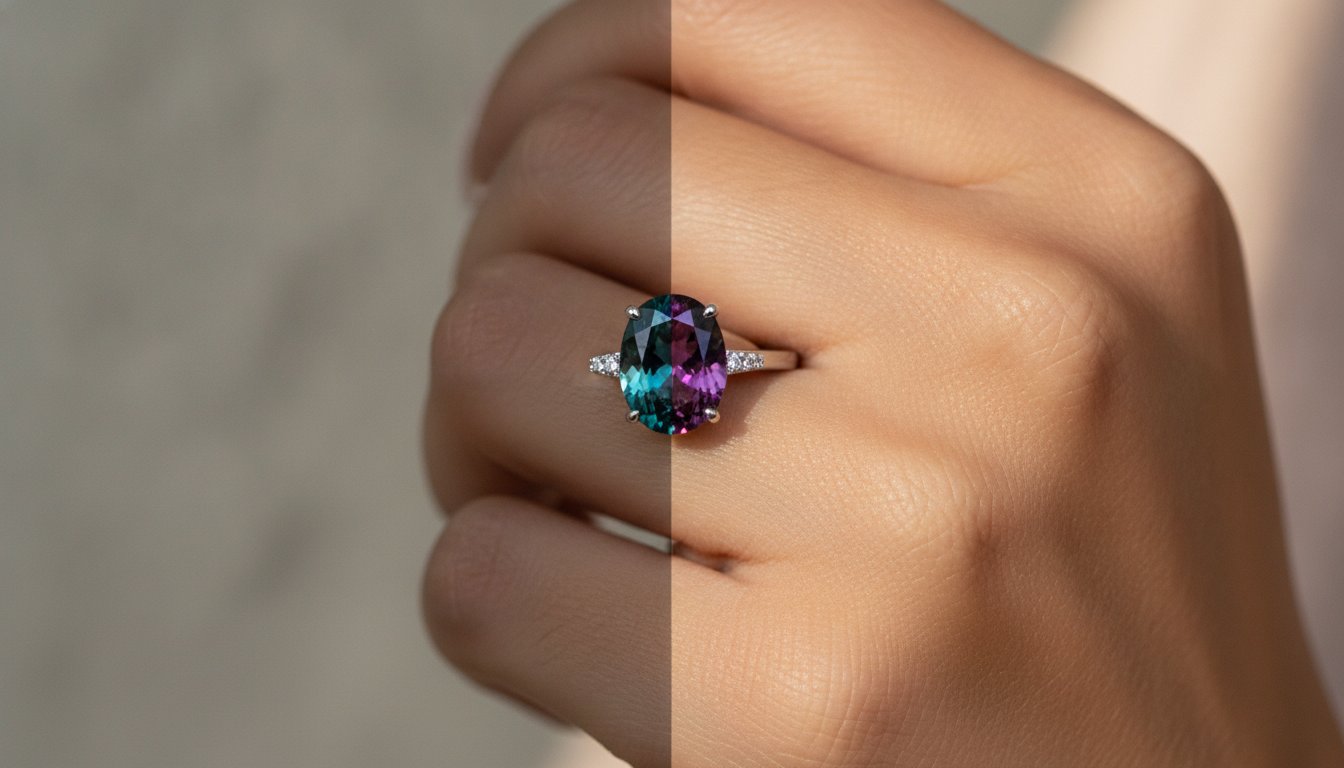
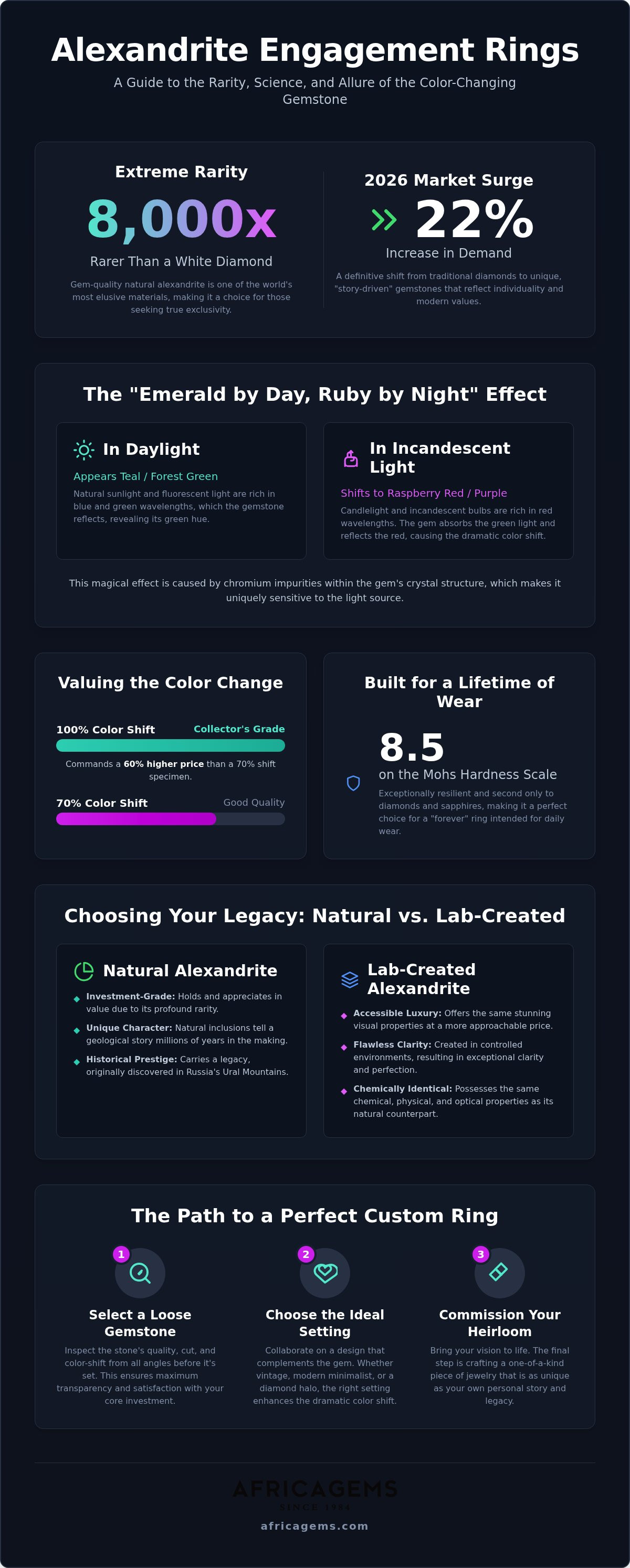
Did you know that gem-quality natural alexandrite is approximately 8,000 times rarer than a white diamond? While many still view clear stones as the default, the 2026 market has seen a 22% surge in demand for this remarkable color-shifting chrysoberyl. You might be asking yourself, are alexandrite gemstones getting very popular as engagement rings? The answer is a resounding yes for those who prioritize extreme rarity and a literal magic trick of nature over mass-market trends.
It's natural to feel a sense of hesitation when stepping outside the diamond comfort zone. You want a ring that reflects your personality, but you don't want to sacrifice durability or feel confused by the price gap between natural and lab-grown varieties. This guide will show you how to balance world-class scarcity with daily wearability, ensuring your choice is as secure as it is poetic. We'll preview the 2026 ROI for natural specimens, the technical markers of high-quality loose stones, and the essential steps for commissioning a custom design that captures your unique legacy.
Key Takeaways
- Understand the 2026 market dynamics and why are alexandrite gemstones getting very popular as engagement rings due to their extreme rarity compared to white diamonds.
- Master the technical factors behind the "emerald by day, ruby by night" effect and how chromium impurities dictate a gemstone's market value.
- Evaluate alexandrite's 8.5 Mohs hardness to see how it provides the necessary resilience for a "forever" ring intended for daily wear.
- Navigate the price disparity between investment-grade natural stones and high-quality Chatham Lab Created Gemstones to find the best fit for your budget.
- Learn the benefits of selecting loose alexandrite gemstones first to ensure transparency before moving into the custom jewelry design process.
The Surge in Alexandrite Engagement Ring Popularity: Why Now?
Alexandrite isn't just another colored stone. It's a rare variety of the mineral chrysoberyl that possesses a singular optical phenomenon. This "color-change" ability makes it appear teal or forest green in natural sunlight, only to shift into a rich raspberry red or purplish hue under incandescent light. It's a dynamic gem that refuses to be just one thing.
In the current 2026 market, many couples find themselves asking: are alexandrite gemstones getting very popular as engagement rings? The data suggests a definitive shift. While diamonds have long served as the standard "status" symbol, modern connoisseurs are moving toward "story-driven" gemstones. An engagement ring is a personal legacy. Choosing a stone that's approximately 8,000 times rarer than a white diamond speaks to a desire for something truly extraordinary. It's an ever-changing masterpiece on the hand, shifting its personality to match the wearer's environment and mood.
The "Alternative" Heirloom Movement
Modern bridal trends emphasize individuality over traditional marketing. We've seen a move away from mass-produced styles toward pieces that feel like discovered treasures. Alexandrite carries a prestigious history, originally discovered in the Ural Mountains of Russia and named for Czar Alexander II. This royal connection adds a layer of historical weight that a standard diamond simply cannot match. For those looking to understand where this stone sits in the hierarchy of scarcity, browsing a Rare Gemstones Guide provides a deeper look at the world’s most elusive materials.
Alexandrite as a 2026 Style Icon
The visual "wow factor" of a stone that changes color has been amplified by the high-definition era of social media. Seeing a ring transform from green to red in a short video clip provides an immediate emotional connection. Beyond the aesthetics, ethical sourcing has become a pillar of the 2026 jewelry industry. Discerning buyers want to know the origin of their stones. Natural alexandrite, sourced from responsible mines in Brazil or East Africa, offers a level of transparency that aligns with modern values; to explore a variety of similarly high-quality jewelry options online, click here.
The versatility of this gem is another reason for its rise. It complements a wide range of designs:
- Vintage Styles: Its historical roots make it perfect for milgrain or filigree settings.
- Modern Minimalist: A simple solitaire setting lets the dramatic color shift take center stage.
- Halo Accents: Surrounding the center stone with diamonds can enhance the contrast of the color change.
By starting with loose alexandrite gemstones, you can inspect the quality and color shift of the stone from every angle before it's secured in a setting. This ensures the integrity of your investment remains the priority.
The Science of the "Emerald by Day, Ruby by Night" Effect
The "alexandrite effect" isn't a mere optical illusion. It's a complex interaction between light and the stone's chemical structure. At its core, this phenomenon occurs because chromium impurities replace some of the aluminum atoms in the crystal lattice. These chromium ions absorb light in a specific way that makes the gem highly sensitive to the ambient light source. For a detailed look at the mineral's history and properties, you can explore Alexandrite gemstone information provided by the GIA.
When you ask yourself, are alexandrite gemstones getting very popular as engagement rings?, you're essentially looking at the appeal of owning a "living" gem. In natural sunlight or fluorescent light, which is rich in blue and green wavelengths, the stone appears teal or forest green. When moved into incandescent light or candlelight, which is rich in red wavelengths, the stone shifts to a purplish-red or raspberry hue. The finest alexandrite displays a 100% color shift, leaving no trace of the previous hue. This complete transformation is what collectors seek. Research from early 2026 indicates that a stone with a 100% shift can command a 60% higher price than a specimen with only a 70% shift.
Understanding Light Sources and Gemstone Reaction
The Kelvin scale measures the "color" of light, and alexandrite reacts predictably to these temperatures. Standard daylight, often around 5500K to 6500K, brings out the cool green tones. Conversely, warm incandescent bulbs (around 2700K) trigger the warm red transition. In "mixed lighting" scenarios, such as a room with both a window and a lamp, the stone can show intermediate shades or even both colors simultaneously. It's vital to view a stone under multiple light sources before finalizing your selection to ensure the shift meets your expectations.
Grading Color Change Intensity
Gemologists categorize the shift as "weak," "moderate," or "strong." A weak shift might only show a slight change in tint, while a strong shift is dramatic and undeniable. Beyond the shift itself, the saturation (intensity of color) and tone (lightness or darkness) are critical. An engagement ring stone shouldn't be so dark that it looks black, nor so light that the color appears washed out. A balanced, medium-dark tone typically showcases the most vivid color change. If you're ready to see this phenomenon in person, browsing our collection of loose alexandrite gemstones is the best way to witness the shift before it's set in metal.
Durability and Daily Wear: Is Alexandrite Tough Enough?
Are alexandrite gemstones getting very popular as engagement rings? Part of the appeal is their remarkable physical resilience. While diamonds sit at a 10 and sapphires at a 9, alexandrite holds a solid 8.5 on the Mohs scale. This isn't just a number; it represents a critical threshold for a piece of jewelry intended for a lifetime of wear. For a stone to survive the rigors of daily life without losing its luster, it needs to be harder than the common environmental elements it encounters.
In the gemological world, 8.5 is often considered the "gold standard" for daily-wear stones. Household dust often contains microscopic particles of quartz, which has a hardness of 7. Any gemstone below this rank will eventually succumb to fine scratches from simple cleaning or accidental contact with surfaces. Because alexandrite is significantly harder than quartz, it maintains its polish and sharp facets decade after decade, resisting the dulling effect that plagues softer gems.
It's also vital to distinguish between hardness and toughness. Hardness measures resistance to scratching, while toughness measures resistance to chipping or breaking. Alexandrite possesses excellent toughness for daily wear. Unlike emeralds, which have distinct cleavage planes that make them prone to splitting if struck, alexandrite lacks these structural weaknesses. It's a dense, compact material that can handle the occasional knock against a desk or doorframe without the high risk of catastrophic failure.
Alexandrite vs. Sapphire for Engagement Rings
While Blue Sapphires are prized for their classic, singular color, alexandrite offers a more complex aesthetic journey. You aren't just choosing one hue; you're choosing a spectrum. Both stones are exceptionally durable, but alexandrite provides a dynamic personality that changes with your environment. To keep an 8.5 stone pristine, regular cleaning with warm, soapy water and a soft brush is all that's required to prevent oils from masking its optical performance.
Setting Styles that Protect Your Gemstone
Choosing the right setting is the final step in ensuring long-term security. Bezel settings, which wrap a thin collar of metal around the gem's entire perimeter, provide the highest level of protection for the stone's edges. If you prefer the light-entry of prongs, platinum is the superior choice for its strength and ability to hold its shape over time. We often suggest exploring custom mountings to ensure the setting is tailored specifically to the unique dimensions of your stone, providing a secure, flush fit that minimizes snagging.
Natural vs. Lab-Created Alexandrite: Navigating the Investment
Deciding between a natural or a lab-grown stone is the most significant fork in the road for any collector. While Chatham Lab Created Gemstones are chemically, physically, and optically identical to those mined from the earth, they lack the inherent scarcity that drives long-term value. This leads many to wonder: are alexandrite gemstones getting very popular as engagement rings because of their utility or their investment potential? The answer depends on your priorities. Natural stones are finite treasures with a high barrier to entry, while lab-grown varieties offer the same "magic trick" of color change at a fraction of the cost.
The price disparity is staggering. A fine-grade natural stone can cost fifty to a hundred times more per carat than its lab-created counterpart. This premium is largely dictated by origin. Specimens from the historic Russian Ural Mountains or the high-yield Hematita mine in Brazil command the highest prices due to their superior color shifts and historical prestige. Investment-grade alexandrite is defined as natural, untreated stones with high clarity and over 85% color change. These are the stones that transition from a vibrant teal to a deep raspberry with no muddy intermediate tones.
The Value Proposition of Natural Alexandrite
Natural alexandrite has shown remarkable price appreciation over the last decade. As yields from famous mines like those in Brazil have fallen to just 12% of their 2012 levels, the supply of high-quality material is tightening. Collectors view these stones as "portable wealth," a hard asset that retains value regardless of currency fluctuations. To protect such a significant investment, a certificate from a reputable lab like GIA or AGL is non-negotiable. It provides the technical validation of origin and treatment status required for any serious acquisition.
When to Choose Lab-Created for Your Ring
If your goal is a large, eye-clean center stone without a five-figure price tag, lab-created options are an excellent path. These stones offer a "cleanliness" and saturation that's rarely found in nature at an accessible price point. They're also a popular choice for those prioritizing ethical and sustainability considerations, as they require no mining. However, not all lab stones are equal. We recommend Chatham varieties over generic synthetics because they use a flux-growth process that mimics the slow natural crystallization of chrysoberyl, resulting in a more authentic appearance.
Whether you seek a rare heirloom or a stunning modern alternative, the first step is seeing the material for yourself. Just as you might visit a luxury boutique like Brides in Love to find a gown that matches your vision, exploring our curated selection of loose alexandrite gemstones is the best way to find the perfect balance of rarity and beauty for your ring.
Selecting a pre-set ring might seem convenient, but it often obscures the very qualities that make this gem valuable. When people ask, are alexandrite gemstones getting very popular as engagement rings?, they're usually responding to the stone's unique optical personality. To truly capture that magic, the most informed path is to start by purchasing loose alexandrite gemstones. This approach allows you to inspect the stone's color shift, clarity, and cut from every angle without a metal setting masking potential inclusions or "windowing."
The custom jewelry design process transforms a rare specimen into a personal heirloom. One of the most critical decisions in this journey is choosing a metal that complements the gem's dual nature. Platinum and white gold are perennial favorites because their neutral, cool tones don't compete with the teal-green daylight hue. However, rose gold has seen a surge in 2026 for its ability to warm up the incandescent purplish-red shift. AfricaGems remains committed to this level of detail, offering personal consultations to ensure your setting choice enhances rather than hinders the chromium-driven light performance.
Choosing the Perfect Loose Stone
Carat weight is a measure of mass, but for an engagement ring, the "face-up" size or millimeter dimensions are what truly matter. A stone cut too deep might hide its weight in the "belly," making it look smaller than a well-proportioned gem of the same weight. You should also watch for windowing, where light passes straight through the center, or extinction, where areas of the stone remain dark. Both flaws can dampen the intensity of the color change. A masterfully cut stone ensures that light bounces back to the eye, maximizing the "emerald by day, ruby by night" transition that defines the species.
From Concept to Setting: The Final Steps
Working directly with a specialist like Marc Sarosi provides a level of security that mass-market retailers can't match. Since 1984, we've focused on radical transparency, ensuring every stone comes with a full disclosure of its history. Once you've secured your ideal loose stone, you can explore our curated shop mountings to find a framework that fits your aesthetic. Whether you prefer a vintage-inspired halo or a sleek modern solitaire, the final piece undergoes a rigorous inspection. This process concludes with the AfricaGems personal guarantee of authenticity, providing the peace of mind necessary for such a significant life milestone.
Securing Your Legacy with the Gem of Transformation
Choosing an engagement ring is the first step in building a shared history. You've discovered that alexandrite offers a rare combination of 8.5 Mohs durability and an optical phenomenon that captures the imagination. So, are alexandrite gemstones getting very popular as engagement rings? The market shift toward unique, story-driven heirlooms proves that modern couples value character and extreme scarcity over traditional standards. By selecting a loose stone first, you ensure total transparency in the color-shift quality before it's set into a custom mounting.
At AfricaGems, we provide a personal expert consultation with Marc Sarosi to guide you through this high-value acquisition. We offer full disclosure on all gemstone treatments and back every purchase with a 30-day money-back guarantee to ensure your absolute security. This methodical approach transforms a digital search into a personal consultation, mirroring the care you put into your relationship.
Explore our collection of rare, natural Loose Alexandrite Gemstones and begin the journey of creating a ring that's as dynamic and enduring as your commitment.
Frequently Asked Questions
Is alexandrite too soft for an engagement ring worn every day?
No, alexandrite is remarkably durable with an 8.5 Mohs scale rating. This hardness makes it more resilient than quartz particles found in common dust, preventing the fine scratches that eventually dull softer gemstones. It also lacks cleavage planes, meaning it doesn't split easily upon impact. For those wondering are alexandrite gemstones getting very popular as engagement rings?, this structural integrity is a primary driver. It's a "forever" stone that withstands daily activities while maintaining its polish.
How much should I expect to pay for a 1-carat natural alexandrite?
Market value for a 1-carat specimen depends heavily on the percentage of color change and the stone's origin. High-quality natural stones are exceptionally rare, and prices increase exponentially at the 1.00-carat threshold. A stone with a 100% color shift from teal to red is significantly more valuable than one with a partial shift. Because natural alexandrite is thousands of times rarer than diamonds, the cost reflects its status as a premier investment-grade asset. GIA certification is essential to validate these quality factors.
Does lab-created alexandrite change color as well as natural stones?
Yes, high-quality lab-created varieties often display a more vivid and consistent color shift than lower-grade natural stones. Lab-grown chrysoberyl, particularly Chatham Lab Created Gemstones, is chemically and optically identical to mined material. Because the growth environment is controlled, these stones often feature a dramatic teal-to-purple transition without the inclusions or "muddy" tones found in affordable natural specimens. They provide a stunning, durable alternative for those who prioritize visual performance over historical rarity.
What is the best metal for an alexandrite engagement ring setting?
Platinum and 18k white gold are the most popular choices because their neutral tones highlight the stone’s cool daylight colors. These white metals provide a crisp backdrop that doesn't interfere with the teal or forest green hues seen in natural light. However, rose gold has become a connoisseur favorite in 2026 for its ability to enhance the warm raspberry tones during the incandescent shift. When designing a custom ring, consider which color state you'll see most often and choose a metal that complements that personality.
How can I tell if an alexandrite is real or a synthetic sapphire imitation?
Professional lab certification is the only definitive way to distinguish between chrysoberyl and synthetic sapphire imitations. Many "vintage" rings actually contain synthetic corundum laced with vanadium, which produces a purple-to-grey shift rather than the green-to-red shift of true alexandrite. Under a loupe, natural alexandrite may show specific inclusions or growth patterns absent in mass-produced synthetics. To ensure the integrity of your purchase, only buy loose alexandrite gemstones that come with a full disclosure of origin and treatment status.
Why is alexandrite called the "Friday night" stone?
This nickname refers to the gem's dramatic transformation under evening lighting conditions. During the day, the stone appears professional and understated in its cool green or teal state. As the sun sets and you move into candlelit or incandescent environments typical of a "Friday night" out, the gem shifts into a passionate, fiery red or purple. This dual personality is a major reason why are alexandrite gemstones getting very popular as engagement rings?, as it offers a versatile aesthetic for any environment.
Can I use an alexandrite as a center stone with diamond accents?
Absolutely, diamonds are the ideal accent for alexandrite because they provide a neutral, high-brilliance contrast. The white flash of a diamond halo or side stones serves to frame the center gem, making the color shift appear even more dramatic. Because diamonds are also highly durable, they match the longevity of the 8.5-hardness alexandrite. Using shop mountings designed for multi-stone settings can help you create a balanced look that highlights the center stone's unique optical performance.
Where does the best quality alexandrite come from in 2026?
Brazilian and Russian stones remain the global benchmarks for the highest quality alexandrite. While the original Russian mines are largely exhausted, their stones still set the standard for the "emerald by day, ruby by night" effect. Currently, the Hematita mine in Brazil is the premier source for stones with a 100% color shift and exceptional clarity. High-quality material is also emerging from East Africa, specifically Tanzania and Madagascar, offering collectors a broader range of choices in terms of tone and saturation for bespoke designs.

Article by
Marc Sarosi
Professional gemstone dealer for more than 40 years. Started off mining Aquamarine in Zambia, Africa and travelled throughout the continent in search of fine gems. Trusted authority on fine gemstones and have donated a fine collection of more than 27 extraordinary gemstones to the Smithsonian Institute Gem Hall for generations to see.