
Aquamarine Gemstone Quality: The Connoisseur’s Guide to Color, Clarity, and Value
Sep 11th 2026
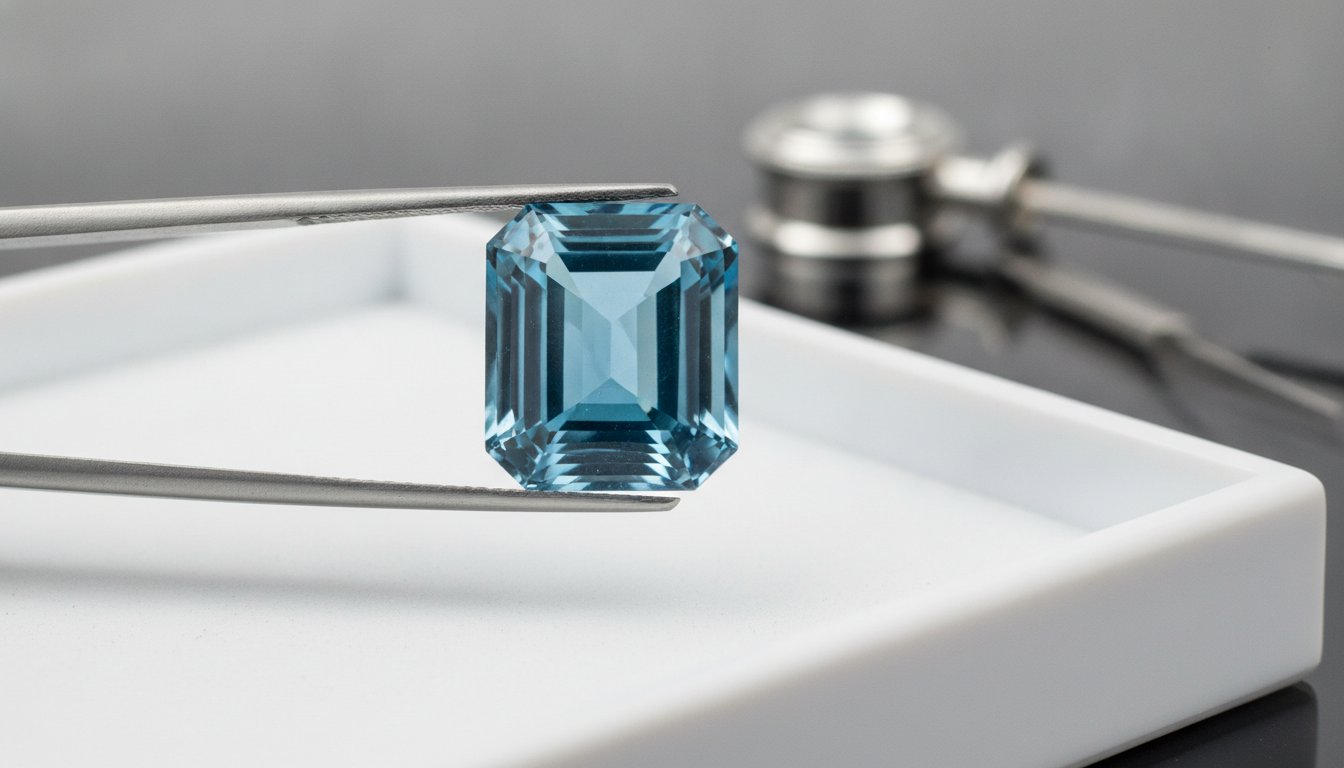
Why does a stunning, deep blue aquamarine seen in a professional photograph so often arrive looking like a piece of faded glass? For the serious collector, mastering the nuances of aquamarine gemstone quality is the vital difference between acquiring a generic, commercial stone and securing a true investment-grade treasure. It's often frustrating to encounter a market filled with "washed out" specimens and vague treatment disclosures. You deserve a transparent, expert look into the technical specifications that dictate a stone's true value and character.
We believe that the beauty of a fine beryl should be as vivid as the tropical waters it's named after. This guide provides the connoisseurship needed to select investment-grade gemstones with absolute confidence. We'll examine the prestigious "Santa Maria" color standard, the impact of eye-clean clarity on light return, and the industry reality of standard heat treatments. You'll gain the insider knowledge required to identify ethically sourced, high-quality beryl that maintains its brilliance for a lifetime. This transition from enthusiast to informed collector ensures your next acquisition is a legacy piece defined by integrity and exceptional beauty.
Key Takeaways
- Identify the iron trace elements that produce the most desirable pure blue hues and learn why saturation is the primary driver of market value.
- Master the technical nuances of aquamarine gemstone quality by identifying "Type I" clarity standards and spotting inclusions that can mar a stone's transparency.
- Gain a clear understanding of heat treatments to confidently distinguish between standard enhancements and the rare, unheated specimens favored by top collectors.
- Learn the strategic advantage of purchasing loose gemstones to ensure you are seeing the true color and cut before committing to a custom jewelry design.
- Discover how to find a trusted source that prioritizes ethical mining and radical transparency for every stone in their inventory.
Defining Aquamarine Gemstone Quality: The Collector’s Framework
To truly appreciate aquamarine gemstone quality, one must look deep into the chemistry of the earth. Aquamarine is the blue to greenish blue variety of the mineral species beryl, a family that also includes the prestigious emerald and the delicate morganite. While emeralds are often clouded by inclusions, aquamarine is prized for its crystalline purity. This transparency is a result of its unique growth environment, allowing for large, flawless crystals that capture light like a still pool of water.
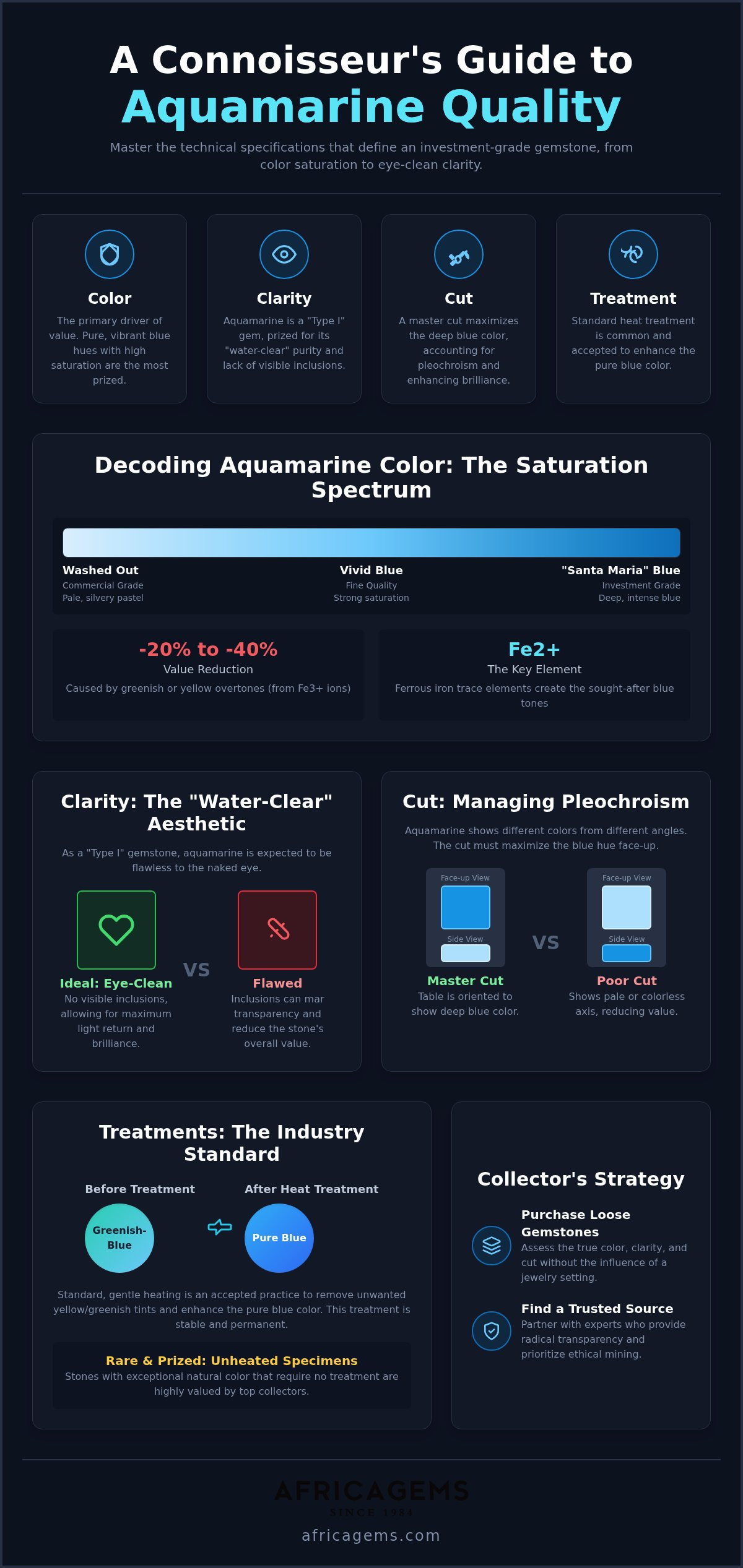
The secret behind its captivating color lies in the presence of iron trace elements within the crystal structure. Specifically, ferrous iron (Fe2+) creates the sought after blue tones, while ferric iron (Fe3+) introduces yellow or greenish tints. This Aquamarine gemstone overview highlights that the most valuable specimens possess a high concentration of blue-producing ions with minimal interference from yellow shades. True aquamarine gemstone quality is the perfect equilibrium between a vibrant blue hue, high saturation, and a signature "water-clear" transparency.
To better understand this concept, watch this helpful video:
Distinguishing between market tiers is essential for any serious collector. Commercial grade stones often appear as pale, silvery pastels that can look "washed out" in certain lighting. In contrast, investment grade pieces exhibit a "deep sea" blue that retains its saturation across the entire stone. These top tier gems are increasingly rare as traditional mines in Brazil and Africa yield fewer saturated crystals, making high quality loose stones a priority for those seeking long term value.
The Beryl Family Connection
Aquamarine shares its lineage with famous stones like emerald and morganite. While emerald is colored by chromium and morganite by manganese, aquamarine relies on iron for its identity. Unlike emerald, which is often brittle and included, the beryl structure in aquamarine allows for exceptional clarity and impressive size. Its Mohs hardness of 7.5 to 8.0 makes it durable enough for daily wear in gemstone rings or heirloom pendants.
The Importance of Pleochroism
Pleochroism is a fascinating optical phenomenon where the stone shows different colors from different angles. In aquamarine, one axis typically appears deep blue, while the other may look nearly colorless. A master cutter's goal is to orient the "table" to maximize that blue hue. If the cut is poor, the "side view" color might dominate the "face up" appearance, significantly reducing the stone's visual impact and market value.
Decoding Aquamarine Color: Saturation and Trade Names
Color is undeniably the most significant factor when evaluating aquamarine gemstone quality. While other gemstones like sapphire might tolerate deeper, darker tones, aquamarine is celebrated for its luminous clarity and brightness. The market prioritizes a pure, vibrant blue hue. Greenish overtones, while natural, typically decrease the value by approximately 20 to 40 percent. The most prized stones capture the essence of a clear tropical ocean, free from the yellow tints that can make a stone look muddy or dull.
Saturation is where many buyers feel the most uncertainty. A stone with low saturation looks pale or "washed out," often losing its identity as an aquamarine and appearing more like common glass. Conversely, tone refers to the lightness or darkness of the blue. While deeper tones are generally more valuable, you should avoid stones that appear "inky" or overly dark. These stones lose the characteristic "water-clear" brilliance that defines the species. This American Gem Society buying guide emphasizes that the ideal balance is a medium-dark tone paired with vivid saturation.
The Legend of Santa Maria Blue
Originally discovered in the Santa Maria de Itabira mine in Brazil, this trade name represents the pinnacle of aquamarine gemstone quality. A Santa Maria stone is characterized by a deeply saturated blue that remains transparent and bright. Today, the original Brazilian mine is largely exhausted. However, similar high-quality material found in Mozambique and other parts of Africa is now marketed as "Santa Maria Africana." These stones are highly sought after by collectors because they possess a depth of color rarely seen in commercial jewelry.
Identifying "Double Blue" and "Maxixe" Varieties
In high-end trade circles, you may hear the term "Double Blue." This refers to stones with exceptional saturation that exceeds even the standard Santa Maria grade. However, collectors must be wary of "Maxixe" beryl. While it displays a stunning deep blue, the color is often the result of radiation and is notoriously unstable. Maxixe stones fade rapidly when exposed to sunlight, turning a dull yellow or brownish color. Always verify color stability with your dealer to ensure your investment doesn't fade over time. For those seeking the highest standards of stability and hue, exploring a curated selection of high-quality loose aquamarines is the best way to see these differences firsthand.
Clarity and Cut: Achieving the "Water-Clear" Aesthetic
Aquamarine is classified as a Type I gemstone. In the professional trade, this designation indicates that the mineral typically grows in large, clean crystals, leading the market to expect an "eye-clean" appearance. While emeralds are celebrated for their "jardin" or garden of inclusions, any visible flaw in an aquamarine significantly compromises its value. High aquamarine gemstone quality is defined by a crystal that appears as clear as a drop of distilled water. When a stone achieves this level of purity, it allows light to travel through the material without obstruction, creating the signature "liquid" shimmer that collectors prize.
Specific inclusions often haunt lower-grade specimens. You might encounter "rain," which consists of fine, parallel hollow tubes that can create a hazy or silky effect. There are also liquid inclusions known as "snowflakes" or "fingerprints" that disrupt the path of light. These internal features don't just affect aesthetics; they interfere with the stone's ability to return light to the eye, deadening the shimmer that collectors crave. Understanding these nuances is a key part of mastering aquamarine gemstone quality and ensuring your investment possesses true brilliance.
Evaluating Eye-Clean Transparency
For the serious collector, the distinction between eye-clean and loupe-clean is worth understanding. While a stone might show tiny features under 10x magnification, it's considered premium if it remains clear to the naked eye. This level of transparency is essential for the stone's performance in low-light environments. A clean stone will "glow" and maintain its hue even in dim settings, whereas an included stone will appear flat and lifeless. This transparency is what separates investment-grade beryl from common commercial materials.
Precision Cutting for Maximum Light Return
The cut is the engine that drives an aquamarine's brilliance. Many commercial stones suffer from "windowing," where the center of the gem is too shallow, allowing light to pass straight through rather than reflecting back. This results in a pale, empty spot in the middle of the stone. Premium quality requires precision "meet-point" faceting, where every facet edge meets perfectly to maximize scintillation. Proper proportions can actually deepen the perceived color of lighter rough, while avoiding the dreaded "fish-eye" effect found in poorly proportioned, shallow stones. Choosing loose aquamarine gemstones allows you to inspect these cutting nuances from every angle before they're obscured by a jewelry setting.
Treatments and Enhancements: Protecting Your Investment
Transparency is the ultimate currency in the gemstone trade. When we discuss aquamarine gemstone quality, we have to address the industry standard of heat treatment. Approximately 80 to 90 percent of aquamarines on the market undergo low temperature heating to remove yellow or greenish "masking" tints. This process leaves behind the pure, crystalline blue that collectors desire. Unlike the oiling of emeralds or the irradiation of blue topaz, aquamarine heat treatment is stable and permanent. It won't fade with light exposure or change over time, making it a secure choice for heirloom jewelry.
AfricaGems has built a forty year legacy on the principle of radical transparency. We believe every collector deserves to know the exact history of their stone. While heating is widely accepted, we provide full disclosure on every piece in our inventory. This honesty builds the security essential for high value online transactions. It transforms a digital storefront into a personal consultation where you're treated as an informed insider.
Standard Heat Treatment vs. Natural Stones
Heating transforms greenish beryl into the classic blue that defines the species. However, for the elite connoisseur, unheated, naturally deep blue aquamarine is the "Holy Grail." These rare specimens command a significant price premium because they achieved their saturation entirely through geological pressure and time. Some collectors actually seek out unheated stones for their "sea-foam" or minty green undertones. They appreciate the raw, untouched beauty of the mineral that hasn't been altered by human hands. This appreciation for artisanal quality often extends to other jewelry types; for instance, many collectors look to international markets to handgemaakte oorbellen kopen and find unique, beach-inspired accessories that complement their high-end gemstones. Identifying these nuances is a hallmark of superior aquamarine gemstone quality.
As carat weight increases, technical validation becomes a non-negotiable requirement. For any significant investment, an independent report from a laboratory like GIA or AGL is essential. These documents verify the stone's origin and, most importantly, its treatment status. When reviewing a report, look for the "Comments" or "Enhancements" section. A high quality stone will have its treatment clearly identified, ensuring you aren't paying unheated prices for a heated gem. These reports also provide a standardized assessment of color and clarity, allowing you to compare stones with clinical accuracy. Explore our commitment to these rigorous standards by browsing our curated selection of precious gemstones today.
Source Selection: Buying High-Quality Loose Aquamarine
Selecting a gemstone is a technical journey as much as a personal one. Buying loose stones offers a level of transparency that pre-set jewelry simply cannot match. When a stone is already mounted, the metal acts as a mirror, often masking low saturation or hiding inclusions near the girdle. By selecting a loose stone, you can evaluate aquamarine gemstone quality from every angle. This ensures the "water-clear" aesthetic remains consistent across the entire pavilion and isn't just a trick of clever setting techniques.
AfricaGems has been a leader in the industry since 1984, guided by the personal guarantee and expertise of our founder, Marc Sarosi. We recognize that high-value online transactions require a foundation of security and trust. Our approach moves logically from visual appreciation to technical validation. We offer a 30-day inspection period to act as a safety net for your investment. This allows you to view the stone in various lighting conditions and verify its brilliance before committing to a final design. Our commitment to radical transparency ensures you're treated as an informed insider throughout the process.
The Loose Stone Advantage
A setting's prongs can easily obscure small chips or "feathers" near the edge of the stone. To truly vet a gem, you must inspect the girdle and the pavilion facets for precision. This is particularly important for aquamarine, where light return is the primary driver of beauty. You can browse loose options to see how various cuts interact with light before they're fixed in metal. This method allows you to verify that the stone doesn't suffer from "windowing," a common flaw that ruins the visual impact of even the most saturated rough.
Custom Jewelry Integration
Once you've secured a high-quality crystal, the next step is choosing the right canvas. White metals like platinum or white gold are the classic choices for aquamarine. They complement the cool blue tones and enhance the stone's natural brightness. However, yellow gold can provide a striking contrast, especially for stones with a slight greenish tint, lending them a regal, vintage aesthetic. AfricaGems provides custom jewelry design services to help you transform your loose selection into a one-of-a-kind heirloom. We focus on structural integrity and aesthetic balance, ensuring the mounting protects the stone while allowing maximum light entry to showcase its superior aquamarine gemstone quality.
Securing Your Legacy with Investment-Grade Beryl
You've now mastered the technical framework required to evaluate aquamarine gemstone quality with clinical precision. You understand that the interplay between iron-trace chemistry and precision faceting is what creates a stone's signature liquid shimmer. By prioritizing saturated hues like the legendary Santa Maria blue and insisting on eye-clean transparency, you ensure your selection stands apart from common commercial-grade pastels. This knowledge is your greatest asset in a market where radical transparency regarding enhancements is the only path to a secure investment.
Every stone in our inventory reflects founder Marc Sarosi’s personal selection and forty year dedication to the craft. We provide an ethical sourcing guarantee and free independent lab reports on select stones to validate your purchase. It's time to apply your expertise and find a piece that truly resonates with your personal style. Explore the Finest Selection of Loose Aquamarine at AfricaGems and begin your journey into the world of rare beryl with absolute confidence today.
Frequently Asked Questions
How can I tell if an aquamarine is high quality?
High quality is defined by the rare intersection of vivid blue saturation and water-clear transparency. You should look for a stone that is eye-clean, as any visible inclusions significantly reduce aquamarine gemstone quality. A high-grade specimen will glow even in low light, reflecting a pure blue hue without muddy green or yellow tints. Precision cutting is also essential to ensure light returns to the eye rather than passing through a "window" in the stone.
Is a darker blue aquamarine always more expensive?
Not necessarily, as the market prioritizes saturation over sheer darkness. While deeper blues command higher prices, stones that appear "inky" or overly dark often lose the luminous brilliance that collectors value. The most expensive aquamarines feature a vibrant, medium-dark blue tone that remains bright and transparent. If a stone is dark but has a significant greenish tint, its value can drop by 20 to 40 percent compared to a pure blue specimen.
What is the difference between Santa Maria and standard aquamarine?
The distinction lies primarily in the depth of saturation and historical prestige. Santa Maria refers to a specific, deep blue color originally found in Brazil, while standard aquamarine typically displays a much lighter, pastel hue. While standard stones are beautiful for commercial jewelry, Santa Maria and Santa Maria Africana grades are considered investment-grade. These saturated stones are increasingly rare, making them highly sought after by serious collectors who value intense color and exceptional clarity.
Are most aquamarine gemstones heat treated?
Yes, approximately 80 to 90 percent of aquamarines on the market undergo low-temperature heat treatment. This is a standard, stable practice used to remove yellow and green masking tints, leaving behind a pure blue. At AfricaGems, we prioritize radical transparency by providing full disclosure on every enhancement. While unheated stones with deep natural color are the "Holy Grail" for collectors, heated stones remain a durable and high-quality choice for fine jewelry.
Does aquamarine have good resale value?
Resale value depends entirely on aquamarine gemstone quality and the rarity of the specimen. Investment-grade stones, such as those with Santa Maria color or exceptional "Double Blue" saturation, have seen gradual price increases due to dwindling supply. Commercial-grade, pale stones don't typically hold value as well. To protect your investment, you should always secure a stone with an independent lab report and purchase from a dealer with a multi-decade legacy of ethical sourcing.
What is the most valuable cut for an aquamarine?
A precision meet-point cut that maximizes light return is the most valuable. While emerald cuts are traditional and showcase clarity, custom precision cuts that eliminate "windowing" command a 10 to 20 percent premium. The goal is to ensure the stone sparkles across its entire surface rather than having a dead spot in the center. A well-proportioned cut can even make a lighter stone appear more saturated, significantly increasing its overall market appeal and value.
Can aquamarine be worn in an engagement ring every day?
You can wear aquamarine daily, provided you choose a protective setting. With a Mohs hardness of 7.5 to 8.0, it's a durable gemstone that resists scratches well. However, it's more prone to chipping than a sapphire or diamond if struck against a hard surface. We recommend using white gold or platinum settings with secure prongs. Regular cleaning with mild soap and water will keep your stone's "water-clear" aesthetic brilliant for a lifetime of wear.
How do I verify if an aquamarine is natural or synthetic?
Independent lab reports from organizations like the GIA or AGL are the only definitive way to verify a stone's origin. These reports distinguish natural beryl from synthetic varieties or common substitutes like blue topaz. At AfricaGems, we provide these reports for significant stones to ensure our clients feel like informed insiders. Verification includes checking for natural inclusion patterns, such as "rain" needles, which are rarely found in the same way within lab-created alternatives.

Article by
Marc Sarosi
Professional gemstone dealer for more than 40 years. Started off mining Aquamarine in Zambia, Africa and travelled throughout the continent in search of fine gems. Trusted authority on fine gemstones and have donated a fine collection of more than 27 extraordinary gemstones to the Smithsonian Institute Gem Hall for generations to see.