
Amethyst Gemstones: The Connoisseur’s Guide to Quality, Origin, and Value
Sep 18th 2026
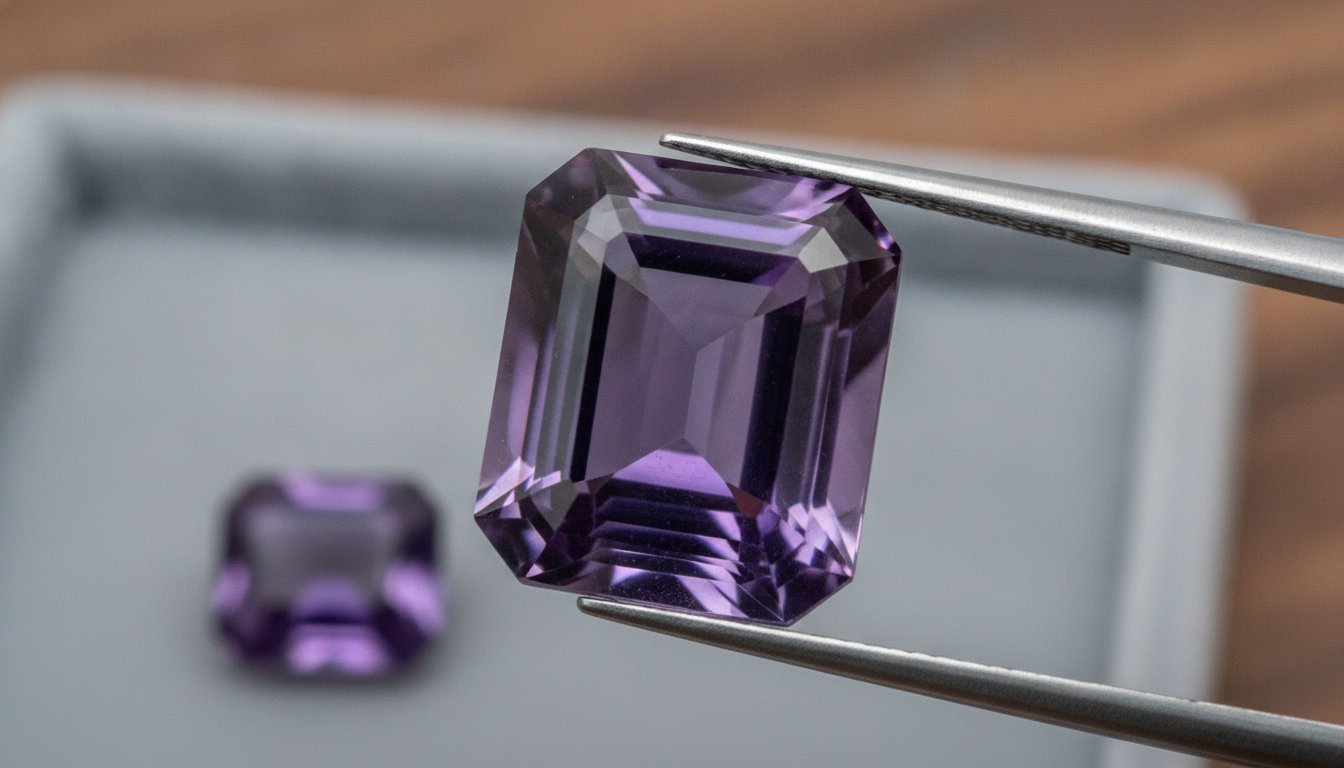
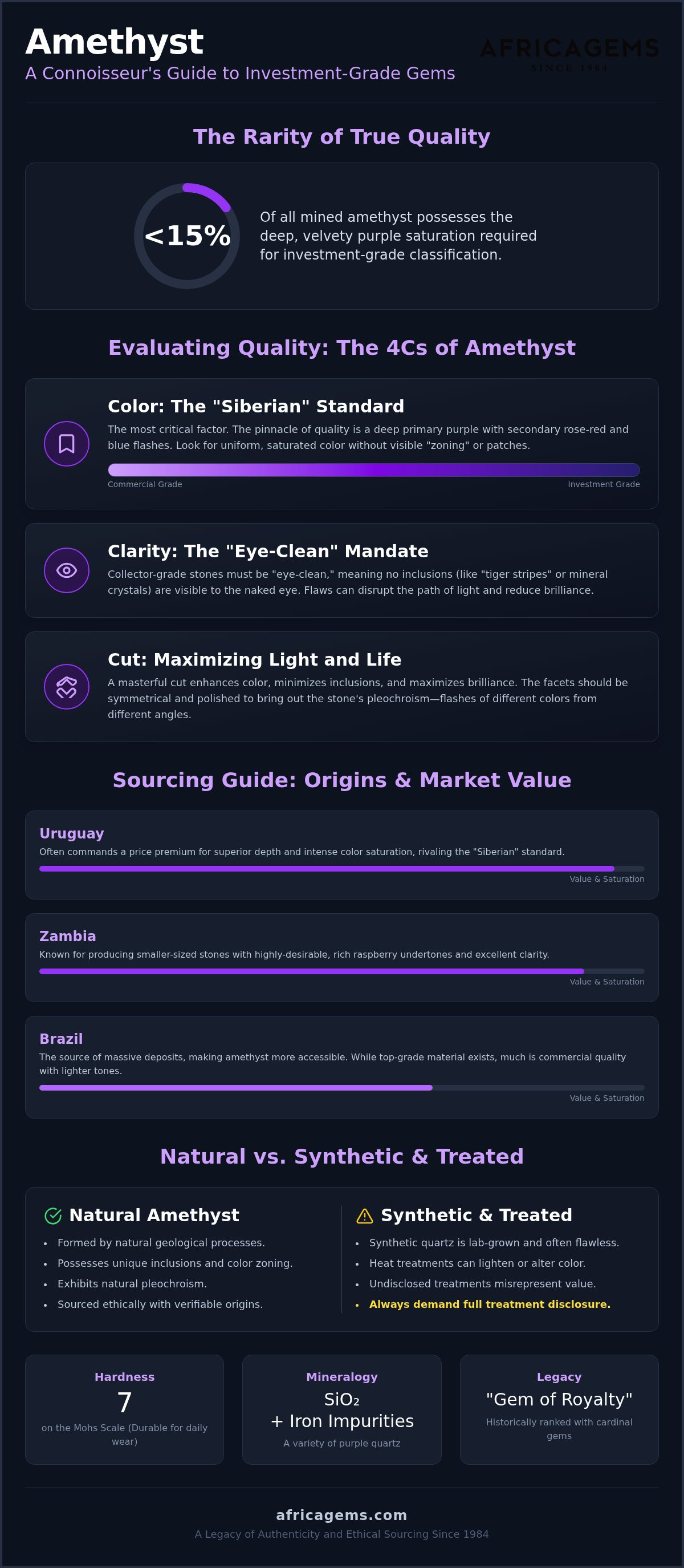
Less than 15% of all mined amethyst possesses the deep, velvety purple saturation required to be considered true investment-grade material. While this gemstone is often celebrated for its accessibility, the gap between a common craft-store crystal and a masterfully faceted "Siberian" quality gem is vast. You might feel a justified sense of caution when browsing, perhaps fearing that a vibrant stone is actually synthetic quartz or an undisclosed lab-treated imitation. It's a valid concern in a market where transparency is often sacrificed for a quick sale.
We understand that as a serious collector or jewelry enthusiast, you seek more than just a pretty stone; you want a legacy piece with verifiable integrity. This guide promises to transform you into a connoisseur capable of evaluating amethyst with professional precision. You'll learn to master the 4Cs, identify high-value color saturation, and navigate the nuances of ethical sourcing. We'll examine the specific beauty of Uruguayan and Zambian origins while demystifying the industry standards for treatment disclosure. By the end, you'll have the confidence to select a stone that stands as a testament to nature's artistry and your own refined taste.
Key Takeaways
- Learn how to identify the rare "Siberian" color standard that distinguishes investment-grade amethyst from common commercial varieties.
- Discover why stones from Uruguay often command a price premium over Brazilian exports because of their superior depth and saturation.
- Gain the technical knowledge to detect synthetic quartz and understand the critical importance of full treatment disclosure in the modern market.
- Understand how starting with a loose gemstone allows for higher quality control and more meaningful results in custom jewelry design.
- Leverage the legacy of a brand established in 1984 to secure gemstones backed by a personal guarantee of authenticity and ethical sourcing.
What is Amethyst? Understanding the Royal Purple Quartz
The Mineralogy of Purple Quartz
The vibrant color of this stone isn't just a surface trait; it's a structural marvel. When iron atoms are subjected to natural gamma radiation within the earth, they reach an oxidized state that absorbs specific wavelengths of light, leaving us with the iconic purple. For those seeking a comprehensive overview of amethyst, understanding this atomic interplay is essential to appreciating the stone's rarity. The intensity of the color often depends on the amount of iron present and the duration of the irradiation process.
With a hardness of 7 on the Mohs scale, amethyst is remarkably durable. It's resilient enough for daily wear, resisting the scratches that often dull softer stones. High-quality specimens also exhibit pleochroism, where the gem reveals different shades of purple or even reddish-blue flashes when viewed from different angles. This optical depth is a primary marker of quality that separates a masterfully cut loose gemstone from a mere decorative crystal. The crystal structure often forms in six-sided prisms, though the most coveted material comes from the tips of these crystals where the color is most concentrated.
Historical Allure and Modern Value
Historically, amethyst was ranked alongside diamonds and rubies as one of the cardinal gems. Its name derives from the Greek "amethystos," meaning "not drunken," reflecting an ancient belief that the stone protected its wearer from intoxication. This "Sobering Stone" eventually found its way into the most prestigious precious gemstones collections in the world, including the British Crown Jewels. For centuries, its scarcity ensured that only the highest echelons of society could possess it.
The discovery of massive deposits in Brazil during the 19th century shifted the market, moving the stone from extreme rarity to relative accessibility. However, this abundance has only heightened the demand for the top 15% of production. While the market is flooded with commercial-grade material, true connoisseurs focus on high-investment-grade stones with deep saturation and no visible inclusions. These rare specimens maintain the legacy of the "Gem of Royalty," offering a blend of historical prestige and contemporary luxury that remains a staple for serious collectors and designers.
Evaluating Quality: The 4Cs of Loose Amethyst Gemstones
While many view quartz as a common mineral, the professional grading of an investment-grade amethyst requires a disciplined eye. Unlike diamonds, where brilliance is often the primary focus, color reigns supreme here. As a Type II gemstone, this purple quartz follows specific grading standards that separate commercial material from true collector pieces. Understanding these nuances ensures you don't overpay for a stone that lacks the "life" and longevity required for a high-end collection.
Color Grading: Seeking the "Siberian" Standard
The pinnacle of quality is the "Siberian" color standard. This describes a deep, primary purple with secondary flashes of rose-red and blue. Finding this balance is difficult; research indicates that less than 15% of mined material reaches this level of saturation. When you're evaluating a stone, watch closely for "color zoning." This phenomenon appears as uneven stripes or patches of color within the crystal. A high-value stone must show a uniform, saturated face-up color without visible zones. Lighting also plays a critical role in your assessment. Incandescent light typically brings out warm red tones, while daylight might emphasize cooler blue secondary hues.
Clarity and Cut for Maximum Brilliance
Amethyst typically grows with minor inclusions, but for a collector-grade stone, the standard is "eye-clean." This means no internal flaws should be visible to the naked eye. Inclusions like "tiger stripes" or small mineral crystals can disrupt the light path, significantly lowering the value. A clean stone provides the perfect canvas for a master lapidary to showcase the unique Geologic Occurrence of Amethyst through precision faceting.
The cut breathes life into the raw material. A poor cut often results in "windowing," where the center of the stone appears washed out because light leaks through the back. Conversely, "extinction" occurs when a stone is cut too deep, creating dark, lifeless patches that mask the purple hue. A masterfully faceted stone maximizes internal reflection, ensuring the color remains vibrant across the entire table. Common shapes include ovals and emerald cuts, though custom designer cuts are increasingly favored for bespoke jewelry. Because this gemstone is available in larger sizes than rubies or sapphires, it offers exceptional value for statement pieces. If you're ready to find a stone that meets these rigorous standards, you can explore our curated selection of loose amethyst gemstones to begin your custom design journey.
Natural vs. Treated and Synthetic Amethyst
The prevalence of synthetic quartz in the modern market poses a significant challenge for collectors. Unlike many other gemstones where lab-grown versions are easily spotted under a loupe, hydrothermal amethyst is chemically, physically, and optically identical to its natural counterpart. This creates a market where radical transparency is no longer just a business value; it's a necessity for security and long-term value retention.
Identifying Synthetic Material
Hydrothermal growth is the primary method used to create synthetic quartz. In this process, crystals are grown in high-pressure autoclaves, resulting in stones that often lack the natural "fingerprints" we look for in earth-mined gems. While we previously discussed the importance of avoiding color zoning for aesthetics, the complete absence of it in a deeply saturated stone can be a red flag. Natural stones rarely achieve perfect color distribution without some subtle evidence of their growth history, such as faint angular bands or microscopic mineral crystals.
Synthetics also tend to be "too clean." While an eye-clean stone is the goal for any connoisseur, the presence of specific microscopic inclusions can actually confirm a stone's natural origin. Because of these complexities, professional certification from respected bodies like the Gemological Institute of America (GIA) is essential for high-value loose stones. Without a lab report, even experienced dealers can struggle to distinguish a top-tier natural gem from a sophisticated lab-grown imitation that costs only a fraction of the price.
Treatment Disclosure and Ethics
Beyond the natural versus synthetic debate, buyers must navigate the nuances of gemstone enhancements. Approximately 25% of amethyst stones sold undergo treatments, such as heat treatment, to enhance their color or transform them into citrine or green prasiolite. While these treatments are stable and widely accepted within the trade, they must be disclosed to the buyer. At AfricaGems, our commitment to integrity is personal. Marc Sarosi has championed full disclosure since 1984, ensuring every client understands exactly what they're purchasing.
For the serious connoisseur, unheated stones with natural, vivid color remain the ultimate prize. These gems represent the raw, unadulterated beauty of the earth and hold their value more reliably than enhanced varieties. Understanding these distinctions is the first step toward building a collection with lasting integrity. You can read more about our philosophy on why treatment disclosure is crucial to ensure your next acquisition is both ethical and secure. Don't settle for "natural" claims that lack the backing of a transparent sourcing history.
Sourcing Guide: Origins and Market Value
The geographical origin of an amethyst is more than a footnote; it's a primary determinant of the stone's character and long-term market value. While the mineral is found on nearly every continent, only a few specific regions produce the saturation and clarity required for investment-grade collections. Understanding these regional signatures allows you to identify which stone best fits your aesthetic and financial goals. Since 1984, we've seen how origin-specific traits influence the desirability of a gem in the eyes of serious collectors.
Comparing Global Origins
Uruguay stands as the premier source for the deepest, most saturated "Siberian" colors. These stones often command a premium over Brazilian material because of their intense violet hues and velvety texture. Conversely, Brazil remains the world's largest producer, supplying approximately 40% of the global market with 2,500 metric tons annually. Brazilian mines are the best source for large, eye-clean jewelry stones that offer exceptional clarity at a more accessible price point. They provide the perfect material for statement pieces where size and transparency are paramount.
African sources provide a distinct alternative for those who prioritize color intensity. Zambia is the second-largest producer, contributing around 20% of the world's supply. Zambian stones are known for being smaller but incredibly vibrant, often displaying exceptional red secondary flashes that dance under incandescent light. For those seeking rare domestic gems, the Four Peaks mine in Arizona remains a legendary American source, producing high-quality material in limited quantities that is highly prized by collectors of North American minerals. For enthusiasts looking to acquire these rare regional specimens, the option to sell gold Houston can provide the necessary capital to expand a high-end gemstone portfolio with confidence.
The global market for this purple quartz reached a valuation of $1207.52 million in 2026, reflecting a sustained demand for high-quality colored gems. Pricing remains bifurcated between commercial and investment grades. While lower-grade rough is widely available for decorative use, top-tier faceted stones with deep saturation and no visible inclusions are increasingly scarce. The rarest "Siberian" quality specimens command the highest market values because of this scarcity, particularly as consumer demand in the U.S. accounts for more than 35% of the global supply.
Compared to other semi-precious gemstones, amethyst offers an unrivaled value proposition. It provides the royal color of a purple sapphire at a fraction of the cost, even for stones exceeding five carats. As the global supply of top-tier color tightens, collectors are increasingly focusing on verifiable origins and ethical sourcing. If you're looking to add a world-class specimen to your collection, you can explore our selection of ethically sourced loose amethyst gemstones to find a stone that meets these rigorous standards.
Custom Jewelry: Bringing Your Loose Amethyst to Life
Buying a loose amethyst is the hallmark of a discerning collector who refuses to compromise on quality. Most pre-set jewelry found in commercial showrooms is designed to mask internal inclusions or average cut quality behind heavy prongs and thick bezels. By selecting a loose stone first, you gain the distinct advantage of inspecting the gem's symmetry, color zoning, and clarity from every possible angle. This transparency ensures that your final piece isn't just a generic accessory, but a curated work of art that meets the highest professional standards.
The AfricaGems Custom Design Process
The journey from a raw mineral to a wearable heirloom begins in our inventory of loose gemstones, where you can filter specimens by their specific origin and carat weight. Whether you're drawn to the fiery red flashes of a Zambian stone or the deep, velvety purple of a Uruguayan specimen, the setting should be chosen to enhance these specific optical traits. Yellow gold creates a warm, royal contrast that has defined luxury jewelry for centuries. Conversely, platinum or white gold provides a crisp, modern frame that emphasizes the cooler blue secondary hues often found in top-tier material.
Marc Sarosi's expertise, honed since 1984, guides this transformation from a simple purchase into a personal consultation. Our custom design services allow you to collaborate directly on bespoke pieces, ranging from sophisticated rings to exquisite gemstone pendants. This collaborative process ensures that the stone's "life" is maximized through a setting that allows optimal light entry. It's a legacy-oriented approach that transforms a digital transaction into a meaningful, personalized experience.
Caring for Your Amethyst Jewelry
While this gemstone is durable with a Mohs hardness of 7, it still requires mindful care to maintain its brilliance over a lifetime. You should avoid exposing your jewelry to extreme heat or harsh household chemicals, which can damage the stone's surface or cause color fading in some treated varieties. For routine maintenance, use lukewarm water and a mild soap with a soft-bristled brush. This simple ritual preserves the "Siberian" glow that makes the stone so captivating to the eye.
Every finished piece comes with Marc Sarosi’s personal guarantee of quality and ethical sourcing, providing the security essential for high-value acquisitions. Whether you're celebrating a February birthday or a 6th wedding anniversary, a custom-designed piece serves as a permanent testament to your refined taste. By starting with a loose stone, you've ensured that the center of your jewelry is as authentic and resilient as the story it represents.
Securing Your Legacy in Purple Quartz
You've mastered the intricate art of evaluating the 4Cs and identifying the rare "Siberian" standard that defines top-tier quality. You now possess the technical insight to distinguish between common decorative quartz and high-investment-grade gems that hold their value over time. Whether you're drawn to the intense saturation of Uruguayan mines or the fiery red flashes found in Zambian deposits, your commitment to transparency ensures a collection of lasting integrity. Each stone tells a story of geological wonder, and your ability to read that story is what separates a casual buyer from a true connoisseur.
Selecting a loose amethyst is more than a purchase; it's the foundation of a truly bespoke heirloom. With over 40 years of professional expertise since 1984, AfricaGems provides the security you deserve through full treatment disclosure and the personal accountability of our founder. You're invited to explore our collection of Loose Amethyst Gemstones or reach out for a personal consultation with Marc Sarosi to bring your custom jewelry vision to life. We look forward to helping you secure a stone that reflects your discerning standards and deep passion for natural beauty.
Frequently Asked Questions
Is amethyst a precious or semi-precious stone?
Historically, amethyst was considered one of the five cardinal precious gemstones alongside diamonds and rubies. While modern classifications often label it as semi-precious due to its abundance in Brazil, this term is misleading for collectors. High-investment-grade stones with exceptional saturation remain remarkably scarce. We treat these top-tier specimens with the same professional rigor as any precious gem, focusing on the rarity of color and clarity that defines a true heirloom piece.
How can I tell if my amethyst is real or synthetic?
Distinguishing natural amethyst from hydrothermal synthetic quartz is difficult because they share identical chemical properties. You should look for subtle color zoning, which appears as angular bands of varying purple intensity. Synthetics are often too perfect and lack these natural growth markers. Because lab-grown stones are rampant, we recommend a professional lab report or purchasing from a dealer like Marc Sarosi, who has provided full treatment disclosure since 1984 to ensure authenticity.
Does amethyst fade in sunlight?
Yes, prolonged exposure to intense, direct sunlight can cause the purple color to fade or become dull over time. This is a natural reaction to UV radiation affecting the iron impurities within the crystal lattice. To maintain the vibrant glow of your jewelry, it's best to store it in a dark, lined jewelry box when you aren't wearing it. Avoid leaving your gemstones on windowsills or in sun-drenched display cases for extended periods.
What is the most valuable color for an amethyst?
The most valuable color is a deeply saturated, vivid purple that retains its brilliance even in low light. Connoisseurs specifically seek out the Siberian standard, which features secondary flashes of rose-red or blue. A stone's value decreases if the color is too light or so dark that it appears black, a phenomenon known as extinction. Uniformity is equally critical; stones with no visible color zoning are significantly more prized in the collector-grade market.
Is amethyst durable enough for an engagement ring?
Amethyst is suitable for an engagement ring, but it requires more mindful care than harder stones like sapphires or diamonds. It ranks 7 on the Mohs scale, making it resistant to common scratches but vulnerable to hard knocks. If you choose this stone for daily wear, we recommend a protective setting like a bezel or heavy prongs. Our custom jewelry design services can help you create a mounting that balances elegance with the necessary structural security.
What is "Green Amethyst" and is it natural?
Green amethyst is a trade name for prasiolite, a leek-green variety of quartz. While it occurs naturally in rare instances, nearly all prasiolite on the market is created by heat-treating specific amethyst from the Montezuma mine in Brazil. It is important to distinguish this from natural green quartz. At AfricaGems, we believe in radical transparency, ensuring you always know whether a stone's color was achieved through natural geological processes or expert laboratory enhancement.
How much should a high-quality loose amethyst cost per carat?
The price of a high-quality loose stone is determined by its color saturation, origin, and the precision of its cut. Investment-grade specimens with deep purple hues and no windowing command a significant premium over commercial-grade material. Factors like large carat weights and rare origins, such as Uruguay or the Four Peaks mine in Arizona, also influence the market value. While prices vary based on current availability, focusing on stones with a Siberian color profile ensures better long-term value retention.
Where does the best quality amethyst come from?
The best origin depends on your specific aesthetic goals for your collection. Uruguay is widely considered the source for the deepest, most velvety purple hues, often referred to as Siberian quality. Zambia is celebrated for producing smaller, highly saturated stones that exhibit unique reddish flashes. If you are looking for large, eye-clean specimens for a statement piece of jewelry, Brazil remains the world's premier source, offering an incredible range of sizes and clarity levels.

Article by
Marc Sarosi
Professional gemstone dealer for more than 40 years. Started off mining Aquamarine in Zambia, Africa and travelled throughout the continent in search of fine gems. Trusted authority on fine gemstones and have donated a fine collection of more than 27 extraordinary gemstones to the Smithsonian Institute Gem Hall for generations to see.