
Alexandrite Price Per Carat: The 2026 Connoisseur’s Value Guide
Jul 28th 2026
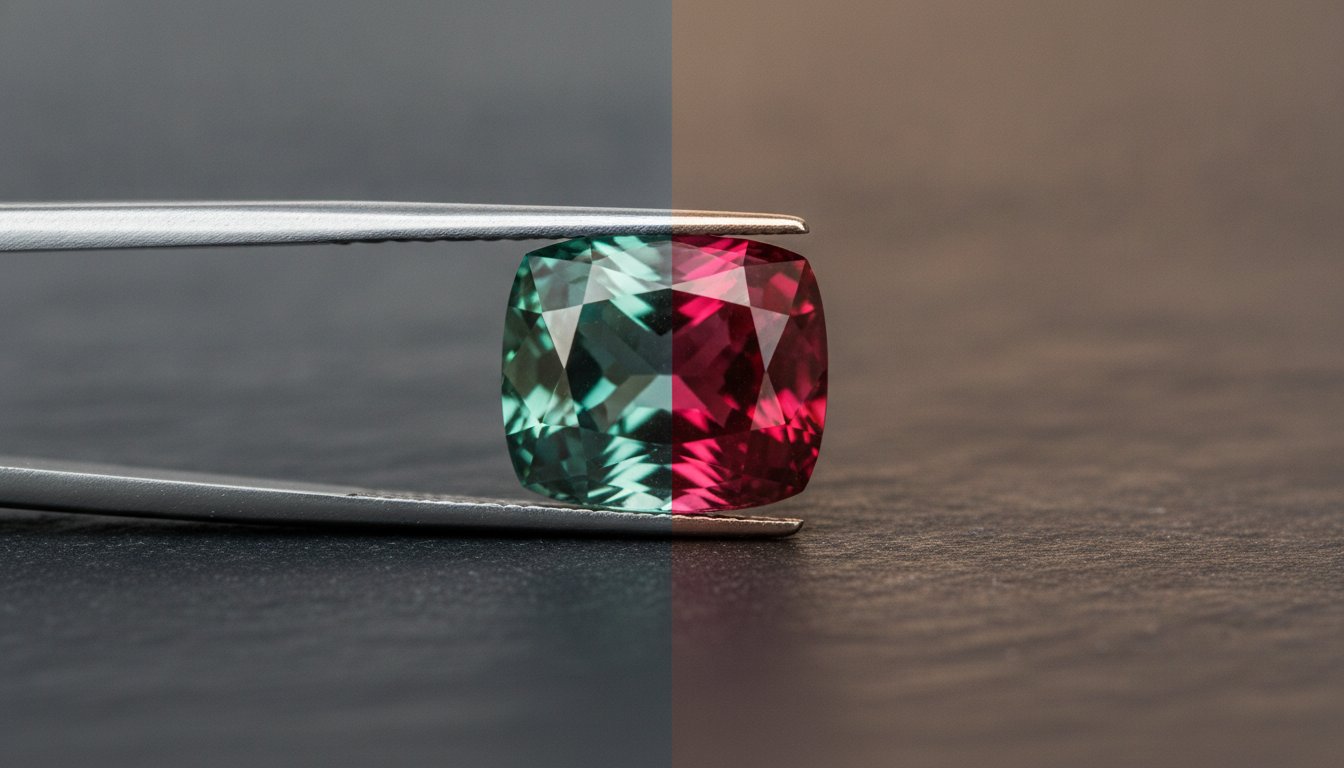
Why does one 1-carat stone command a price of $2,000 while a seemingly identical gem costs $20,000? If you've felt overwhelmed by the extreme fluctuations in alexandrite price per carat, you aren't alone. It's a complex market where a minor shift in color change percentage or a specific geographic origin can swing the value by tens of thousands of dollars.
We understand that investing in such a rare treasure requires more than just an appreciation for beauty; it requires radical transparency. You deserve to know exactly why a Brazilian stone carries a premium over one from East Africa and how to distinguish a natural masterpiece from a synthetic imitation. This guide provides the definitive 2026 framework for evaluating quality, from the critical rarity jump at the one-carat threshold to the nuances of color purity. We'll demystify the pricing tiers and show you which laboratory certifications are essential for securing a fair market deal. By the end, you'll have the confidence of a seasoned collector when selecting your next investment piece.
Key Takeaways
- Master the "alexandrite effect" by identifying the specific hue shifts from daylight teal to incandescent red that command the highest premiums.
- Understand the exponential jump in alexandrite price per carat that occurs at the 1.00-carat threshold, a statistical rarity for this specific gemstone species.
- Evaluate the impact of geographic origin, comparing the legacy of Russian Ural Mountain stones with the vibrant, high-clarity material found in modern Brazilian deposits.
- Compare investment-grade natural stones with premium Chatham lab-created alternatives to find the perfect balance between rare natural history and accessible luxury.
- Secure your investment by learning which top-tier certifications and expert sourcing standards are essential to guarantee authenticity and ethical origin.
What Drives Alexandrite Price Per Carat? The 'Color Change' Premium
Alexandrite is a rare and captivating variety of the mineral chrysoberyl that owes its legendary status to the "alexandrite effect." This phenomenon is the gemstone's ability to change color based on the light source. In the world of high-end gems, the alexandrite price per carat is primarily dictated by the strength and purity of this transformation. While other factors like clarity and origin play their parts, the color change remains the ultimate arbiter of value. A stone that makes a full, dramatic transition is a miracle of nature; a stone that only hints at a shift is merely a curiosity.
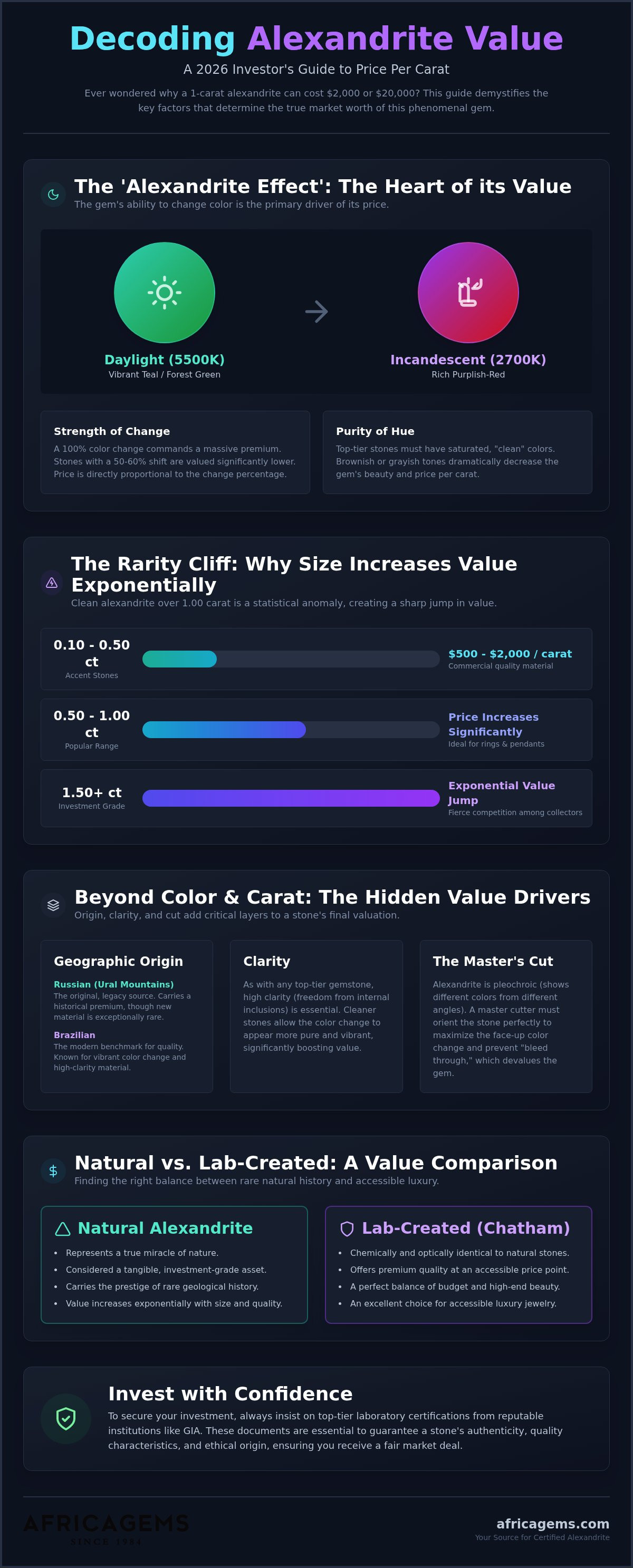
The "ideal" shift for a top-tier specimen moves from a vibrant teal or forest green in natural daylight to a rich, purplish-red under incandescent light. Price is directly proportional to the percentage of this change. A stone exhibiting a 100% color change commands a massive premium compared to one with a 50% or 60% shift. Hue purity is also essential. If a stone shows brownish or grayish modifiers, its beauty is dampened, leading to a significant drop in the alexandrite price per carat. Collectors demand saturated, "clean" colors that don't look muddy in any environment.
The Physics of the Shift: Chromium and Pleochroism
The magic behind the shift lies in trace elements of chromium. These atoms absorb light in a narrow path of the yellow spectrum while allowing green and red wavelengths to pass through. This creates a high-stakes challenge for lapidaries because alexandrite is also pleochroic. This means the crystal shows different colors when viewed from different crystallographic directions. A master cutter must orient the stone perfectly to maximize the face-up color change. If the orientation is off, you might experience "bleed through," where both colors are visible at once. While this might sound interesting, it actually lowers a stone's value because it dilutes the distinct "day" and "night" personalities that define a world-class gem.
Daylight vs. Incandescent: The Two-Sided Valuation
A stone's performance in a laboratory doesn't always translate to the dinner table or the office. Many modern stones look exceptional under specific LED setups but appear dark or "extinguished" in real-world lighting. Professional valuation requires testing under 5500K (standard daylight) and 2700K (warm incandescent) light sources. If a stone loses its luster or becomes overly dark in these settings, its market desirability falls. For the 2026 connoisseur, the ideal alexandrite exhibits a 100% shift from a vibrant forest green in daylight to a vivid, raspberry purplish-red under incandescent light, completely free of distracting gray or brown modifiers.
The 1-Carat Threshold: Why Size Exponentially Increases Alexandrite Value
Nature is stingy with alexandrite. While a sapphire or ruby might occasionally be found in massive sizes, alexandrite crystals rarely grow large; finding clean material over 1.00 carat is a statistical anomaly. According to the GIA, most fine-quality alexandrite is small, usually weighing less than half a carat. This scarcity creates a "cliff" effect in valuation. A stone weighing 0.95 carats might be beautiful, but the moment a gem crosses the 1.00-carat mark, the alexandrite price per carat leaps significantly. You aren't just paying for the extra weight; you're paying for the extreme rarity of that specific size threshold.
Market data for 2026 suggests that for every carat added, the cost doesn't just double. It scales exponentially. For serious collectors, investment-grade stones typically start at the 1.50 to 2.00-carat mark. In these ranges, the competition among connoisseurs becomes fierce, as the global supply of high-clarity, large-format stones remains incredibly tight. While numbers provide a baseline, seeing the stones is essential. You might explore our loose gemstone inventory to understand how these weight thresholds affect visual presence.
Alexandrite Price Per Carat Estimates by Weight (2026)
- 0.10 to 0.50 Carats: These are the entry-level gems used for fine jewelry accents or small studs. Prices generally range from $500 to $2,000 per carat for commercial quality material.
- 0.50 to 1.00 Carats: This is the most popular range for engagement rings and pendants. You can expect to pay between $2,000 and $8,000 per carat for good quality material.
- 1.00 to 3.00+ Carats: This is "Collector's Vault" territory. Fine quality stones in this weight class often command between $8,000 and $40,000 per carat, while museum-quality specimens over 3 carats can exceed $100,000 per carat.
The Impact of the 'Face-Up' Size
Carat weight can be deceptive. A deep-cut stone might carry a high weight on the scale, but if that mass is hidden in a heavy "belly," the stone looks smaller than it should. Conversely, a well-proportioned lighter stone can have a larger "face-up" appearance. If a stone is cut too shallow, you'll see "windowing," a pale area in the center where light leaks through rather than reflecting. This flaw significantly lowers the alexandrite price per carat regardless of the total weight. A perfect cut is vital because it balances the weight with the maximum color-change effect, ensuring the gem's value matches its technical specifications.
Geographic Origin and Clarity: The Hidden Value Drivers
While the intensity of the color shift sets the stage, geographic origin acts as the final multiplier for the alexandrite price per carat. A stone's birthplace carries weight not just for its geological properties, but for its historical pedigree. In 2026, the market recognizes a clear hierarchy. Russian stones from the Ural Mountains remain the undisputed gold standard. Since these mines were largely exhausted decades ago, genuine Russian specimens are almost exclusively found in high-end estate jewelry or private collections. If you find a stone with a verified Russian lineage, you're looking at a piece of history.
The 'Russian' Premium: History vs. Reality
A certified Russian origin can double or even triple the alexandrite price per carat compared to an East African stone of similar appearance. Collectors prize them for their benchmark color change. However, savvy buyers often look to Brazilian material from the Hematita mine. Brazilian alexandrite is the modern connoisseur's choice, often exhibiting the same dramatic teal-to-raspberry shift as the Russian legends but with superior clarity. To ensure you're paying for actual quality rather than just a label, verification from labs like the GIA or AGL is non-negotiable for high-value origin claims. These institutions provide the technical validation necessary to support such significant price premiums.
Clarity Grades and Price Deductions
Unlike emeralds, where "gardens" of inclusions are tolerated, top-tier alexandrite is expected to be relatively eye-clean. Inclusions don't just affect the stone's structural integrity; they physically disrupt the light path. As we discussed regarding the physics of the shift, anything that scatters light can soften the color change and lower the stone's market value. Tiny needles or "silk" can create a sleepy appearance that mutes the vibrant teal or purplish-red hues. In the 2026 market, a stone that combines a Brazilian pedigree with a VVS clarity grade represents the peak of modern investment-grade material.
Finding an eye-clean stone over one carat is exceptionally difficult. Sri Lankan (Ceylon) and East African stones often provide larger carat weights at a more accessible price point, but they frequently struggle with "muddy" brownish modifiers or weaker shifts. If you're seeking the pinnacle of natural beauty, you should browse our collection of certified natural gemstones to see how clarity and origin converge. Choosing a stone with high clarity ensures that the "alexandrite effect" remains the star of the show, unhindered by internal flaws that would otherwise diminish its brilliance and resale value.
Natural vs. Chatham Lab-Created: Finding the Right Value for Your Budget
When you consider the astronomical alexandrite price per carat for natural specimens, it's vital to understand that a sophisticated alternative exists. Lab-created alexandrite, specifically those produced by Chatham, isn't a "fake" or a simulant like color-change sapphire. These stones are chemically, physically, and optically identical to their natural counterparts. They possess the same crystal structure and the same chromium-driven "alexandrite effect" that we've discussed in previous sections. The primary difference lies in the environment of their creation, moving from a chaotic geological process to a controlled laboratory setting.
The price comparison is startling for many first-time buyers. While a top-quality 1-carat natural stone might command $15,000 or more, a Chatham equivalent costs only a small fraction of that amount. This massive difference in the alexandrite price per carat allows collectors to prioritize visual perfection. Chatham stones offer a guaranteed 100% color change and flawless clarity, two traits that are statistically nearly impossible to find together in nature. For modern couples choosing an engagement ring, the ethics and sustainability of a lab-grown stone provide an added layer of appeal, ensuring a conflict-free origin without sacrificing the gemstone's legendary beauty.
Chatham Lab-Created: The Science of Perfection
Chatham uses a specialized flux growth process to create their gems. This method mimics the high-pressure, high-heat conditions found deep within the earth's crust, allowing crystals to grow slowly over many months. Unlike cheaper flame-fusion methods that produce stones with curved growth lines, flux growth creates a material that even seasoned gemologists must examine closely to distinguish from natural origins. Chatham is the only lab-grown brand with a multi-generational legacy that rivals natural dealers, offering a level of trust that is rare in the synthetic market. You can explore these high-quality alternatives by visiting our Chatham lab-grown alexandrite collection.
Which Should You Choose? Investment vs. Wearability
The choice between natural and lab-grown ultimately depends on your goals as a buyer. Natural alexandrite serves as a "wealth storage" asset and a rare heirloom. These stones tend to appreciate over time due to their finite supply, making them ideal for those viewing their purchase as a long-term investment. Conversely, Chatham alexandrite is the superior choice for everyday luxury. Its durability and accessible price point make it perfect for frequent wear in items like gemstone earrings or bracelets, where the risk of loss or damage might make a $20,000 stone too stressful to enjoy. While natural stones hold the edge in resale value, lab-grown stones provide immediate, uncompromising "use value" for the connoisseur who wants the look of a museum-quality gem today.
This focus on wearable elegance is also a hallmark of Orek, where premium jewelry is designed to bridge the gap between high-end aesthetics and daily versatility.
If you're ready to select a stone that fits both your aesthetic standards and your financial plan, browse our full inventory of loose gemstones to compare these options side-by-side.
Investing with Confidence: How to Source Certified Alexandrite Online
Acquiring a rare gemstone is an exercise in trust. Because the alexandrite price per carat reaches such heights, the market is unfortunately flooded with synthetic "simulants" that can deceive even experienced buyers. You'll often find color-change sapphire or vanadium-doped synthetic corundum masquerading as natural alexandrite. To protect your investment, you should never purchase a stone without a certificate from a premier laboratory like the GIA or AGL. These reports provide more than just a name; they offer specific comments on "Color Change" and "Origin" that validate the premiums we've discussed in this guide.
The "Marc Sarosi" standard is built on the principle of radical transparency. When you're navigating high-value transactions, having a mentor with decades of direct sourcing expertise makes the difference between overpaying for a "muddy" stone and securing a legacy-grade gem. We prioritize full disclosure regarding any gemstone treatments, ensuring you understand the technical pedigree of your selection. Once you've secured a world-class loose stone, the logical next step is often a bespoke setting. You can explore AfricaGems custom services to transform your investment into a wearable masterpiece.
Red Flags in Alexandrite Pricing
If you encounter an alexandrite price per carat on a marketplace like eBay that seems "too good to be true," it almost certainly is. These listings are frequently synthetic materials that lack the sophisticated teal-to-red shift of the real mineral. Always demand high-definition video taken in multiple lighting environments. A static photo can't capture the "flip" of the color change, which is essential for assessing value. While the term "unheated" is a major value driver for rubies or sapphires, it's less critical for alexandrite since they're rarely heated. Instead, focus on the term "untreated" to ensure the stone's color and clarity are entirely natural.
The AfricaGems Guarantee
Since 1984, we've positioned ourselves as a pillar of integrity in the global gem trade. We understand that a digital storefront must offer the security of a personal consultation. This is why we provide a 30-day return policy and a commitment to absolute disclosure. We want you to feel like an informed insider, not just a customer. For those who wish to deepen their knowledge of specific deposits or the history of the "alexandrite effect," we encourage you to visit the AfricaGems blog. Our goal is to build buyer confidence through information density, ensuring that every stone you purchase is a source of pride for generations to come.
Secure a Gemstone Legacy That Lasts Generations
Selecting a world-class alexandrite is a journey into one of nature's most exclusive miracles. You've learned that alexandrite price per carat isn't a random figure; it's a precise calculation of color-change percentage, clarity, and the statistical rarity of weight thresholds. Whether you're chasing the historical prestige of a Russian origin or the vibrant perfection of a Chatham lab-created stone, the true value remains in the "flip" of the hue.
At AfricaGems, we've dedicated ourselves to this level of connoisseurship since 1984. Every natural stone is expertly curated by Marc Sarosi and backed by GIA or AGL certification to ensure your peace of mind. We prioritize radical transparency, providing full disclosure on all gemstone treatments so you can invest with absolute confidence. Your next heirloom is waiting to be discovered.
Secure Your Investment: Shop Certified Loose Alexandrite at AfricaGems
We invite you to explore a collection where technical excellence meets natural beauty. Let us help you find the perfect stone that reflects your unique standards and vision.
Frequently Asked Questions
Is alexandrite more expensive than a diamond?
High quality natural alexandrite is often significantly more expensive than a standard colorless diamond of the same weight. While a 1-carat diamond is relatively common, a 1-carat alexandrite with a 100% color change is a global rarity. This extreme scarcity drives the market value for top tier specimens far beyond that of most commercial diamonds, placing them in the elite category of the world's most expensive gemstones.
What is the average price for a 1-carat natural alexandrite in 2026?
The market value for a 1-carat natural stone varies based on the strength of its color change and clarity. Fine quality specimens with a strong shift command premium values, while stones with a weak or "muddy" change are valued much lower. Because the alexandrite price per carat scales exponentially with quality, collectors should prioritize stones with a verified shift and clear transparency to ensure long term value.
How can I tell if an alexandrite is real or lab-created?
A professional laboratory certificate from the GIA or AGL is the only definitive way to distinguish between natural and lab-grown stones. Under high magnification, natural stones often display unique inclusions or "silk" that are absent in lab environments. Conversely, some lab-grown varieties show specific growth patterns or flux remnants. Without technical validation, even experts can be deceived by the optical perfection of modern lab-created materials.
Does the origin of an alexandrite really matter for its price?
Geographic origin is a primary driver of market value, with Russian stones carrying the highest historical premium. While Brazilian stones from the Hematita deposit are currently prized for their clarity and intense shift, they typically trade at a different level than certified Russian estate pieces. Origin provides a narrative of rarity and geological history that collectors are willing to pay for, provided it's backed by credible lab documentation.
Why is some alexandrite green and some purple?
This phenomenon occurs because of the gemstone's unique ability to absorb and reflect different wavelengths of light. In daylight, the chromium trace elements within the crystal reflect green light; under incandescent light, the same elements reflect red and purple wavelengths. This dual personality is the hallmark of the species. The value is highest when these two colors are distinct and saturated rather than overlapping or appearing brownish.
What is the best metal for an alexandrite ring?
Platinum or 18k white gold are the preferred metals for alexandrite because their neutral, silvery tones don't interfere with the gemstone's color change. Yellow gold can sometimes cast a warm tint that muddies the teal daylight color, while white metals provide a clean, reflective backdrop. For a stone that shifts into a deep purplish-red, a neutral setting ensures that both the "day" and "night" colors remain vivid and true to their technical grade.
Are lab-created alexandrites worth anything?
Lab-created alexandrites hold significant "use value" but generally don't appreciate in price like rare natural stones. They are ideal for high-wear jewelry where the owner wants a museum-quality look without the immense financial risk of a natural gem. While they don't serve as a wealth storage asset, their chemical and optical identity to natural stones makes them a legitimate and beautiful choice for fine jewelry enthusiasts.
Should I buy a loose alexandrite or a pre-set ring?

Article by
Marc Sarosi
Professional gemstone dealer for more than 40 years. Started off mining Aquamarine in Zambia, Africa and travelled throughout the continent in search of fine gems. Trusted authority on fine gemstones and have donated a fine collection of more than 27 extraordinary gemstones to the Smithsonian Institute Gem Hall for generations to see.