
Alexandrite Price Per Carat: The 2026 Connoisseur’s Guide to Value and Scarcity
Aug 25th 2026
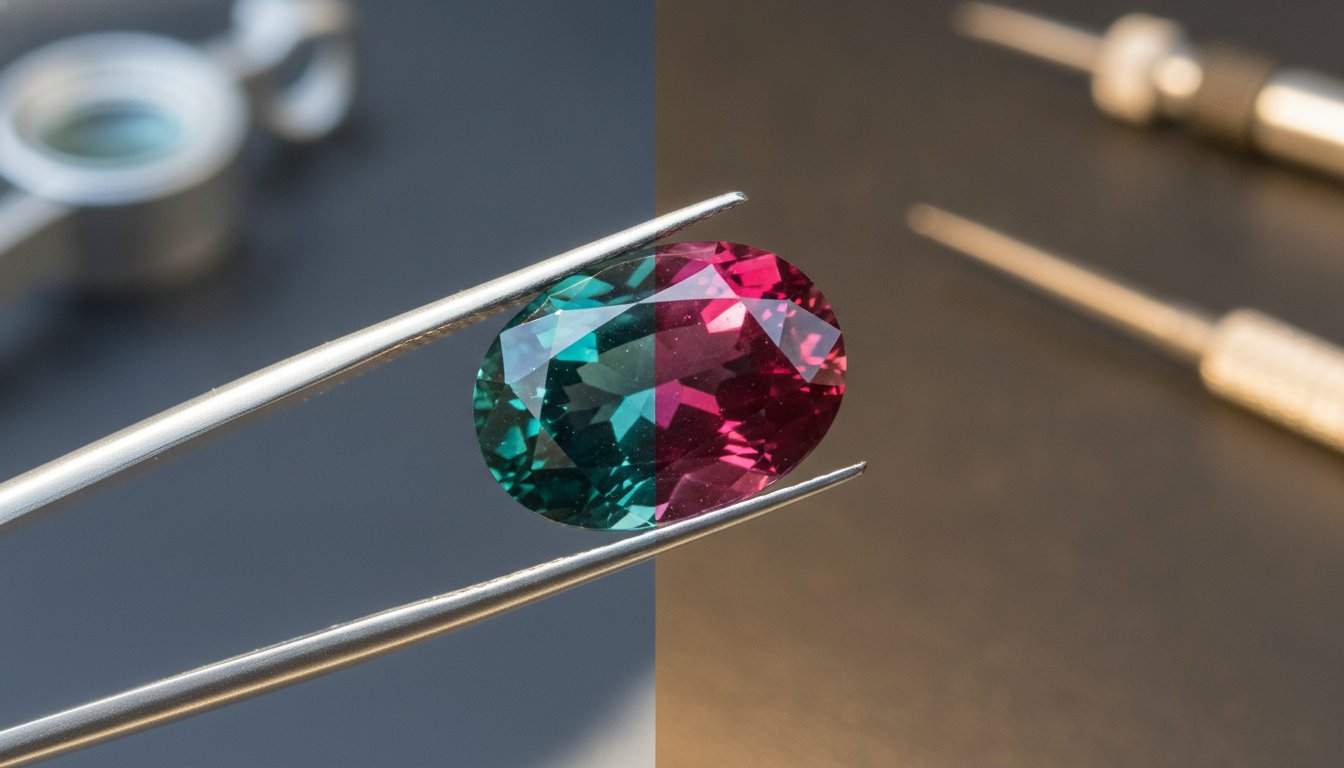
Did you know that gem-quality alexandrite is approximately 8,000 times rarer than a white diamond? This staggering scarcity is exactly why the alexandrite price per carat can swing from $3,000 to over $70,000 for a single specimen in the 2026 market. It's a high-stakes environment where a 10% improvement in color-shift quality can literally double the value of your investment. You likely feel the weight of choosing correctly, especially when stones marketed as premium often reveal muddy, grayish undertones rather than the vivid teal-to-raspberry transition you desire.
We understand that the fear of overpaying for a weak color-change or a mislabeled origin is a significant hurdle for any serious collector. This guide will help you master the complex variables that determine true brilliance, from the "Alexandrite Effect" to the dwindling yields of Brazil’s Hematita mine. You'll gain a clear framework for evaluating color-change quality and the confidence to select a stone that matches your specific budget. We'll explore the latest auction trends, the exponential price jump at the one-carat milestone, and the essential laboratory certifications needed to ensure your purchase remains a secure legacy for years to come.
Key Takeaways
- Discover the rare geological alchemy behind the "Emerald by day, Ruby by night" phenomenon. You'll see why these stones are 8,000 times scarcer than diamonds.
- Learn why the alexandrite price per carat is determined primarily by the percentage of color shift. Often, smaller, high-quality stones outprice larger, muted specimens.
- Navigate the non-linear price jumps at key carat thresholds. This helps you understand the extreme rarity and investment potential of natural gems over 1.00 carat.
- Distinguish between the unique character of natural origins and the accessible brilliance of Chatham lab-created stones. This ensures you find the right luxury for your budget.
- Understand the necessity of GIA certification. You'll learn how to leverage custom jewelry design services to securely mount and protect your investment-grade loose gemstones.
The Phenomenon of Alexandrite: Why Scarcity Drives Value
Alexandrite's allure lies in its theatrical duality, often described by connoisseurs as "Emerald by day, Ruby by night." This dramatic color shift isn't a mere visual trick. It's a testament to a geological miracle. Alexandrite forms only when chromium, a rare element, meets chrysoberyl under intense pressure. Usually, chromium is found in different rock layers than beryllium, the core of chrysoberyl. Their meeting is a rare cosmic accident. Discovered in Russia's Ural Mountains during the 1830s, the gem was named for Tsar Alexander II. It quickly became a symbol of imperial prestige. Because the stone displayed the red and green of the Russian military colors, it secured a legacy-oriented status that few other minerals could match.
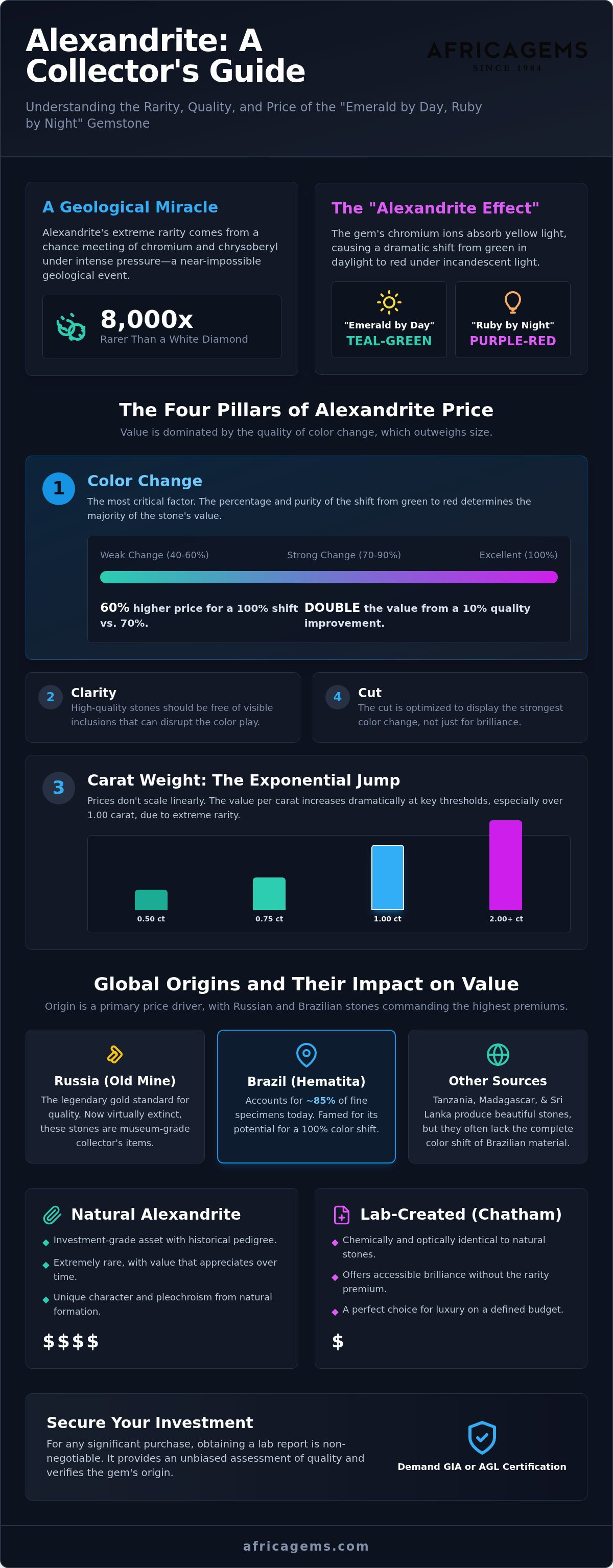
Unlike commercial staples like sapphire or emerald, alexandrite remains a true collector's gem. Its scarcity is nearly unparalleled. Fine specimens are roughly 8,000 times rarer than white diamonds. This extreme supply-demand gap is the primary engine behind the alexandrite price per carat. It reflects both physical rarity and historical pedigree. To better understand the technical factors that influence this value, watch this helpful video:
The Chemistry of the Alexandrite Effect
The "Alexandrite Effect" happens because of a specific chemical interference within the mineral chrysoberyl. While standard chrysoberyl is common, alexandrite only forms when chromium ions replace aluminum in the crystal lattice. This is a rare geological event. These chromium ions absorb light heavily in the yellow region of the spectrum. In blue-leaning daylight, which is rich in short-wave energy, the stone reflects green. Under yellow-leaning incandescent light, which is rich in long-wave energy, it reflects red. Pleochroism is the optical property where a gemstone displays different colors when viewed from different angles.
Global Origins and Their Impact on Rarity
Origin is a massive price driver. While the legendary "Old Mine" Russian stones are almost extinct, they still set the gold standard for quality. Today, Brazil accounts for approximately 85% of the fine specimens available, particularly from the famed Hematita mine. We've also seen beautiful stones emerge from Tanzania, Madagascar, and Sri Lanka. These often lack the 100% color shift found in Brazilian material. Because origin so heavily dictates the alexandrite price per carat, obtaining a GIA or AGL certification is non-negotiable. Our collection of loose alexandrite gemstones focuses on these high-integrity origins to ensure your investment is secure.
The Four Pillars of Alexandrite Price Per Carat
Mastering the four pillars of alexandrite price requires a departure from traditional diamond grading logic. While the 4Cs still apply, the hierarchy of value is strictly dominated by the quality of the color change, followed by clarity, carat weight, and cut. This prioritization explains why a 0.80-carat stone with a 100% color shift can command a significantly higher price than a 2.00-carat specimen with a weak, 40% change. In the world of rare gems, we prioritize the "effect" above all else. A stone that fails to transform decisively under different light sources loses its investment appeal, regardless of its size.
Evaluating the Percentage of Color Change
The most influential factor in the alexandrite price per carat is the percentage and purity of the color shift. In the 2026 market, a stone with a 100% shift from teal-green to purple-red typically costs 60% more than a stone with a 70% shift. We also evaluate the impact of pleochroism, which is the gem's ability to display different colors when viewed from different angles. If the pleochroic colors don't align with the primary color change, you'll see "bleed," where both colors are visible at once. This overlap, often appearing as brownish or grayish overtones, significantly lowers the value. Connoisseurs seek a "clean" change where the green is vivid in daylight and the red is raspberry-hued under incandescent light.
The Role of Clarity and Transparency
Alexandrite is classified as a Type II gemstone. This means it naturally forms with some level of internal inclusions, yet transparency remains vital for a high-value stone. Because the color change phenomenon depends on how light travels through the crystal lattice, heavy inclusions can scatter light and dull the visual transition. While eye-clean stones are the standard for fine collections, "Loupe Clean" specimens command a massive premium in today's market. These rare, transparent crystals allow for a crisp, decisive optical shift that highlights the stone's inner fire. If you are beginning your search for an investment-grade specimen, you can explore our current inventory of loose alexandrite gemstones to see how these clarity factors influence the overall aesthetic.
Carat Thresholds: Navigating the Exponential Price Jump
Navigating the alexandrite price per carat requires a deep understanding of exponential scarcity. In the gemstone world, weight is rarely a linear multiplier. For alexandrite, the price curve is remarkably steep. This is because the geological conditions required to grow large, transparent crystals are exceptionally rare. Most natural specimens are found as small, fractured crystals. When a cutter finds a piece of rough capable of yielding a stone over one carat, it represents a significant anomaly in nature. The market reflects this rarity with sharp price increases at specific weight milestones.
The 1.00 Carat Milestone
The 1.00 carat mark serves as both a psychological and financial barrier for collectors. It's the point where a stone transitions from a beautiful piece of jewelry to a significant asset. Finding high-saturation stones at this weight is a challenge. Saturation often drops as size increases, or the stone becomes too dark to show a clear change. If you're looking for value, we often suggest looking for stones in the 0.85 to 0.95 carat range. These "under-size" gems offer the visual impact of a full carat stone without the steep pricing premium. You can browse our curated selection of Loose Alexandrite Gemstones to compare these subtle weight differences and their impact on value.
Investment Grade: Stones Above 2.00 Carats
Once a stone exceeds the 2.00 carat threshold, it enters the 'Investment Grade' category. At this level, the alexandrite price per carat can reach staggering heights, especially for Brazilian or Russian origins. These stones are almost exclusively sold with comprehensive lab reports from institutions like GIA or SSEF. Finding a clean stone above two carats with a 100% color shift is a once-in-a-career event for most dealers. AfricaGems leverages over 40 years of expertise to source these rare treasures for serious investors who demand full disclosure and ethical provenance. At this size, every point of color change percentage can add thousands of dollars to the total value. The market for these stones is highly competitive, as global demand has surged by 22% in the last 24 months, further squeezing an already limited supply.
Natural vs. Chatham Lab-Created: A Value Analysis
While securing such a significant investment requires careful planning, managing your personal health and well-being is equally important for long-term security. For those looking for expert guidance on healthcare options, Aussie Scripts:-types-indications-benefits-and-side-effects-C36532) provides detailed resources on essential topics like oral contraceptive pills.
Choosing between natural and lab-created alexandrite is a decision that balances investment goals with aesthetic desires. Chatham lab-created alexandrite isn't a cheap stimulant or a piece of glass. It's a flux-grown mineral that possesses the exact chemical, physical, and optical properties of natural chrysoberyl. While a natural stone carries the "unique" fingerprints of its geological origin, a lab-grown specimen offers a "perfect" color change that most natural stones can't match. This perfection comes with a significantly lower entry point, allowing you to enjoy the legendary color-shift without the extreme scarcity premium.
Understanding the alexandrite price per carat is essential when weighing these options. While natural stones are priced based on extreme rarity and origin, lab-grown stones are valued based on production excellence and brand reputation. The differential in the alexandrite price per carat between the two categories is substantial, often making lab-grown stones a tenth of the price of their natural counterparts. This makes the lab-grown variety an excellent choice for stunning, daily-wear jewelry like engagement rings or pendants. However, if your goal is a legacy piece that appreciates over time, the scarcity of a natural stone remains the only viable path for serious collectors.
The Integrity of Chatham Flux-Growth
Chatham is widely regarded as the industry standard because of its commitment to the flux-growth process. Unlike cheaper flame-fusion methods, flux-growth mimics the natural environment of the Earth's crust over several months. This slow crystallization allows for the development of a true crystal lattice, resulting in the same "Emerald by day, Ruby by night" phenomenon found in nature. You can explore how these high-quality alternatives compare by visiting our collection of non-genuine gems, which features the finest Chatham specimens available today.
Ethical and Practical Considerations
For many modern collectors, the ethical transparency of a lab-grown origin is a significant draw. These stones are created in controlled environments, ensuring a conflict-free supply chain from start to finish. Practically speaking, both natural and lab-grown alexandrite are exceptionally durable, boasting a hardness of 8.5 on the Mohs scale. This makes them ideal for daily wear in rings or bracelets. To dive deeper into the nuances of these choices, explore our gemstone education blog. Whether you desire the storied rarity of the earth or the accessible brilliance of science, we're here to help. Browse our natural and lab-created inventory to find the perfect stone for your next custom design.
How to Buy Alexandrite Securely at AfricaGems
Investing in a stone of this magnitude requires a partner who values radical transparency as much as you value the gem's beauty. Since 1984, AfricaGems has built a legacy on the principle of full disclosure. We don't just sell gemstones; we provide a gateway for collectors to enter the market with absolute security. Founder Marc Sarosi’s 40 plus years of expertise ensures that every stone in our inventory is ethically sourced and rigorously vetted. Because the alexandrite price per carat is so significantly influenced by subtle shifts in hue and origin, we provide high-definition videos of every specimen. This allows you to witness the color change in real-time before the stone ever leaves our vault.
The Importance of Third-Party Certification
A reputable gemological report is your greatest asset when verifying value. You should never purchase a natural alexandrite without a GIA or AGL report. These documents act as an unbiased safeguard, confirming the stone's geographic origin and its "natural" status. A report from a premier lab validates that the color change hasn't been artificially enhanced. AfricaGems provides these comprehensive reports for all major alexandrite listings, ensuring that your investment is backed by the industry's most stringent standards. This level of technical validation is what transforms a simple purchase into a secure, long-term asset.
From Loose Stone to Custom Masterpiece
Choosing a loose stone gives you the rare opportunity to inspect its "eye-clean" status from every angle. Once you've selected a specimen that meets your quality standards, our Custom Jewelry Design Services can help you create a setting that protects and highlights its duality. We often recommend Platinum or 18k White Gold to enhance the cool, teal-green daylight tones. For those celebrating a 45th wedding anniversary or a June birthday, a custom-mounted alexandrite serves as a legacy-oriented gift. We offer a 30-day money-back guarantee on every high-value gem, providing the peace of mind necessary for such a significant transaction. You're invited to explore our current collection of Loose Alexandrite and begin your journey with a personal consultation.
Before you finalize your selection, use this connoisseur’s checklist to ensure the alexandrite price per carat aligns with the stone's true quality:
- Independent Certification: Is there a GIA or AGL report confirming the origin and natural color change?
- Visual Verification: Have you viewed HD video in both daylight and incandescent light sources?
- Expert Consultation: Have you discussed the stone’s specific pleochroism and clarity with a specialist?
- Security Guarantee: Does the dealer offer a clear, 30-day return policy for inspection?
Securing Your Legacy in Color-Changing Brilliance
You've now mastered the intricate variables that define the alexandrite price per carat, moving beyond simple weight to prioritize the mesmerizing optical phenomenon. By focusing on the percentage of color shift and insisting on third-party validation, you ensure your investment holds its value in a competitive 2026 market. Whether you're drawn to the storied rarity of a natural Brazilian specimen or the accessible perfection of a Chatham lab-created stone, the key is making an informed choice backed by radical transparency. Selecting a stone with a decisive transition ensures your jewelry remains a captivating conversation piece for generations.
At AfricaGems, we combine over 40 years of professional gemstone expertise with a commitment to ethically sourced natural gems. Every high-value stone in our vault is GIA or AGL certified, providing you with the technical security required for a confident purchase. We invite you to View Our Certified Natural Alexandrite Collection and find a stone that speaks to your personal style. Your journey into the world of rare materials starts with a mentor you can trust. We look forward to helping you discover a gem that truly changes everything.
Frequently Asked Questions
Is alexandrite more expensive than a diamond?
Yes, gem-quality alexandrite is 8,000 times rarer than a white diamond and often commands a higher price tag. Fine specimens can exceed $25,000 per carat, which is significantly higher than many commercial-grade diamonds. Because supply is so limited and demand has surged by 22% recently, the market value remains exceptionally high. It's truly a collector’s gem where scarcity dictates a premium. Secure your investment by choosing stones with certified origin.
What is the most valuable color change for alexandrite?
The most valuable color change is a 100% shift from a vivid teal-green in daylight to a purplish-red or raspberry-red under incandescent light. Connoisseurs look for a decisive transition without any bleed or muddy overtones. A stone with this perfect shift typically costs 60% more than one with only a 70% shift. The purity of these hues determines the ultimate investment potential and aesthetic allure of the specimen.
Does the origin of alexandrite (Brazil vs. Russia) affect the price per carat?
Origin is a primary driver of the alexandrite price per carat, with Russian stones commanding a 200% premium over other sources. Brazil currently accounts for 85% of the fine market, specifically from the Hematita mine where yields have dropped to 12% of 2012 levels. While Brazilian stones are highly prized for their clarity and shift, the historical pedigree of Russian stones keeps them at the top of the value hierarchy for serious collectors.
How can I tell if an alexandrite is real or lab-created?
You cannot reliably distinguish between natural and lab-created alexandrite with the naked eye because they share identical physical properties. The only secure method is through a third-party lab report from GIA or AGL. These reports use advanced spectroscopy to identify growth patterns and trace elements. While Chatham lab-grown stones offer a perfect look, natural stones contain unique inclusions that act as a geological birth certificate for investors and collectors.
Why does my alexandrite look brownish in certain light?
Brownish or grayish overtones occur when chromium ions don't perfectly align within the crystal lattice, leading to light absorption bleed. This often happens in lower-quality stones where the pleochroism isn't well-coordinated with the primary color shift. These modified colors significantly lower the alexandrite price per carat. Connoisseurs prioritize stones that maintain vivid, saturated hues in both lighting environments to ensure the highest possible value and decisive visual appeal for their collection.
Is alexandrite a good investment for 2026?
High-quality alexandrite has shown strong appreciation, with one-carat gems increasing in value by over $6,000 in the four years leading up to early 2026. Because the supply-demand gap is widening, investment-grade stones with GIA certification are considered stable assets. Collectors prioritize stones over 1.00 carat with strong shifts. As yields from major mines continue to decline, the scarcity of fine material likely supports continued market growth for those holding high-grade specimens.
What is the "Alexandrite Effect" exactly?
The "Alexandrite Effect" is a rare optical phenomenon where a gemstone changes color based on the light source's spectral energy. In daylight, the stone reflects green wavelengths. Under incandescent light, it reflects red. This happens because chromium ions within the chrysoberyl structure absorb yellow light while allowing other colors to pass. It's a miracle of chemistry that requires very specific geological conditions, making it one of nature's most sought-after and valuable dualities.
Can I wear an alexandrite ring every day?
Daily wear is perfectly safe because alexandrite is an exceptionally durable gemstone with a Mohs hardness of 8.5. It's tougher than emeralds or tanzanite and resists scratching well. We recommend setting your stone in a protective mounting like platinum or 18k gold through our custom jewelry design services. Regular cleaning with mild soap and warm water keeps the crystal clear, ensuring the color-change effect remains brilliant and unobstructed for a lifetime.

Article by
Marc Sarosi
Professional gemstone dealer for more than 40 years. Started off mining Aquamarine in Zambia, Africa and travelled throughout the continent in search of fine gems. Trusted authority on fine gemstones and have donated a fine collection of more than 27 extraordinary gemstones to the Smithsonian Institute Gem Hall for generations to see.