
Alexandrite Color Change: The Connoisseur’s Guide to the 'Alexandrite Effect'
Sep 18th 2026
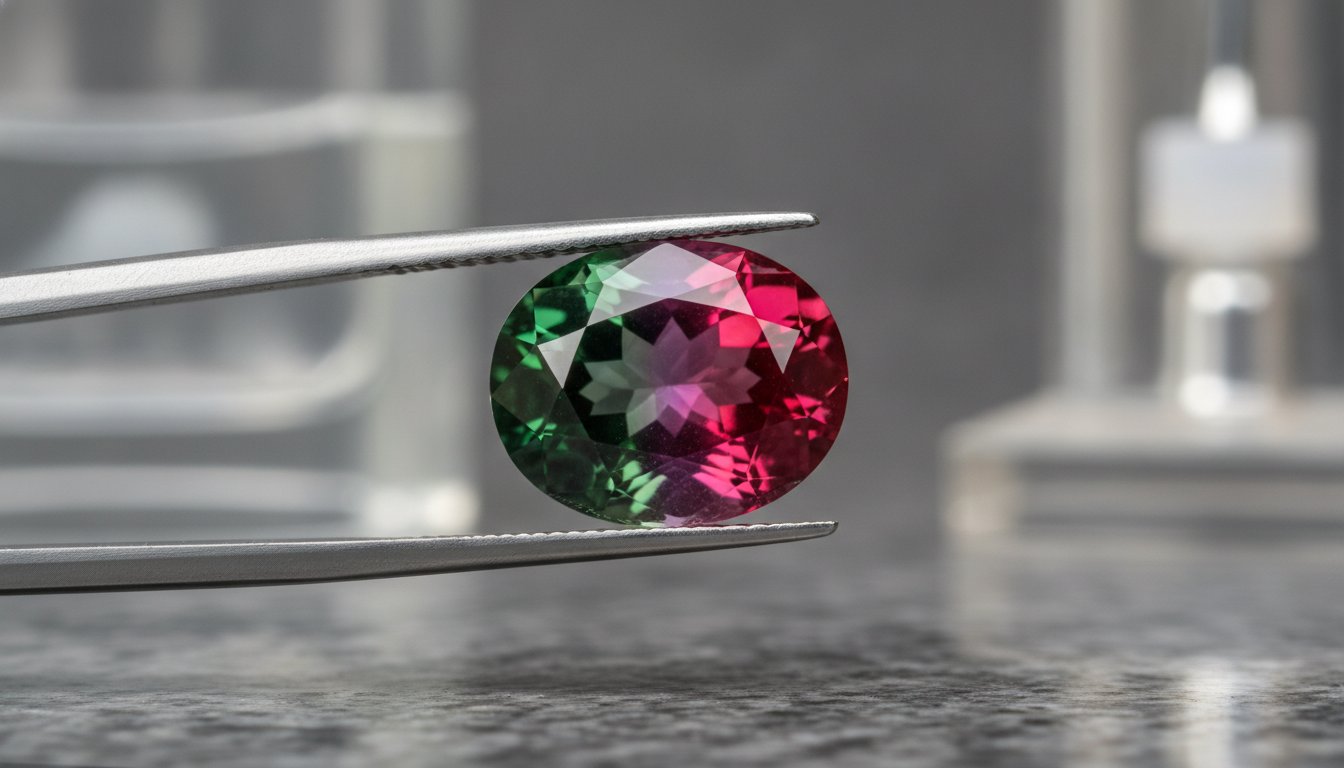
What if the true value of a gemstone wasn't found in a single hue, but in its refusal to stay the same? You've likely felt the magnetic pull of this rare chrysoberyl, yet finding a stone that delivers a vivid alexandrite color change is often harder than it looks. It's frustrating to browse listings only to find descriptions that don't match the reality of the stone in your hand. You want a gem that shifts decisively from a lush forest green to a regal raspberry red, not a muddy transition that leaves you questioning your investment.
I understand that the world of high-end gems can feel opaque, especially when you're trying to weigh the rarity of a natural stone against the flawless consistency of Chatham lab-created varieties. This guide promises to transform you into an informed insider by breaking down the complex science of the 'Alexandrite Effect.' We'll move methodically through technical validation, teach you how to accurately judge color change percentages, and provide the transparency you need to choose a stone with absolute confidence.
Key Takeaways
- Discover the technical science behind the chromium ions that trigger the alexandrite color change, allowing you to identify a truly superior specimen.
- Learn to evaluate the "completeness" of a stone's transformation by measuring color change percentage and saturation against the 100% gold standard.
- Navigate the choice between ethically sourced natural stones and chemically identical Chatham lab-created varieties with radical transparency.
- Identify the critical value drivers for 2026, from the rarity of stones exceeding 1.00 carat to the security provided by independent GIA or AGL certification.
- Master the art of custom jewelry design by selecting metals and settings that enhance the gem's shift from forest green to raspberry red.
The Science of the Alexandrite Effect: Why Colors Shift
Alexandrite isn't just a gemstone; it's a geological miracle that challenges how we perceive color. While most stones remain static, the alexandrite color change occurs because of a specific optical phenomenon called the "Alexandrite Effect." This isn't a simple trick of the light. It's a complex interaction between the stone's chemical structure and the visible light spectrum. Historically described as "emerald by day, ruby by night," this gem belongs to the chrysoberyl family, but its rare chemistry sets it apart from its more common cousins. We define the 'Alexandrite Effect' as a specific type of pleochroism where the stone's appearance shifts based on the light source rather than just the viewing angle.
The core of this transformation lies in the crystal lattice of the chrysoberyl. In a standard chrysoberyl, aluminum atoms fill the lattice. However, in alexandrite, trace amounts of chromium (Cr3+) ions replace some of that aluminum. This substitution is extremely rare in nature because chromium and beryllium, a key component of chrysoberyl, rarely occur in the same geological environment. This chemical tension creates the "transmission windows" that allow the stone to flip between two distinct personalities.
Chromium and Light Absorption
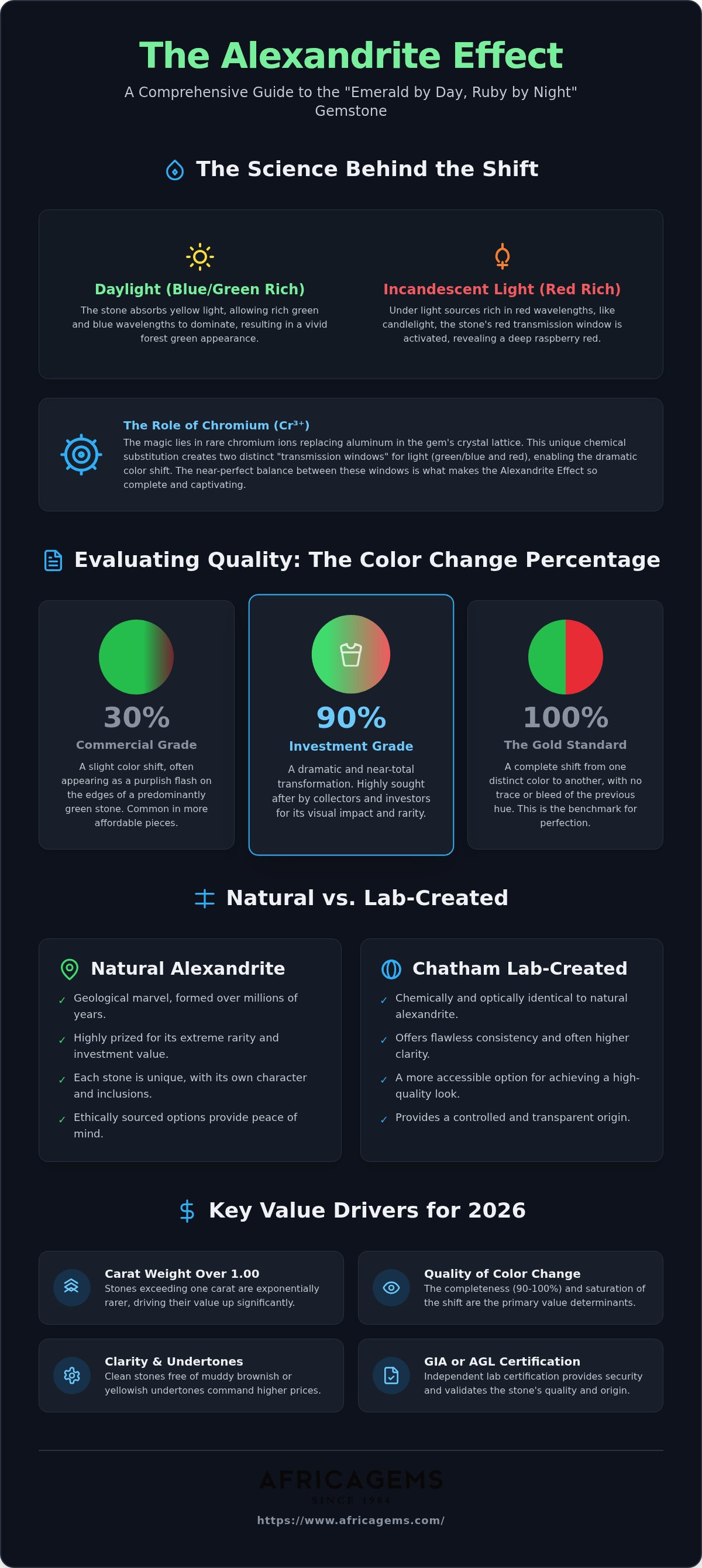
Chromium is the master architect of the alexandrite color change. These ions are positioned within the crystal in a way that allows them to absorb light in the yellow region of the spectrum, specifically around 580 nanometers. By "erasing" yellow light, the chromium creates a delicate balance. The stone is left with two paths for light to escape: a green/blue window and a red/purple window.
This specific absorption profile is what distinguishes alexandrite from other color-change gems. For instance, while some color-change sapphires exist, their shift often results from different trace elements or less balanced transmission windows. In alexandrite, the chromium creates a nearly perfect equilibrium between the two colors. This makes the transition feel more complete and dramatic to the human eye. If you're looking for rare specimens, you can explore the loose gemstones available through our curated inventory.
Daylight vs. Incandescent Light Spectrums
The reason you see green in the morning and red in the evening is due to the source of the light hitting the stone. Daylight is naturally abundant in blue and green wavelengths. When you step outside, the blue/green light floods the stone's first transmission window, overwhelming the red. Your eye perceives a lush, forest green. It's a vibrant, cool-toned phase that has captivated collectors since the stone's discovery in the Ural Mountains.
Incandescent light, such as the glow from a candle or a traditional lamp, is far richer in red wavelengths. Under these conditions, the red transmission window takes over, and the stone appears to blush into a deep raspberry or purplish red. The 'Alexandrite Effect' is the result of a gemstone having two nearly equal transmission windows for light. Because our eyes are more sensitive to green light, the stone needs this specific balance of chromium to ensure the red phase remains just as vivid and saturated as the green.
Evaluating Quality: Percentage and Saturation of Color Change
Evaluating the quality of an alexandrite color change requires a disciplined eye for two specific metrics: percentage and saturation. While the chemical science explains why the shift happens, these metrics determine the gem's market value by measuring the completeness of the visual transformation. A 100% change is the industry's gold standard. This means the stone transitions entirely from one color to the other without any lingering traces of the previous hue. To a gemological lab, a 100% change implies that the color shift is visible across the entire face of the stone, with no "bleed" from the secondary light source's opposite color.
Secondary hues can often mar the beauty of an otherwise impressive specimen. You should look for stones that avoid brownish or yellowish undertones. These muddy colors act as visual noise, dulling the brilliance of the transition and lowering the overall value. The ideal stone exhibits a crisp, clean shift between its two phases. The stone's tone, which refers to how light or dark it is, also plays a vital role. A stone that's too dark might look black in certain lighting, effectively hiding the very phenomenon you're seeking.
Measuring the Percentage of Change
A 30% shift is often what you'll find in more affordable, commercial-grade pieces. These stones might only show a slight purplish flash on the edges of a green body. In contrast, a 90% to 100% shift is a dramatic, total transformation that stops you in your tracks. You can evaluate this yourself with a simple penlight test. Observe the stone under natural daylight first, then introduce a warm, incandescent penlight in a darkened room. The speed and completeness of the flip will tell you everything you need to know about its pedigree.
Saturation and the 'Muddy' Stone
Saturation refers to the intensity of the color. Without vivid saturation, the emerald phase looks like a pale lime and the ruby phase appears as a weak pink. High-quality stones possess deep, rich colors that remain vibrant through the transition. Clarity also supports this; internal inclusions can scatter light and weaken the visual impact of the shift. For those seeking the pinnacle of this phenomenon, our collection of precious gemstones includes select pieces chosen specifically for their exceptional optical performance and color purity.
Natural vs. Chatham Lab-Created Alexandrite: Radical Transparency
Choosing between a stone forged in the earth over millions of years and one grown in a sophisticated laboratory is a personal journey for every serious collector. At AfricaGems, we believe that true luxury is built on a foundation of radical transparency. Since 1997, our digital storefront has prioritized the integrity of the industry by providing full disclosure on all gemstone origins and treatments. Whether you seek a natural specimen with a storied history or a flawless Chatham alternative, our goal is to position you as an informed insider. You can explore non-genuine and lab-created gems to see how modern science honors the optical legacy of this rare material.
The Scarcity of Natural Deposits
Natural alexandrite is significantly rarer than diamonds, rubies, or sapphires. The legendary Russian mines in the Ural Mountains, which first revealed the stone in the 1830s, are effectively exhausted, leaving behind a legacy of museum-quality artifacts. Today, the global market relies on limited, sporadic finds from Brazil, Sri Lanka, and East Africa. These modern deposits are small and geographically isolated. Finding a natural stone that exhibits a clean, vivid alexandrite color change without significant internal inclusions is a feat of patience. The scarcity of high-carat natural stones drives a steep value curve that reflects their status as one of the earth's most elusive treasures. For a deeper look at why these materials are so difficult to source, consult our Rare Gemstones guide.
The Innovation of Chatham Lab-Created Gems
Chatham has spent decades perfecting the flux growth method to offer a chemically identical alternative to mined stones. This process isn't a "synthetic" imitation; it's a slow, methodical recreation of nature. By mimicking the high-pressure, high-heat conditions found in the earth's crust, Chatham allows chrysoberyl crystals to grow over many months. Because the growth environment is strictly controlled, these gems often achieve the coveted 100% alexandrite color change that is so rare in nature. It's an ethical and sophisticated choice for those who prioritize optical perfection and saturation. This "insider" option allows you to own a masterpiece of gemology that performs flawlessly under any light source, providing a level of brilliance and color purity that is often out of reach in the natural market. Our founder, Marc Sarosi, personally oversees our inventory to ensure every Chatham stone meets our uncompromising standards for beauty and performance.
Investment Factors: What Drives Alexandrite Value in 2026
As we look toward the market in 2026, the value of alexandrite continues to be defined by its scarcity and the dramatic nature of its optical performance. While many collectors focus on diamonds, those in the know recognize that a high-quality alexandrite color change is one of the most secure ways to hold value in rare materials. Several factors dictate the final price per carat, but none is more influential than the completeness of the shift itself. Origin pedigree also plays a significant role; stones with documented Russian or Brazilian heritage often command a substantial premium due to their historical significance and superior color saturation. Understanding these drivers ensures you don't overpay for a stone that fails to perform under varied lighting conditions. For a deeper dive into secure acquisitions, read our guide to buying gemstones online.
Weight and Scarcity
In the world of chrysoberyl, size is far from the only indicator of worth. There is a massive "price per carat" jump once a stone crosses the 1.00 carat threshold. This is because natural crystals large enough to produce a clean, faceted gem of this size are exceptionally rare. Finding a natural alexandrite over 3 carats is an extreme rarity that typically triggers interest from international auction houses and serious private collectors. As the weight increases, the price doesn't just grow; it compounds exponentially. However, you must remember that for alexandrite, color change quality always trumps size in value. A smaller stone with a 100% shift will consistently outperform a larger stone with a weak or "muddy" transition in terms of long-term investment potential.
Certification and Ethical Sourcing
The complexity of this gem means you should never buy uncertified alexandrite. Independent lab certification from the GIA or AGL is the only way to verify both the origin and the degree of color change. A GIA report will specifically describe the color shift, providing a third-party validation that the stone meets the criteria for this rare species. This documentation is your security against misidentified stones or undisclosed treatments. At AfricaGems, we've built a legacy of trust since 1997 by providing radical transparency on every stone. Founder Marc Sarosi provides a personal guarantee on every purchase, ensuring that your investment is backed by decades of professional authority and ethical sourcing practices. If you're ready to add a world-class specimen to your collection, browse our current inventory of loose precious gemstones to find a stone that meets these rigorous standards.
Designing Custom Jewelry for Color-Changing Stones
Designing around a gem that refuses to stay a single color requires a deep understanding of optical physics. Unlike a ruby or an emerald, where the goal is to trap and intensify a static hue, an alexandrite setting must act as a stage for a performance. The way light enters and exits the stone directly dictates the intensity of the alexandrite color change. If the setting is too restrictive, you risk "suffocating" the phenomenon, which can leave the stone looking flat or dark even in the correct lighting. For those ready to begin this creative process, our gemstone rings category offers a window into how professional mountings can showcase these rare materials without compromising their optical integrity.
Setting Styles for Maximum Light
Open settings, particularly traditional four or six-prong styles, are vastly superior for phenomenal gems. These designs allow light to flood the stone from multiple angles, ensuring that both the green and red transmission windows are fully engaged. In contrast, heavy bezel settings can block lateral light, which often weakens the visual shift. Adding colorless diamonds as side stones is a sophisticated tactic used by master jewelers to enhance the viewer's perception. Because the diamonds remain a constant, brilliant white, they provide a visual anchor that helps the human eye perceive the dramatic shift in the center stone's hue. It's also vital to remember that the pavilion, or the bottom of the stone, must be kept pristine. Even a small amount of oil or dust on the pavilion can disrupt light transmission and dull the chromatic transformation.
Metal Selection: Enhancing the Shift
The choice of metal is a strategic decision that can accentuate specific phases of the gem's life. Platinum and white gold are the preferred choices for collectors who want to highlight the cool, teal-green daylight phase. The neutral, silvery backdrop creates a crisp contrast that makes the green appear more vibrant and saturated. Conversely, yellow or rose gold can be used to warm up the incandescent phase, making the raspberry reds and purples feel deeper and more regal. This warmth can help a stone with a slightly weaker red phase appear more decisive. At AfricaGems, we specialize in helping you navigate these nuances through our custom jewelry design services. Whether you're setting a natural heirloom or a Chatham lab-created masterpiece, our bespoke approach ensures that the final piece is a perfect reflection of your personal taste and the stone's unique optical signature.
Securing Your Legacy in the World of Color-Change Gems
You now possess the specialized knowledge to distinguish between a commercial-grade stone and a museum-quality investment. By understanding the chemical role of chromium and the necessity of high saturation, you can evaluate any alexandrite color change with the precision of a seasoned dealer. Whether you prioritize the historical pedigree of a natural stone or the optical brilliance of a Chatham creation, the key remains radical transparency and independent certification.
AfricaGems has served collectors since 1997 with a deep commitment to ethical sourcing and full treatment disclosure on every stone. Our inventory of natural and Chatham varieties is curated to meet the highest standards of the industry. Every purchase is backed by the personal guarantee of our founder, Marc Sarosi, ensuring your acquisition is secure. We invite you to browse our exclusive collection of Loose Alexandrite Gemstones at AfricaGems to find a specimen that captures the magic of the "Alexandrite Effect." Your journey into the world of rare materials is just beginning, and we're honored to act as your knowledgeable mentor.
Frequently Asked Questions
What is the most valuable color for an alexandrite gemstone?
The most valuable specimens exhibit a vivid forest green in daylight that shifts to a rich raspberry red under incandescent light. This "100% change" is the gold standard for investment grade stones. Value is driven by the purity of these hues; any presence of muddy brown or gray tones will significantly lower the price. A stone that perfectly mimics the "emerald by day, ruby by night" ideal remains the most coveted specimen for serious collectors.
Is lab-created alexandrite a 'fake' stone?
Chatham lab-created alexandrite is not a fake stone but a chemically and physically identical version of the natural gem. These stones are grown using the flux method, which recreates the earth's natural processes over several months. While they lack the geological history of mined stones, they offer a flawless alexandrite color change that is often impossible to find in nature without spending a significant amount on a rare specimen.
Can I see the color change in alexandrite under LED lights?
You can see the shift under LEDs, but it depends entirely on the light's color temperature. Cool-white LEDs often mimic daylight, bringing out the green phase. Warm-white LEDs, which have more red in their spectrum, may trigger the red phase. However, traditional incandescent bulbs or candlelight are still the most reliable tools to witness a dramatic alexandrite color change because they provide the specific red wavelengths the stone needs to transform.
Why is natural alexandrite so much more expensive than sapphire?
Natural alexandrite is more expensive than most sapphires because of its extreme geological rarity. For this gem to form, the earth must bring beryllium and chromium together, two elements that rarely occur in the same place. While high-quality sapphires are rare, the global supply of natural alexandrite is so limited that stones over one carat are considered world-class treasures. This scarcity, combined with the complex optical phenomenon, drives its premium status.
Does alexandrite change color over time or lose its effect?
No, alexandrite doesn't lose its ability to change color over time. The "Alexandrite Effect" is an inherent physical property caused by chromium ions within the crystal lattice itself. It isn't a coating or a temporary treatment that can fade or wear off. As long as the stone is exposed to the correct light sources, the shift will remain as vibrant and decisive as the day it was faceted, regardless of the gem's age.
How can I tell if my alexandrite is real or just color-change glass?
Distinguishing real alexandrite from glass requires professional equipment and expertise. Color-change glass or synthetic corundum often lacks the complex pleochroism found in true chrysoberyl. A genuine stone will show different colors when viewed from different angles, a property glass cannot replicate. To ensure you're buying a legitimate gem, always insist on an independent lab report from the GIA or AGL, which AfricaGems provides for all high-value specimens to ensure radical transparency.
What is the best way to clean and care for alexandrite jewelry?
The best way to care for your jewelry is using warm water, mild dish soap, and a soft-bristled brush. Alexandrite is a durable stone with a Mohs hardness of 8.5, making it suitable for daily wear in rings or pendants. You should avoid exposing it to harsh household chemicals or extreme thermal shock. Regular cleaning of the pavilion is essential because dirt buildup on the bottom facets can block light and dull the intensity of the color shift.

Article by
Marc Sarosi
Professional gemstone dealer for more than 40 years. Started off mining Aquamarine in Zambia, Africa and travelled throughout the continent in search of fine gems. Trusted authority on fine gemstones and have donated a fine collection of more than 27 extraordinary gemstones to the Smithsonian Institute Gem Hall for generations to see.