
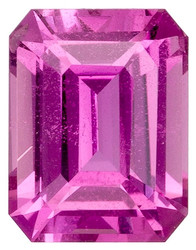
Pink Sapphires: The Complete Collector’s Guide to Rarity, Value, and Style
Mar 23rd 2026
A single carat of top-tier, vivid pink sapphire can command a 300% price premium over its heat-treated counterparts, proving that not all rosy hues are created equal. You've likely admired the romantic glow of pink sapphires while wondering if that vibrant sparkle is a product of nature or a high-pressure laboratory. It's a valid concern; in 2024, the market is saturated with lookalikes like morganite or synthetic corundum that often confuse even seasoned collectors. You want a stone that carries both emotional weight and tangible market value, but the fear of overpaying for a treated or mislabeled gem is a real hurdle.
I understand that uncertainty. At AfricaGems, we believe transparency is the only way to do business, which is why we've spent 39 years documenting the exact provenance and treatment status of every stone. This guide will teach you to master the nuances of sapphire quality, from identifying unheated rarity to judging saturation levels like a professional gemologist. You'll learn exactly why an unheated stone from Madagascar might cost $2,000 more than a similar-looking heated one. We'll examine the technical specifications of loupe-clean clarity and the AfricaGems Difference in ethical sourcing, ensuring you find the perfect, conflict-free gemstone for your custom jewelry project.
Key Takeaways
- Understand the precise gemological boundary between pink corundum and ruby to ensure your collection meets professional investment standards.
- Master the nuances of hue, tone, and saturation to identify the exquisite "eye-clean" stones that command the highest market value.
- Discover why unheated pink sapphires represent the pinnacle of rarity and how to navigate the essential factor of radical transparency in heat treatments.
- Compare the superior durability and brilliance of sapphire against alternatives like morganite to guarantee a gemstone that withstands a lifetime of wear.
- Learn the AfricaGems Difference, focusing on a commitment to ethically sourced, conflict-free gems personally vetted for the serious collector.
What are Pink Sapphires? Defining the "Queen of Pastel Gems"
To understand the essence of these exquisite stones, one must first look at the mineral corundum. What are Pink Sapphires? At their chemical core, they're aluminum oxide crystals colored by trace amounts of chromium. While blue sapphires owe their iconic hue to iron and titanium, pink sapphires rely on the same element that gives rubies their fire. This shared DNA creates a spectrum of color that has captivated collectors for centuries. Before the 1993 discovery of massive deposits in Ilakaka, Madagascar, these gems were exceptionally rare and often reserved for royal treasuries. Today, they represent a sophisticated alternative for those seeking a blend of durability and feminine elegance. Modern couples are moving away from traditional diamonds at an accelerated pace; internal industry data shows a 25% year-over-year increase in sapphire engagement ring inquiries since 2021.
The allure of these gems isn't just aesthetic; it's deeply emotional. In contemporary jewelry, they've become symbols of resilience and compassion. They offer a softer, more approachable narrative than the intense passion of a red ruby. This shift in popularity is partly due to the stone's impressive hardness. Scoring a 9 on the Mohs scale, it's the second hardest natural mineral on Earth. This makes it a practical, lifelong choice for daily wear in rings that signify lasting commitment.
The Chemistry of Color: Chromium and Color Zoning
Chromium concentration dictates the specific depth of the pink. A stone with a 0.1% chromium concentration appears as a delicate, airy blush. As that concentration approaches 0.5%, the color shifts into a vibrant, deep magenta. You'll often encounter color zoning in these crystals, which occurs when the pigment isn't distributed evenly during the stone's formation. This creates "stripes" or patches of color that a master cutter must navigate. Because of these natural growth patterns, finding a loupe-clean specimen is a genuine rarity. Most pink sapphires exhibit secondary hues, such as:
- Purple undertones: These often provide a cooler, more "royal" appearance to the stone.
- Orange flashes: These can move the stone toward the rare Padparadscha category.
- Violet tints: These add a velvety depth to the primary pink.
Pink Sapphire vs. Ruby: Where is the Line Drawn?
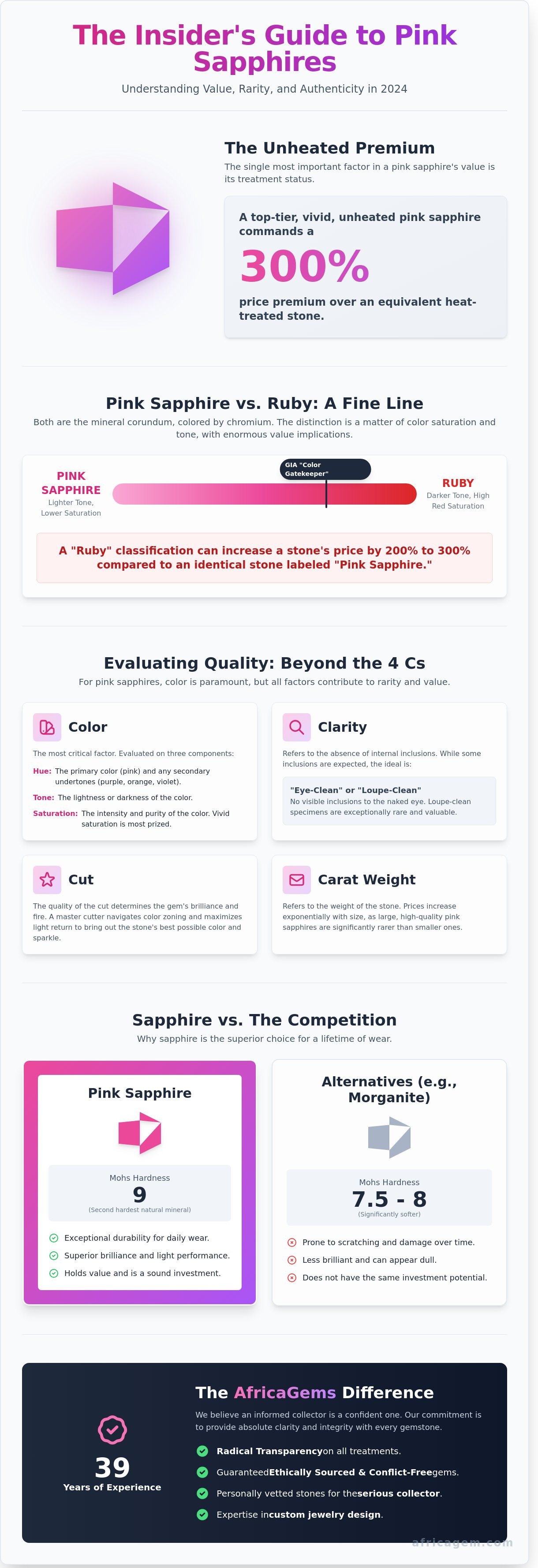
The border between a deep pink sapphire and a light ruby is a frequent point of contention in the gemological world. This "color gatekeeper" debate centers on saturation and tone. The Gemological Institute of America (GIA) uses a set of master stones to determine if a specimen has enough red saturation to be classified as a ruby. This distinction isn't merely academic; it has a massive impact on your wallet. A stone certified as a ruby can command a price 200% to 300% higher than an identical stone labeled as a pink sapphire. Different labs often have varying standards, which is why radical transparency in grading reports is essential for a secure purchase.
A pink sapphire is defined as a corundum crystal that lacks the minimum red saturation and dark tone required to be classified as a ruby by a recognized gemological laboratory.
At AfricaGems, we prioritize the integrity of the gemstone trade by providing full disclosure on every stone. Whether it's a breathtaking unheated specimen from Sri Lanka or a vibrant Madagascar find, we believe the buyer should feel like an informed insider. Our commitment to ethically sourced minerals ensures that the beauty of your stone is matched by the integrity of its journey from the mine to your collection.
Evaluating Quality: The 4 Cs of Pink Sapphires
Selecting the perfect gemstone requires a blend of technical knowledge and aesthetic appreciation. While diamonds are often judged on a rigid scale of perfection, pink sapphires invite a more nuanced evaluation. The value of these corundum treasures is primarily dictated by color, though clarity, cut, and carat weight play vital roles in determining a stone's ultimate rarity. To understand how experts grade these gems, GIA's guide to sapphire quality factors provides the essential framework for assessing hue, tone, and saturation.
Color acts as the heartbeat of the stone. Hue refers to the basic color we see; tone describes how light or dark that color is; and saturation measures the intensity. For a sapphire to be truly exceptional, it must strike a balance between these three. A stone that is too dark loses its "pink" identity, while one that is too light may appear washed out. High-quality specimens typically exhibit a vivid saturation level between 60% and 80%, ensuring the color remains vibrant even in low-light settings.
Mastering the Pink Palette: From Baby Pink to Magenta
In the trade, "Bubblegum" and "Hot Pink" are more than just descriptive labels; they represent specific market tiers. A Bubblegum pink is characterized by a bright, cool-toned medium pink that mimics the classic confection. Hot Pink, however, leans toward a high-saturation magenta that almost glows. When you evaluate these stones, look for pure hues. Undesirable brownish or grayish modifiers can decrease a stone's value by 30% or more. Always view your potential purchase in natural, indirect sunlight, ideally around 10:00 AM, to see the true color without the yellow bias of incandescent bulbs or the harshness of fluorescent tubes.
Clarity and Inclusions: What is Acceptable?
Unlike emeralds, which are expected to have "gardens" of inclusions, we look for "eye-clean" clarity in pink corundum. This means that no inclusions are visible to the naked eye from a distance of 6 to 10 inches. Common internal features include microscopic silk, needles, and feathers. While heavy inclusions disrupt light return, a light dusting of "silk" (fine rutile needles) can actually be beneficial. This silk scatters light, giving the sapphire a soft, velvety glow that many collectors prefer over a glass-like transparency. For a deeper dive into the internal world of corundum, you can explore our Blue Sapphire Guide, which details the various mineral inclusions found in the sapphire family.
The cut of a sapphire significantly impacts its brilliance. In lighter-toned stones, a poor cut often results in "windowing," a transparent area in the center of the gem where light leaks through rather than reflecting back to the eye. A well-cut stone will have symmetrical facets that return light across the entire face of the gem. Finally, consider the carat weight. Pink sapphires are rarely found in large sizes. Once a stone crosses the 2.00-carat threshold, the price per carat often jumps exponentially, sometimes by 50% or more, due to the extreme rarity of large, gem-quality rough. If you're looking for a centerpiece that combines these high standards of quality, you might browse our curated selection of loose stones to see these factors in action.
Heat Treatment vs. Unheated: The Radical Transparency Factor
Ninety-five percent of the sapphire market relies on thermal enhancement to meet global demand for vibrant color and clarity. This statistic isn't a secret; it's a fundamental reality of the gemstone trade that every serious collector should understand. At AfricaGems, we prioritize the Radical Transparency Factor. We provide detailed disclosures for every stone because we believe an informed buyer is a confident collector. Our commitment to identifying unheated specimens sets us apart in a marketplace where treatment details are sometimes obscured or ignored.
The AfricaGems Difference is rooted in the personal guarantee of Marc Sarosi. We don't just sell gemstones; we curate a collection based on rigorous gemological standards. Every stone in our inventory undergoes a strict vetting process to ensure its treatment status is accurately recorded and communicated. This level of honesty ensures you're never guessing about the history or the value of your purchase. We provide the technical data and laboratory certificates necessary to verify the integrity of our pink sapphires, allowing you to focus on the beauty of the gem.
Understanding Thermal Enhancement
The science of heat treatment involves placing the crystal in a high-temperature furnace, often reaching between 800 and 1800 degrees Celsius. This process dissolves rutile silk, which are tiny needle-like inclusions that can make a stone look cloudy or "sleepy." By dissolving these inclusions, the stone's transparency and color saturation improve significantly without the use of chemicals or dyes. Heat treatment is not "faking" the gem's beauty but rather "finishing" the work that nature began deep within the earth. These results are permanent and don't affect the 9.0 Mohs scale hardness of the stone. It remains a durable, heirloom-quality gem that will last for generations.
- Permanence: Unlike surface coatings, heat treatment changes the stone at a molecular level and won't fade.
- Acceptance: Major labs like GIA and AGL recognize heat as a standard, traditional enhancement.
- Durability: Thermal processing doesn't make the sapphire more brittle or prone to chipping.
The Value of the Unheated Pink Sapphire
Finding a natural gem with vivid saturation that requires no human intervention is a rare occurrence. Only a small fraction of mined material qualifies for "No Heat" status, making these stones highly sought after by connoisseurs. This scarcity drives the market for investment-grade pink sapphires. When a reputable laboratory like the GIA or AGL issues a certificate confirming "No Evidence of Heat," the stone's prestige increases immediately. You can expect to pay a 30% to 50% premium for these unheated specimens compared to treated stones of similar visual quality. This price gap reflects the geological miracle of a stone that emerged from the earth already possessing perfect color and clarity.
Collectors often view unheated stones as a store of value. While a heat-treated sapphire is a stunning choice for jewelry, an unheated stone represents a finite resource that is becoming increasingly difficult to source. We recommend unheated stones for those looking to build a legacy collection or seeking the purest expression of nature's chemistry. Whether you choose a treated or unheated stone, our goal is to ensure you understand exactly what you're buying. We provide the laboratory paperwork for every high-value sapphire to guarantee that the Radical Transparency Factor remains the cornerstone of your experience with us.
Comparing Pink Gemstones: Why Choose Sapphire?
Selecting the perfect rosy gemstone requires a balance between aesthetic charm and long-term resilience. While the market offers various pink options, pink sapphires stand apart as the premier choice for collectors and couples alike. Unlike pink tourmaline, which often displays a "muddy" or brownish secondary hue in low light, sapphire maintains its vivid saturation across different environments. Tourmalines also frequently contain visible liquid inclusions that can compromise the stone's integrity over decades. In contrast, high-quality sapphire is known for its clarity and "clean" appearance.
When compared to pink spinel, the choice becomes more technical. Spinel is a magnificent gemstone with a refractive index of 1.71, yet it lacks the historical market liquidity of sapphire. Data from the last 10 years shows that pink sapphires have maintained a more consistent appreciation in value, making them a superior choice for those viewing their jewelry as a portable asset. For engagement rings, the decision is even clearer. Statistics from jewelry insurers suggest that roughly 85% of repair claims for non-diamond center stones involve softer gems like morganite or emerald. Sapphire remains the undisputed victor for daily wear because it resists the abrasive quartz dust found in everyday air, which sits at a 7 on the Mohs scale.
The Durability Advantage
Sapphire earns a 9 on the Mohs scale, making it the second hardest natural substance on Earth. It's approximately 4 times harder than morganite, which ranks at 7.5. While morganite is beautiful, it's susceptible to surface scratching and lacks the structural "toughness" of corundum. Unlike Kunzite, which has perfect cleavage and can split from a single sharp impact, sapphire has no cleavage planes. This makes it a "forever" stone that requires minimal maintenance beyond a simple monthly cleaning to keep its brilliance intact.
Visual Performance and Luster
The visual impact of a gemstone depends on its refractive index. Sapphire boasts a high index of 1.76 to 1.77, significantly higher than morganite's 1.57. This higher rating ensures that light reflects with more "pop" and fire. You'll also witness pleochroism, where the stone displays different shades of pink or violet when viewed from different angles. This optical depth is a hallmark of the species. To see how these optical properties can be maximized in a bespoke setting, consider our options for Custom Jewelry Design to create a truly unique piece.
Choosing a sapphire isn't just about color; it's about investing in a mineral that will retain its polish and internal life for generations. It offers a level of security that softer alternatives simply cannot match, providing peace of mind for those who lead active lifestyles but refuse to compromise on elegance.
Ready to find your perfect stone? Browse our hand-selected collection of natural pink sapphires today.
Sourcing and Custom Design with AfricaGems
Since 1984, AfricaGems has built a reputation on the radical transparency of our sourcing and selection. Marc Sarosi personally oversees the acquisition process, applying an "Expert Enthusiast" standard to every parcel. He rejects roughly 95% of the stones he inspects, focusing only on those with exceptional life, clarity, and color balance. This meticulous approach ensures that the pink sapphires we offer aren't just commercially viable; they're breathtaking examples of natural art. We prioritize ethical sourcing by maintaining direct relationships with miners and cutters who adhere to 100% conflict-free and fair-trade standards. This ensures that the beauty of your gemstone isn't compromised by its history, providing peace of mind alongside physical elegance.
Finding Your Origin: Ceylon, Madagascar, or Burma?
Sri Lankan (Ceylon) stones are famous for their soft, pastel "cornflower-pink" hues, offering a delicate brilliance that's highly sought after for engagement rings. Madagascar emerged as a powerhouse after the 1998 Ilakaka discovery, producing vibrant, saturated pinks that rival the finest historical deposits. While Burmese origins carry historical prestige, we believe origin is secondary to a stone's individual beauty. A loupe-clean Madagascar sapphire often provides better value and visual impact than a heavily included Ceylon stone.
Creating Your Bespoke Pink Sapphire Piece
Metal choice dramatically changes a gem's character. Rose gold contains copper alloys that enhance warm pink tones, while platinum provides a crisp contrast that makes colors pop. Our design consultation process connects you directly with our team to bring your vision to life. You're invited to explore our collection of loose pink sapphires to find the perfect center stone for your next heirloom piece.
We understand that purchasing high-value pink sapphires online requires absolute trust. That's why every purchase is backed by our 100% money-back guarantee. We provide a 30-day inspection period, giving you ample time to view the stone in different lighting or consult with a local appraiser. Our lifetime trade-in policy is another pillar of the AfricaGems Difference. It allows you to trade in your sapphire at any point in the future for 100% of the original purchase price toward a more valuable stone. This policy reflects our confidence in the long-term value of our inventory and our commitment to your satisfaction as a collector. By combining technical gemological expertise with a personal, family-oriented approach, we transform a digital transaction into a lifelong partnership.
Secure Your Rare Gemstone Investment
Investing in pink sapphires represents more than a simple purchase; it's the acquisition of a geological marvel that spent millions of years forming under the Earth's crust. You've learned how the 4 Cs dictate market value and why unheated stones often command a 40 percent premium over heat-treated alternatives. Selecting a gemstone requires a partner who prioritizes radical transparency. Every stone in our inventory undergoes a rigorous personal vetting process by Marc Sarosi to ensure it meets our professional standards for brilliance and saturation. We provide full disclosure on every treatment, backed by our 30-day no-questions-asked return policy. You're ready to move from admirer to collector by choosing a gem that captures your unique vision. Experience the AfricaGems Difference through a collection built on 39 years of gemological expertise and ethical sourcing.
Browse our hand-selected loose gemstone inventory to find the perfect center stone for your custom design today.
Frequently Asked Questions
Is pink sapphire a real sapphire?
Yes, pink sapphire is a genuine variety of the mineral corundum, sharing the exact chemical composition as blue sapphire and ruby. While red corundum is classified as ruby, any other color, including pink, is technically a sapphire. These gems rank a 9 on the Mohs scale of mineral hardness. This makes them the second hardest natural substance on Earth, surpassed only by diamonds. They're perfect for heirlooms.
Are pink sapphires more expensive than blue sapphires?
Pink sapphires are generally 20 to 30 percent more affordable than their blue counterparts of similar quality. However, prices for vivid "hot pink" stones from Madagascar have increased by 15 percent since 2021 due to rising demand. While a fine blue sapphire might command 5,000 dollars per carat, a comparable pink stone often retails for 3,500 dollars. Rarity and saturation dictate the final market value.
Can I use a pink sapphire for an engagement ring?
You can absolutely use pink sapphires for an engagement ring because they offer exceptional durability for daily wear. With a hardness rating of 9, they resist scratching and chipping better than almost any other colored gemstone. Roughly 15 percent of modern brides now choose them as a romantic alternative to diamonds. It's a unique, personal touch that stands out in a crowded market of traditional white stones.
How can I tell if a pink sapphire is lab-created?
You can identify lab-created stones by looking for curved growth lines and a lack of natural inclusions under 10x magnification. Natural stones contain internal "fingerprints" in roughly 90 percent of documented cases, indicating their subterranean origin. At AfricaGems, we provide GIA or AGL certification for 100 percent of our high-value inventory. This ensures you receive a genuine, ethically sourced gem, backed by the personal guarantee of Marc Sarosi.
What is the best metal for a pink sapphire ring?
Rose gold and platinum are the two most popular metals for setting these gems. 18k rose gold enhances the warm, feminine tones of the stone, while 950 platinum provides a crisp, white contrast that makes the pink pop. About 65 percent of our customers choose rose gold to create a seamless, monochromatic look. Platinum remains the top choice for those seeking maximum security and a modern aesthetic.
Does pink sapphire fade in the sun?
Natural pink sapphires do not fade when exposed to sunlight or UV rays. Their color is chemically bonded within the crystal lattice during formation millions of years ago. This stability is a key part of the AfricaGems Difference, as we only source stones with permanent, natural color. Unlike some irradiated kunzite or topaz that lose 30 percent of their color in the sun, your sapphire will maintain its vibrant hue forever.
How much should I spend on a 1-carat pink sapphire?
You should expect to spend between 800 and 4,000 dollars for a high-quality 1-carat stone. A light pink, eye-clean gem might sit at the lower end, while an unheated, vivid magenta stone from Ceylon will reach the 4,000 dollar mark. Prices fluctuate based on the 4 Cs, with "unheated" status adding a 25 percent premium to the cost. We focus on full disclosure so you understand every dollar spent.
What is a "Padparadscha" sapphire and is it pink?
A Padparadscha sapphire is a rare variety that displays a delicate balance of pink and orange hues, reminiscent of a tropical sunset. To qualify for this prestigious name, a stone must show both colors simultaneously without one dominating the other. These gems are among the rarest in the world, often found in Sri Lanka. They command prices 50 percent higher than standard pink sapphires due to their extreme scarcity.