
Loose Gemstones for Custom Jewelry: The Connoisseur’s Guide to Selection & Design
May 4th 2026
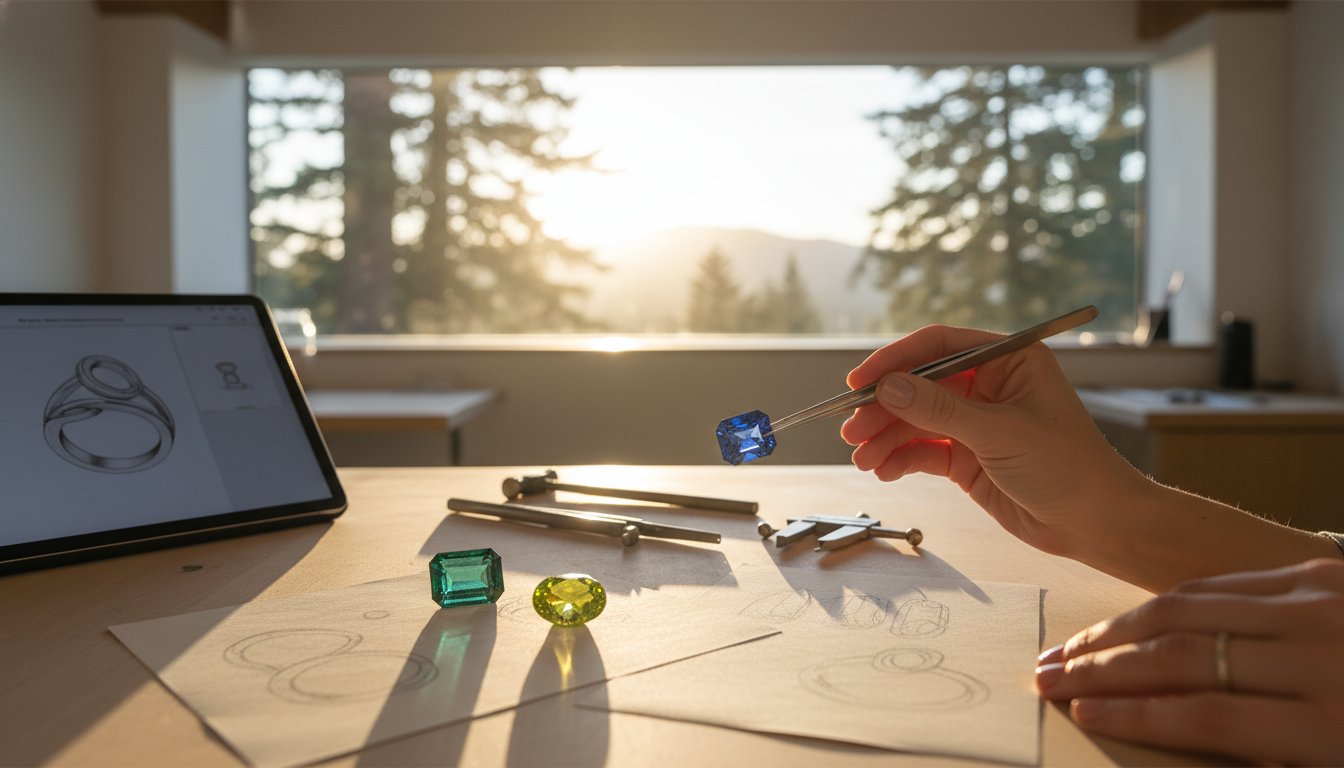
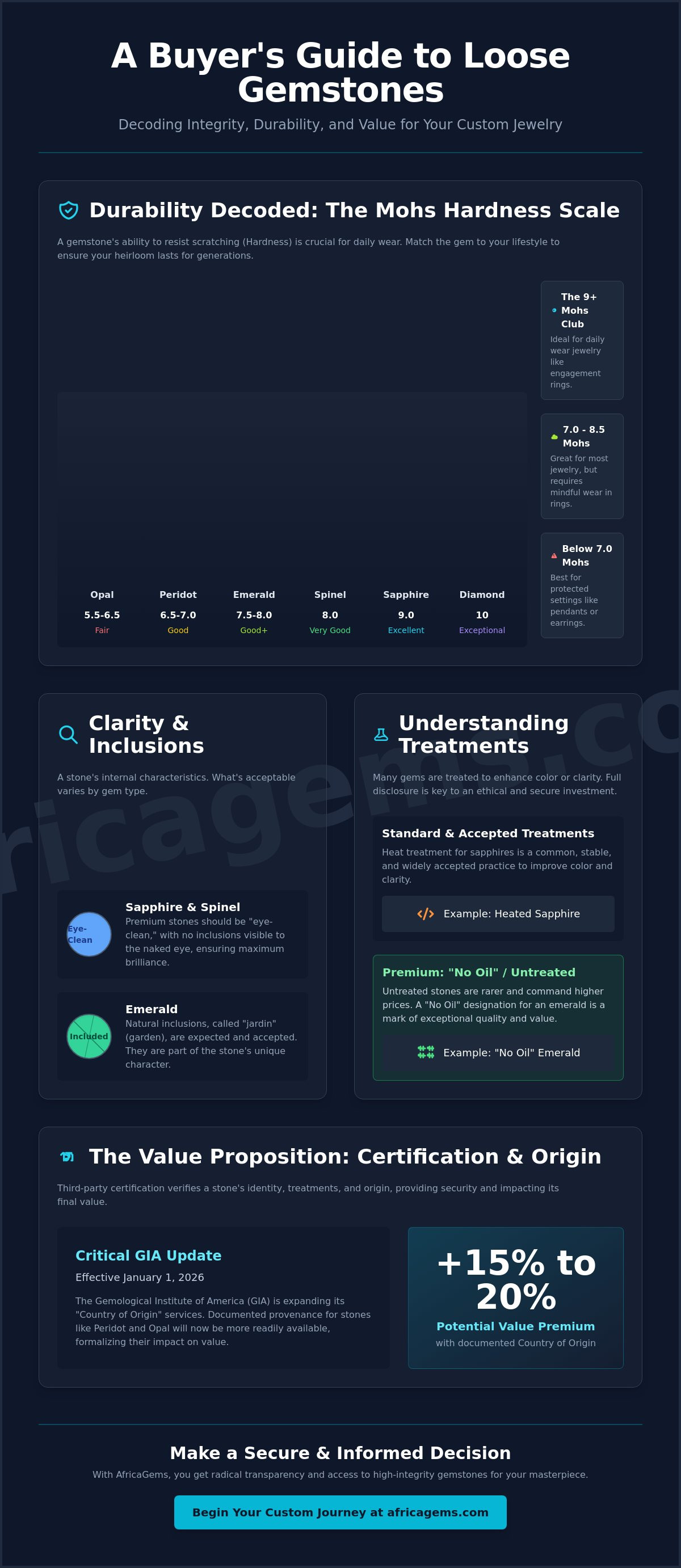
What if the most breathtaking sapphire you've ever seen is actually a liability in disguise? Choosing loose gemstones for custom jewelry often feels like a high-stakes balancing act between aesthetic desire and technical reality. You've likely felt the frustration of seeing two seemingly identical gems with wildly different price tags; perhaps you've even worried that a stunning emerald might not survive the rigors of a daily-wear setting. It's a valid concern, especially since the GIA expanded its "Country of Origin" services on January 1, 2026, to include stones like peridot and opal. This shift means that documented provenance can now add a 15% to 20% premium to a stone's value, making radical transparency more critical than ever before.
We believe you deserve an ethically sourced piece of the earth that mirrors your personal story without compromising on durability. This guide will show you exactly how to select high-integrity stones that align with your design vision and long-term investment goals. You'll learn to decode technical specs like Mohs hardness and the "No Oil" designation for emeralds. We'll provide the clarity you need to move from uncertainty to the secure, informed decision-making process that defines the AfricaGems Difference.
Key Takeaways
- Learn how sourcing loose gemstones for custom jewelry provides the creative freedom to showcase unique optical properties like pleochroism that mass-market settings often obscure.
- Master the technical selection process by matching gemstone hardness to intended lifestyle use, ensuring your custom heirloom remains durable for generations.
- Identify which rare specimens belong to the "9+ Mohs club" for engagement rings and which softer stones are better suited for the protection of a pendant setting.
- Navigate the complexities of gemstone treatments and third-party certifications to guarantee you are investing in a stone with verified integrity and ethical provenance.
- Understand the collaborative AfricaGems design process, from the initial stone selection to the precision of CAD modeling and final casting.
Why Buy Loose Gemstones for Custom Jewelry?
Selecting loose gemstones for custom jewelry gives you a level of control that pre-set retail pieces simply can't match. When you start with a loose stone, you're not just buying an accessory; you're securing a specimen. Most major retailers stock commercial grade gems that are often treated or cut to maximize weight rather than beauty. By sourcing your own stone, you gain access to unheated sapphires or rare gemstones that rarely make it to a mall showroom.
This approach allows you to appreciate the intricate gemstone characteristics and classification before the metal covers the pavilion. You can witness the pleochroism, which is the way a stone shifts color when viewed from different angles, and ensure the setting is designed to celebrate that specific optical phenomenon. You aren't just picking a stone; you're directing the narrative of the final piece.
To better understand the value of sourcing your own materials, watch this helpful video on gemstone selection:
The Financial and Creative Edge
Buying loose is a strategic move for your budget. Decoupling the gemstone purchase from the manufacturing often results in significant savings because you aren't paying a middleman's markup on a pre-assembled piece. A focused investment in loose gemstones for custom jewelry allows you to prioritize stone quality over brand-name packaging. This freedom also means you can tailor the metal to the gem. A vivid pink sapphire might look exquisite in rose gold, while a cool-toned tanzanite demands the icy brilliance of platinum or white gold.
Transparency and Verification
Transparency is the foundation of the AfricaGems Difference. Once a stone is set, metal can hide windowing or extinction, which are areas where light leaks through or appears black and lifeless. Inspecting a loose stone allows for a full 360-degree validation of its integrity. You verify exact dimensions and weight without setting interference. This is vital given the GIA standards updated on January 1, 2026, where origin and treatment disclosures can impact value by 15% to 20%. You see everything, ensuring absolute security in your purchase.
Technical Selection Criteria: Hardness, Clarity, and Treatments
Selecting loose gemstones for custom jewelry requires a shift from purely aesthetic appreciation to rigorous technical scrutiny. You must evaluate a stone's physical properties to ensure it survives both the jeweler's bench and decades of wear. While the Mohs scale measures scratch resistance, it doesn't account for "toughness," which is the ability to resist fracturing under impact. A stone's light performance is equally vital. The precision of the cut determines how light travels through the gem, creating the breathtaking brilliance and fire that define a high-quality specimen.
According to U.S. Geological Survey gemstone data, global demand for high-quality colored stones continues to rise, yet the supply for "loupe-clean" specimens is increasingly finite. Clarity standards vary significantly by gemstone type. A "moderately included" emerald is often acceptable because of its "jardin," or natural garden of inclusions. However, a sapphire or spinel should generally be eye-clean to maintain its premium status. With the GIA's updated grading standards effective January 1, 2026, these technical specs are now more clearly documented, providing you with a narrative of the stone's journey from the earth to your hands.
Durability vs. Hardness: The "Toughness" Factor
Even a diamond or loose blue sapphires can chip if struck at the wrong angle. This vulnerability often stems from "cleavage," which refers to planes of weakness in the crystal structure. If you lead an active lifestyle, you'll want to prioritize stones with high toughness. Avoid settings that expose vulnerable corners of stones with perfect cleavage, such as topaz or kunzite, to prevent accidental damage during daily wear. Protective settings like bezels are ideal for these delicate specimens.
Decoding Gemstone Treatments
Understanding treatments is essential for value preservation. Rarity drives the market; for instance, unheated loose burma rubies can command prices three times higher than their heated counterparts. While heat treatment is a stable, permanent, and accepted industry standard to enhance color, other methods are less desirable. Glass filling or lattice diffusion significantly lower a stone's long-term worth. At AfricaGems, we believe in radical transparency. We provide full disclosure on every treatment, ensuring you make an investment based on facts rather than marketing. You can browse our ethically sourced collection to find a stone that matches your personal integrity standards.
Matching Loose Gems to Your Custom Jewelry Design
Selecting loose gemstones for custom jewelry requires more than an eye for color; it requires an understanding of structural engineering. Your design vision must harmonize with the stone's physical reality. A breathtaking gem that thrives in a pendant might fracture within weeks if set into a daily-wear ring. At AfricaGems, we believe the "Setting-to-Stone" compatibility is the most overlooked factor in custom design. By matching the right mineral to the right lifestyle use, you ensure your investment remains a pristine heirloom for generations.
The Engagement Ring Standard
For an engagement ring, durability is non-negotiable. We typically recommend the "9+ Mohs club," which includes sapphires and rubies. These stones resist the abrasions of daily life with ease. While the allure of an emerald gemstone is undeniable, its natural inclusions, or "jardin," make it significantly more brittle than a sapphire. If you choose an emerald for a ring, a protective bezel or halo setting is essential to shield the edges from impact. If you desire something unique yet tough, consider spinel or chrysoberyl. Spinel, with a Mohs hardness of 8, offers a spectacular range of colors and exceptional brilliance without the fragility of softer stones.
Occasion Pieces: Pendants and Earrings
Pendants and earrings are the safe havens of the gemstone world. Because these pieces don't endure the constant friction and impact that rings do, you can safely explore rare gemstones that are lower on the Mohs scale. This is the perfect opportunity to showcase a magnificent tanzanite or a delicate opal. When designing earrings, weight becomes a critical factor. Large, dense stones like zircon can become uncomfortable if the setting isn't carefully balanced. Hunting for loose gemstones for custom jewelry in pairs is a rewarding challenge; finding two stones with identical pleochroism and dimensions requires the patient eye of a true connoisseur.
The shape of your loose stone also dictates the technical requirements of the setting. A pear or marquise cut features vulnerable points that require V-prongs to prevent chipping. Emerald cuts, with their clipped corners, are naturally more robust but demand high clarity because their large, open facets act like windows into the stone. Whether you're drawn to a classic round or a modern fantasy cut, the architecture of the jewelry must always serve the integrity of the gem.
Sourcing with Integrity: Ethics and Certification
In a global market projected to reach 394.74 billion USD by the end of 2026, the integrity of your supply chain is as valuable as the stone itself. When you invest in loose gemstones for custom jewelry, you aren't just buying a mineral; you're buying a history. High-value stones require more than a jeweler's word; they demand the objective validation of top-tier laboratories like the GIA, AGL, or Gubelin. These reports provide the technical validation necessary for stones to serve as a true store of value. Without this paperwork, a gem's resale or insurance value remains speculative at best.
The AfricaGems Difference is rooted in radical transparency. While many retailers rely on secondary wholesalers, we've spent decades cultivating direct-to-mine relationships. This ensures that every stone, from an unheated sapphire to a loupe-clean spinel, is sourced with a focus on environmental stewardship and fair trade practices. Since India assumed the chairmanship of the Kimberley Process on January 1, 2026, the industry has seen an even sharper focus on preventing conflict minerals from entering the marketplace. We embrace these standards as the baseline, not the ceiling, of our ethical commitments.
Navigating Lab Reports
A lab report acts as a gem's passport. It identifies the species, dimensions, and weight with surgical precision. Most importantly, it documents the presence or absence of treatments. Since the GIA expanded its origin services on January 1, 2026, to include a wider range of stones like demantoid garnet, provenance has become a major value driver. A verified country of origin can command a 15% to 20% premium on the open market. Full disclosure regarding gemstone treatments and synthetic origins is a mandatory industry standard for 2026. If a dealer cannot provide a clear report on a high-value stone, it's best to walk away.
The AfricaGems Ethical Pillar
Marc Sarosi personally vets our sources to ensure compliance with the highest ethical standards. We believe that the gemstone trade should be a catalyst for growth in mining communities, providing fair wages and supporting local infrastructure. This personal accountability transforms a simple transaction into a partnership of integrity. You can learn more about our commitment to ethical sourcing to see how we maintain these rigorous standards. When you choose loose gemstones for custom jewelry through AfricaGems, you're supporting a legacy of transparency. Examine our certified collection today to find a centerpiece that aligns with your values.
The AfricaGems Custom Journey: From Loose Stone to Masterpiece
The transition from a raw specimen to a finished heirloom is where the AfricaGems Difference becomes tangible. When you acquire loose gemstones for custom jewelry, you've completed the most critical step of the investment. However, the journey from the gem jar to the finger requires a sophisticated bridge of engineering and art. With the global gemstone market projected to reach 394.74 billion USD by late 2026, creating a bespoke piece isn't just a creative outlet; it's a method of securing a high-value asset in a structure that protects its long-term integrity.
Our process begins with a personal consultation that mirrors a private gallery viewing. We don't just look at the color; we analyze the stone's dimensions and light return to determine which setting style will best amplify its natural fire. Once the vision is clear, we move to the CAD (Computer-Aided Design) phase. This allows you to visualize every facet and prong in a digital environment before a single grain of precious metal is cast. It's a methodical approach that eliminates the guesswork often found in traditional jewelry manufacturing.
Collaborating with Our Designers
Translating a personal story into a technically sound design requires a balance of aesthetic desire and gemological safety. Our designers specialize in "Setting-to-Stone" compatibility, ensuring that a breathtaking but delicate stone like a tanzanite is never placed in a high-impact position. A typical custom project spans four to eight weeks, a timeline that reflects our refusal to rush the precision required for rare minerals. We prioritize the security of the stone above all else, often suggesting subtle design tweaks that provide maximum protection without obscuring the gem's brilliance.
Why Sourcing and Setting Under One Roof Matters
Entrusting your loose stone to a third-party setter is a risk many connoisseurs aren't willing to take. Specialized gem setters are required for rare specimens because they understand the specific pressure points and cleavage planes of different mineral species. By keeping the entire journey under one roof, we reduce the risk of stone damage during the setting process to near zero. Our master setters calibrate every seat and prong to the exact micrometer of your specific gem. This level of precision ensures that the metal work serves as a permanent, secure cradle for your investment. Start your custom jewelry journey with AfricaGems today and experience the security of a professional consultation. The final reveal is more than a delivery; it's the culmination of a transparent partnership, backed by the personal sign-off and accountability of Marc Sarosi.
Secure Your Legacy in Stone
Choosing loose gemstones for custom jewelry is a sophisticated journey that blends personal expression with rigorous gemological science. You've learned that a stone's beauty is only as permanent as its technical integrity and the precision of its final setting. By prioritizing "Setting-to-Stone" compatibility and demanding radical transparency, you ensure your investment remains breathtaking for generations. It's about moving beyond the retail counter to become an informed insider in the world of rare minerals.
AfricaGems simplifies this complex process through unwavering honesty. Our foundation is built on over 40 years of expert gemological experience and an uncompromising commitment to full disclosure on all gemstone treatments. Every specimen in our vault comes with Founder Marc Sarosi’s personal guarantee, providing the security you need for high-value transactions. Whether you're seeking a rare unheated sapphire or a loupe-clean spinel, your vision deserves a partner who values integrity as much as you do.
Browse our collection of ethically sourced loose gemstones for your next custom piece and begin the collaborative process of turning a rare mineral into a unique masterpiece. Your journey into the heart of the earth's finest treasures starts here.
Frequently Asked Questions
Is it cheaper to buy loose gemstones and have them set?
Yes, decoupling the stone purchase from the setting often results in a 20% to 30% saving compared to pre-set retail prices. Major retailers add significant markups to cover inventory costs and branding. By sourcing your own material, you allocate more of your budget to the quality of the gem itself rather than the jeweler's overhead. This allows for a higher-grade center stone without increasing the total project expenditure.
What is the best loose gemstone for an engagement ring?
Sapphire and Ruby are the premier choices due to their 9.0 Mohs hardness and exceptional toughness. These stones withstand the abrasions of daily life better than almost any other colored gem. While diamonds are harder, sapphires offer a spectrum of colors, from cornflower blue to padparadscha, that provide a unique aesthetic. Their structural integrity ensures the stone won't chip or dull easily over decades of constant wear.
How can I tell if a loose gemstone is natural or lab-created?
Third-party certification from a laboratory like the GIA is the only definitive way to distinguish natural stones from lab-grown counterparts. As of February 23, 2026, the GIA uses a simplified two-tier grading system for lab-grown specimens to prevent market confusion. Natural stones often contain microscopic inclusions, such as "silk" in rubies, that are absent in synthetic versions. Professional gemological equipment is required to detect these subtle differences with 100% accuracy.
Can any jeweler set a loose stone I buy online?
While most jewelers have the equipment, you should only entrust rare loose gemstones for custom jewelry to a master setter with experience in colored stones. Unlike diamonds, many colored gems have specific cleavage planes or heat sensitivities. A jeweler who primarily handles diamonds might inadvertently apply too much pressure to a tanzanite or emerald. Always ask to see a portfolio of their previous colored stone work before handing over a high-value specimen.
What are the most important certifications for loose gemstones?
The GIA (Gemological Institute of America), AGL (American Gemological Laboratories), and Gubelin are the most respected authorities for colored stone validation. These labs provide unbiased reports on a stone's species, origin, and treatment status. Since the GIA expanded its "Country of Origin" services on January 1, 2026, these reports have become even more critical. They act as a gem's permanent passport, ensuring its value is recognized by insurers and future collectors globally.
How do I care for my custom gemstone jewelry to prevent damage?
Professional cleaning every six months and avoiding harsh chemicals is the standard for maintaining gemstone brilliance. Use warm water and mild dish soap with a soft brush for most stones. However, never use ultrasonic cleaners for emeralds or opals, as the vibrations can expand internal fractures or strip away protective oils. Remove your jewelry before swimming in chlorinated pools or using household bleach to prevent metal erosion and stone dulling.
What happens if a gemstone breaks during the setting process?
Most professional setters require you to sign a waiver, but the risk is minimized by using a "one-roof" provider like AfricaGems. Breaking a stone is rare for an expert, but it's a technical possibility due to hidden internal stress. When you source and set with the same specialist, the setter is already familiar with the gem's specific inclusions and vulnerabilities. This continuity reduces the likelihood of accidents compared to using an outside jeweler.
Do loose gemstones appreciate in value over time?
High-quality, untreated gemstones have historically shown steady appreciation, particularly as mine production for top-tier specimens decreases. According to industry data from late 2025, commercial-grade emerald prices rose from $4.47 to $7.46 per carat in just 15 months. Rarity is the primary driver. Investing in loose gemstones for custom jewelry allows you to capture this value early in the supply chain, securing an asset that often outpaces inflation.