
Buy Ruby Gemstone Certified: The Collector’s 2026 Investment Guide
May 5th 2026
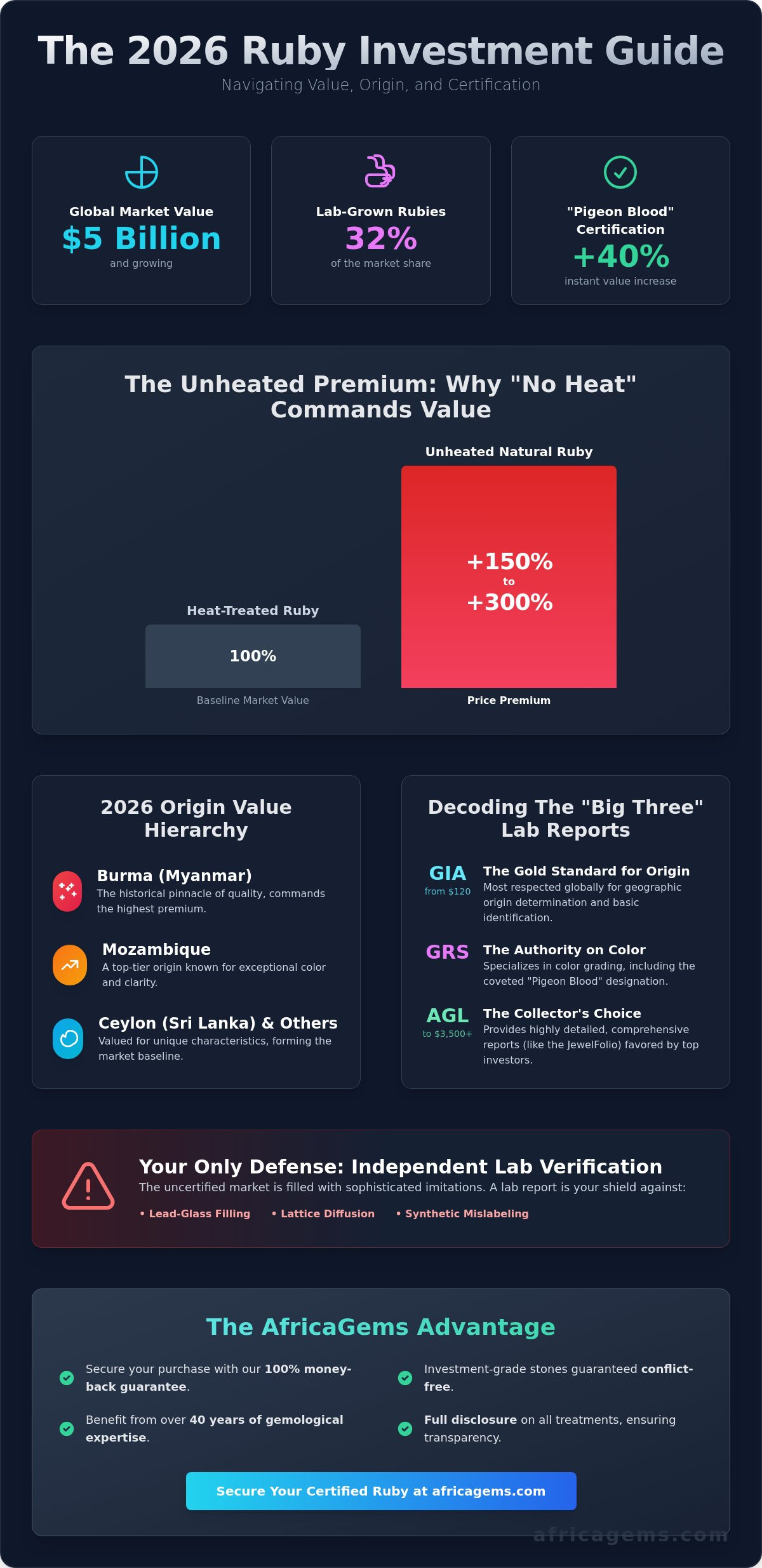
In 2026, an unheated ruby commands a staggering 150% to 300% price premium over its heat-treated counterparts. When you look to buy ruby gemstone certified, you aren't just purchasing a breathtaking stone; you're securing a portable asset in a global market now valued at $5 billion. You likely feel the weight of this decision, especially with lab-grown rubies capturing 32% of the market and the persistent fear of glass-filled imitations. It's a complex environment where a single "Pigeon Blood" certification from a top-tier lab can instantly boost a stone's value by 40%.
This guide will strip away the confusion surrounding 2026 lab fees and origin premiums, helping you master the intersection of gemological data and market value. You'll learn exactly why a $120 GIA origin report or a $3,500 AGL JewelFolio is the most important document you'll ever own. We'll explore the critical price gap between Mozambique and Burma origins, the reality of current ethical sourcing standards, and how to ensure your collection remains a source of both beauty and financial security.
Key Takeaways
- Identify why independent laboratory verification is your only defense against sophisticated treatments like lattice diffusion and lead-glass filling.
- Navigate the specific strengths of the "Big Three" labs to understand why you should buy ruby gemstone certified by GIA for origin or GRS for "Pigeon Blood" grading.
- Decode the 2026 value matrix to understand the significant price hierarchy between Burma, Mozambique, and Ceylon origins.
- Master the art of ethical acquisition by leveraging the AfricaGems Difference, ensuring every investment-grade stone is conflict-free and fully disclosed.
- Secure your purchase with the peace of mind provided by a 100% money-back guarantee and over 40 years of gemological expertise.
Why Certification is Non-Negotiable When You Buy Ruby Gemstones
A certified ruby isn't just a stone with a tag. It's a specimen verified by an independent, third-party gemological laboratory. When you buy ruby gemstone certified, you're paying for the certainty that your stone's identity is grounded in science rather than salesmanship. This Ruby gemstone overview highlights how the mineral corundum becomes a ruby, but only a lab report can confirm if that process was natural or assisted by heavy chemicals.
Certification acts as your primary defense against treatments like lead-glass filling and lattice diffusion. These processes can make a $10 stone look like a $10,000 treasure. Without a report from a lab like GIA or GRS, you risk owning a stone that is more glass than gem. A standard report verifies:
- Authenticity: Confirmation that the stone is a natural corundum.
- Treatments: Detailed disclosure of heat, lead-glass filling, or diffusion.
- Origin: Geologic source, which heavily impacts market value.
In-house appraisals, while common, often lack the equipment or objectivity needed for high-stakes transactions. A seller shouldn't grade their own homework. Reputable lab reports provide the objective distance required for a secure investment and a higher resale value. The 2026 market demands radical transparency. Collectors now prioritize stones with "clean" reports that explicitly list every treatment. If you can't prove the stone's history, its value remains speculative at best.
To better understand the nuances of selecting a high-quality stone, watch this helpful video:
The Risk of the Uncertified Market
Buying rubies on blind auction sites is a gamble that rarely pays off. Unscrupulous sellers often mislabel synthetic rubies, such as flux-grown Chatham stones, as natural. They rely on the buyer's lack of technical knowledge. When you choose to buy ruby gemstone certified through a trusted dealer, you avoid these liabilities. At AfricaGems, our Expert Enthusiast approach ensures that every detail, from treatment to origin, is laid bare before you commit.
Certification as an Investment Shield
A high-tier certificate serves as a global passport for your gemstone. It ensures that a ruby purchased in San Francisco carries the same prestige in London or Hong Kong. Every reputable report now includes a digital link to verify that the physical stone matches the data in the lab's database. AfricaGems bridges this gap by ensuring every high-value ruby carries a verifiable pedigree. This transparency is the cornerstone of the AfricaGems Difference.
Decoding the Big Three: GIA, GRS, and AGL Ruby Reports
The certificate is the heartbeat of your investment. While hundreds of laboratories issue reports, the global market for high-value corundum revolves around three specific institutions: the Gemological Institute of America (GIA), GemResearch Swisslab (GRS), and American Gemological Laboratories (AGL). Each lab offers a unique perspective on GIA on Ruby Quality, and knowing which one to trust for specific traits is what separates a collector from an amateur. When you buy ruby gemstone certified by these names, you're buying liquid value that is recognized from New York to Hong Kong.
Understanding the terminology on these reports is vital for your financial protection. A "No Heat" comment is the holy grail, often triggering a 150% to 300% price premium. Conversely, terms like "Minor Residue" or "Fissure Filled" indicate treatments that significantly lower the stone's intrinsic worth. If you're looking for a stone that balances beauty with a verifiable pedigree, browse our curated selection of loose Mozambique rubies to see how these professional standards are applied in practice.
GIA Reports: The Foundation of Trust
GIA is the world's most respected authority for basic identification and geographic origin. Their 2026 fee structure, updated on April 1, reflects the technical rigor required for these stones. For a ruby between 2.00 and 3.99 carats, a comprehensive Identification and Origin Report costs $120. This document is the industry standard for distinguishing between a Mozambique and a Burma stone. Always use the GIA Report Check tool to ensure the digital record matches the physical gem before you commit to a purchase.
GRS and the "Pigeon Blood" Designation
Based in Switzerland, GRS is the undisputed authority on high-end color terminology. They were the first to formalize the "Pigeon Blood" designation, a status awarded only to rubies with a specific vivid red hue and high fluorescence. A GRS report carrying this comment can command a 20% to 30% price premium over a standard vivid red ruby. It’s a mark of prestige that signals the stone belongs in a top-tier collection.
AGL: The Collector’s Deep Dive
AGL is highly favored by serious investors for their detailed enhancement reports. While GIA focuses on origin, AGL provides a narrative depth that is unmatched. Their JewelFolio reports start at $3,500 and offer an exhaustive analysis of a stone’s character. For rare, unheated stones, an AGL Appendix Letter, starting at $1,500, adds a layer of expert commentary that can be the deciding factor at a high-stakes auction. They are particularly rigorous in identifying "Minor Residue" in heated stones, ensuring you never overpay for a treated gem.
The Ruby Value Matrix: Color, Origin, and Treatment
A ruby's worth isn't determined by a single factor. It's the result of a delicate interplay between color, geographic origin, and the presence or absence of treatments. When you set out to buy ruby gemstone certified, you're essentially buying a data set that proves the stone's rarity. The market for these exquisite minerals is sophisticated; in 2026, the global ruby market reached a valuation of $5 billion. Understanding Ruby formation and sourcing is the first step toward building a collection that appreciates over time.
Color remains the primary value driver. The hierarchy starts with hue, where a pure, fluorescent red is most prized. Tone and saturation follow; a stone that's too dark (over-toned) or too pink (under-saturated) will never reach investment status. While "Pigeon Blood" is the pinnacle, many collectors find exceptional value in stones with slightly different secondary hues that still possess breathtaking brilliance. Clarity also plays a role. While "eye-clean" rubies are exceptionally rare, subtle inclusions often act as "fingerprints," proving a natural, unheated origin to the trained gemologist.
Geographic Origins and Their Price Impact
The geographic source of a stone is more than just a location; it's a brand. Traditionally, loose Burma rubies have been the undisputed gold standard due to their unique geological signature and historical scarcity. However, the 2026 landscape shows a significant shift. Ethically sourced Mozambique rubies are gaining rapid investment traction. They often offer superior clarity and a more consistent "vivid red" hue at a more accessible price point than their Burmese cousins. Regardless of the source, your certificate must explicitly state the origin to secure the stone's long-term liquid value.
The "Unheated" Premium
Nature rarely produces perfection without help. Only about 1% of rubies found today possess a color and clarity that don't require thermal enhancement. This scarcity is why unheated rubies command a premium of 150% to 300% over heated stones. While "Heat Only" is a standard industry practice that improves appearance without compromising the stone's structural integrity, "Unheated" status is a true rarity for collectors. The ROI on an unheated, 2-carat Mozambique ruby has consistently outperformed many other luxury assets, growing at a CAGR of 5.91% as we move toward 2035. When you buy ruby gemstone certified as unheated, you're acquiring a piece of geological history that hasn't been altered by human hands.
Ethics and Authenticity: Navigating the 2026 Ruby Market
Integrity is the final, invisible facet of any investment-grade ruby. While the physical beauty of a stone is undeniable, its ethical pedigree determines its long-term viability in a conscious market. Recent industry data shows that ethical sourcing concerns and authenticity issues have reduced general market confidence by 23%. This makes the "AfricaGems Difference" more relevant than ever. When you buy ruby gemstone certified through a dealer who prioritizes radical transparency, you're protecting yourself from the systemic risks of an opaque supply chain.
The most pervasive threat to your capital is the presence of "Lead Glass Filled" rubies. These are not gemstones in any traditional sense. They are low-grade corundum that has been infused with high-refractive index glass to hide massive fractures. In 2026, these stones still flood "blind" auction sites. They possess no intrinsic value and often deteriorate when exposed to common household cleaners or jeweler’s torches. A reputable certificate is your only shield against these industrial-grade imitations. Transparency regarding treatments isn't just a courtesy; it's the ultimate indicator of a dealer's trustworthiness.
Modern certification has evolved to include blockchain-backed digital tracking. This technology creates a permanent, unalterable record of a stone's journey from the mine to your hand. It ensures that the specific data on your GIA or GRS report remains tethered to the physical gem. If you're ready to add a stone of unquestionable integrity to your portfolio, view our collection of ethically sourced loose rubies and experience the security of full disclosure.
Identifying Ethical Sourcing
Ethical sourcing in 2026 focuses heavily on the "clean gems" movement, particularly within African mines. In Mozambique, this means ensuring that mining operations provide fair wages, safe conditions, and environmental reclamation plans. AfricaGems maintains strict vetting of every supplier to ensure these fair trade practices are upheld. There is a direct link between ethical sourcing and quality; mines that operate with high standards often produce the most exquisite, well-crystallized material because they invest in proper extraction techniques rather than destructive, high-speed methods.
The Truth About Lab-Created Rubies
Lab-grown rubies have gained 32% market traction as consumers look for affordable alternatives. While Chatham lab created gemstones are an excellent choice for fashion-forward jewelry, they do not serve the same role as natural stones in an investment portfolio. The key is disclosure. A "Natural Ruby" should never be a lab-grown lookalike. When you buy ruby gemstone certified as natural, you're paying for geological rarity that took millions of years to form. Lab-grown stones should always be clearly labeled and priced to reflect their manufactured origin, allowing you to choose the right stone for your specific needs without fear of deception.
The AfricaGems Advantage: Secure Your Investment Piece
Trust is the ultimate currency in the gemstone trade. When you buy ruby gemstone certified through AfricaGems, you aren't just clicking a button on a digital storefront; you're entering a professional consultation backed by a legacy that began in 1984. The 2026 market is crowded with speculative sellers, but our approach remains rooted in the "AfricaGems Difference." This philosophy prioritizes radical transparency and technical validation over high-pressure sales tactics, ensuring you feel like an informed insider at every stage of the acquisition.
Security is paramount for high-value transactions. Our 100% money-back guarantee is designed to eliminate the anxiety often associated with online gemstone purchases. It provides you with the essential window to inspect your ruby in person, verify its "Pigeon Blood" fluorescence under proper lighting, or even consult a local expert. Marc Sarosi personally inspects every high-value ruby for quality and character, ensuring that the stone's visual "life" and brilliance match the rigorous data points on its GIA or GRS report.
Personal Consultation and Expertise
Serious collectors often require stones that aren't yet visible on the public market. You can leverage our 40 plus years of industry connections for a private stone search tailored to your specific investment criteria. Whether you're seeking a rare 5-carat unheated Mozambique specimen or a historically significant Burma stone, our team acts as your knowledgeable mentor. We filter through hundreds of carats to find the 1% that meets our "Expert Enthusiast" standards for cut, clarity, and color saturation.
From Loose Stone to Finished Masterpiece
Acquiring a loose ruby is the smartest way to ensure certification accuracy. It allows a gemologist to examine the stone's pavilion and girdle without the obstruction of metal prongs. Once you've secured your investment, our custom jewelry design services can transform that loose ruby into a bespoke heirloom. We specialize in settings that protect the stone's integrity while maximizing its natural pleochroism and brilliance. View our collection of Mozambique and Burma rubies to begin your journey with a stone of unquestionable pedigree.
Before you finalize any purchase, use this checklist to vet your dealer:
- Verification: Can the lab report be verified on the issuer's 2026 digital database?
- Full Disclosure: Does the dealer explain the difference between "Heat" and "No Heat" in plain English?
- Origin: Is the geographic origin guaranteed and stated clearly on the third-party certificate?
- Accountability: Is there a named expert standing behind the stone's quality?
Securing Your Legacy in the 2026 Ruby Market
Acquiring a high-value ruby requires more than just an eye for beauty; it demands a commitment to technical validation. You now understand that the 150% to 300% premium for unheated stones is a reflection of extreme geological rarity. As the global market moves toward a projected valuation of $8.44 billion by 2035, the distinction between a standard heated stone and an investment-grade gem becomes the defining factor of your portfolio's success. A "Pigeon Blood" report from GRS or a detailed origin report from GIA is no longer optional; it's the primary asset securing your capital.
When you decide to buy ruby gemstone certified through AfricaGems, you eliminate the risks of lead-glass filling and undisclosed synthetics. We provide A-rated transparency with full treatment disclosure and comprehensive third-party certification from GIA, GRS, or AGL. Founder Marc Sarosi personally guarantees every stone, ensuring that its character and brilliance match the rigorous data points on its lab report. This level of personal accountability transforms a digital transaction into a secure investment. Explore the AfricaGems Collection of Certified Investment-Grade Rubies and find a stone that balances breathtaking elegance with verifiable pedigree. Your journey into the world of rare minerals begins with the security of a master gemologist's oversight.
Frequently Asked Questions
Is a GIA certificate necessary for every ruby purchase?
A GIA report is essential for any ruby intended as a long-term investment or high-value heirloom. While you might skip formal papers for minor fashion jewelry, you should always buy ruby gemstone certified by a major lab for stones over one carat. It's the only way to confirm a stone isn't one of the lab-grown varieties that now hold 32% of the market traction in 2026.
What is the difference between "Heated" and "Unheated" rubies in terms of value?
Unheated rubies command a staggering price premium of 150% to 300% over heated stones of similar quality. This value gap exists because only 1% of rubies are found with natural color and clarity that require no thermal enhancement. While "Heat Only" is a standard industry practice, an unheated certificate proves the stone is a rare geological miracle that hasn't been altered by man.
Does "Pigeon Blood" always mean the ruby is from Burma?
No, "Pigeon Blood" is a specific color and fluorescence grade, not a geographic origin. While the term originated in the Mogok Valley of Burma, labs like GRS now award this prestigious status to exceptional Mozambique rubies. These stones must exhibit a vivid red hue with high fluorescence to qualify. Always check the origin section of your report to distinguish between a Burma or Mozambique "Pigeon Blood" gem.
How can I verify the authenticity of a ruby certificate online?
You can verify any reputable report by using the lab's digital "Report Check" tool. For example, GIA and AGL provide secure databases where you enter the report number and the stone's exact carat weight. This ensures the physical stone in your hand matches the data recorded at the time of grading. It is your primary defense against forged documents in the 2026 digital marketplace.
Are Mozambique rubies as valuable as Burmese rubies in 2026?
Burmese rubies remain the pinnacle of the market in terms of per-carat price due to historical prestige and extreme scarcity. However, Mozambique rubies are the primary driver of the $5 billion global ruby market in 2026. They often provide superior clarity and "eye-clean" brilliance at a more accessible investment level. Many collectors now prefer them for their ethical traceability and consistent, vivid red color.
What should I look for on a ruby lab report to ensure it is not glass-filled?
Look closely at the "Comments" or "Treatments" section for any mention of "Lead-glass," "Fissure-filled," or "Composite." These terms indicate a stone that has no intrinsic investment value and may even be unstable. A high-quality report from GIA or GRS will explicitly state if a stone has undergone these industrial treatments. If the report mentions "Significant Residue," the stone's value is drastically reduced compared to "Minor Residue" or "No Heat" specimens.
Why is AfricaGems considered a leader in ethical gemstone sourcing?
AfricaGems maintains a strict vetting process for every mine and supplier to ensure conflict-free and fair trade practices. We prioritize the "Expert Enthusiast" philosophy, which demands radical transparency regarding a stone's journey from the earth to the vault. When you buy ruby gemstone certified through us, you're supporting a supply chain that respects both the environment and the miners. This ethical integrity is a core pillar of the AfricaGems Difference.
Can I return a certified ruby if it does not meet my expectations?
Yes, we provide a 100% money-back guarantee to ensure you are completely satisfied with your acquisition. This policy is vital for high-value online transactions, as it allows you to inspect the stone's pleochroism and brilliance in person. We want you to feel the same security as an informed insider. If the ruby's character doesn't resonate with you upon arrival, you can return it without any complicated hurdles.